Introduction
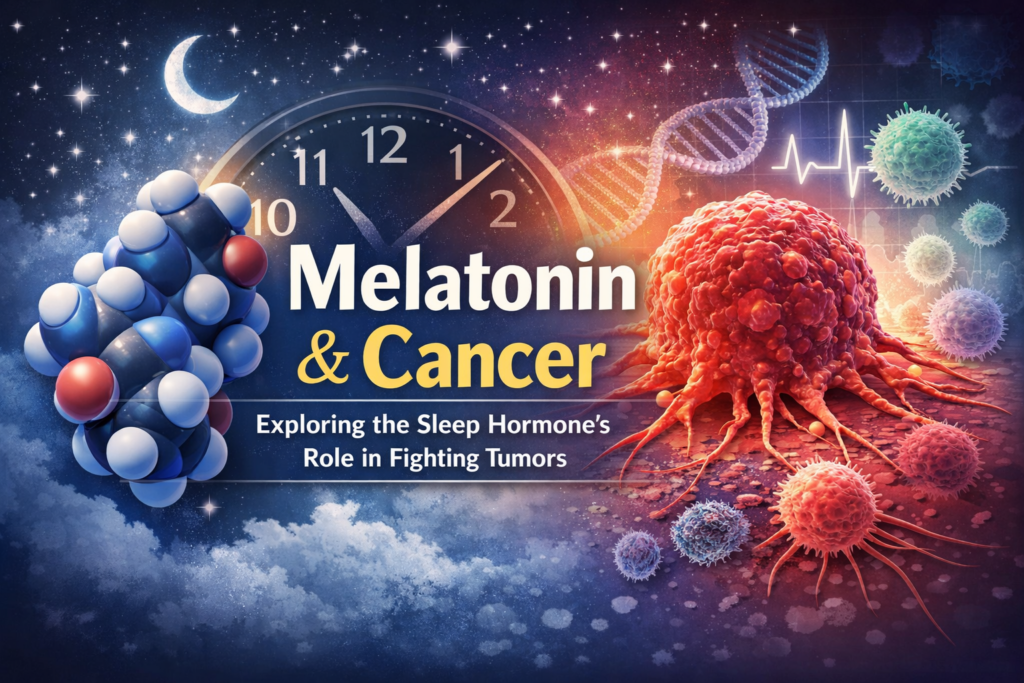
Melatonin is widely known as the hormone that regulates sleep, but scientific research has revealed that its role in the body goes far beyond controlling circadian rhythms. In recent decades, scientists have discovered that melatonin has powerful biological effects related to immune regulation, antioxidant protection, cellular repair, and cancer biology.
Researchers have been investigating the relationship between melatonin and cancer for over 30 years. Studies suggest that melatonin may help slow tumor growth, enhance immune surveillance, support conventional treatments such as chemotherapy, and protect healthy tissues from oxidative damage.
Although melatonin is not a cure for cancer, growing evidence indicates it may serve as a supportive therapy in integrative oncology. This guide explains how melatonin works, what the research says about melatonin and cancer, and why maintaining healthy melatonin levels may be important for cancer prevention and recovery.
This information is for educational purposes only and is not medical advice.
What Is Melatonin?
Melatonin is a hormone primarily produced by the pineal gland, a small structure located deep within the brain. Its main function is to regulate the circadian rhythm, the internal clock that controls sleep and wake cycles.
Melatonin production rises in darkness and falls when exposed to light. This daily cycle helps signal to the body when it is time to sleep.
However, melatonin is also produced in other parts of the body, including:
- The gastrointestinal tract
- Immune cells
- Bone marrow
- The retina
Because melatonin is present in many tissues, researchers now recognize that it acts as a multi-functional signaling molecule, influencing immune activity, mitochondrial health, inflammation, and cellular repair.
These biological processes are closely connected to cancer development and progression.
Learn more about circadian rhythm biology:
Why Melatonin Matters in Cancer Biology
Cancer develops when cells acquire mutations that allow them to grow uncontrollably, avoid cell death, and evade immune detection.
Melatonin appears to influence many of these processes.
Scientists have identified several mechanisms through which melatonin may affect cancer cells:
- Antioxidant protection
- Immune system activation
- Inhibition of tumor growth pathways
- Reduction of inflammation
- Regulation of hormone signaling
- Protection of healthy cells during therapy
Because of these combined effects, melatonin is sometimes described as an onco-protective molecule, meaning it may help defend the body against cancer development.
Research overview:
How Melatonin May Slow Cancer Growth
1. Regulating Cell Growth and Apoptosis
Healthy cells follow strict rules that control when they grow, divide, and die. Cancer cells break these rules.
Melatonin has been shown in laboratory studies to help restore these normal controls by:
- Triggering apoptosis (programmed cell death) in cancer cells
- Slowing cell cycle progression
- Reducing abnormal cell proliferation
These effects have been observed in several cancer types including:
- Breast cancer
- Colon cancer
- Prostate cancer
- Lung cancer
- Liver cancer
Research review:
2. Blocking Cancer Survival Pathways
Cancer cells rely on specific signaling pathways to survive and multiply.
Studies suggest melatonin may influence pathways involved in tumor survival, including:
- PI3K/Akt
- NF-κB
- HIF-1α
- MAPK signaling
- Estrogen receptor signaling
By interfering with these pathways, melatonin may reduce tumor growth signals and increase cancer cell vulnerability.
These pathways are discussed further in:
3. Reducing Angiogenesis (Tumor Blood Supply)
For tumors to grow larger than a few millimeters, they must develop their own blood supply.
This process is known as angiogenesis.
Melatonin has been shown to reduce levels of pro-angiogenic factors such as:
- VEGF (vascular endothelial growth factor)
- HIF-1α signaling
When these signals are suppressed, tumors may struggle to build new blood vessels, limiting their ability to grow.
Research:
Melatonin and the Immune System
The immune system plays a critical role in identifying and destroying abnormal cells before they become tumors.
Melatonin appears to enhance several components of immune surveillance.
Studies show melatonin may stimulate:
- Natural killer (NK) cells
- T lymphocytes
- Cytokine signaling
- Antibody production
Natural killer cells are especially important because they can detect and destroy cancer cells without needing prior exposure.
Melatonin may therefore strengthen the body’s first line of defense against tumor formation.
Immune research:
Melatonin as an Antioxidant and Mitochondrial Protector
Cancer and many cancer treatments generate large amounts of reactive oxygen species (ROS).
While ROS can damage cancer cells, excessive oxidative stress can also harm healthy tissues.
Melatonin is considered one of the most powerful natural antioxidants in the human body.
It works by:
- Neutralizing free radicals
- Supporting mitochondrial energy production
- Protecting DNA from oxidative damage
- Enhancing antioxidant enzymes such as glutathione peroxidase
Unlike many antioxidants, melatonin can enter every cell compartment, including mitochondria and the nucleus.
This unique ability allows it to protect cells at a very deep level.
Scientific review:
Melatonin and Chemotherapy Support
Another area of growing interest is melatonin’s potential to improve cancer treatment outcomes.
Some clinical studies suggest melatonin may help:
- Improve tolerance to chemotherapy
- Reduce treatment side effects
- Enhance tumor response
- Improve quality of life
Melatonin has been studied alongside treatments for:
- Lung cancer
- Breast cancer
- Gastrointestinal cancers
- Brain tumors
Some trials have shown improved survival rates when melatonin is combined with conventional therapy, although more large-scale studies are needed.
Clinical trial overview:
Melatonin, Sleep, and Cancer Risk
Poor sleep and circadian disruption have been associated with increased cancer risk.
People who frequently experience circadian disruption—such as night shift workers—may have lower melatonin levels.
The World Health Organization has even classified long-term night shift work as a probable carcinogen due to circadian rhythm disruption.
Research suggests that maintaining healthy melatonin rhythms may help regulate:
- Hormone balance
- Immune activity
- DNA repair processes
- Cellular metabolism
This is one reason why sleep quality is increasingly recognized as an important factor in overall health and cancer prevention.
Circadian research:
Natural Ways to Support Healthy Melatonin Levels
Melatonin production is strongly influenced by lifestyle habits and environmental factors.
Some ways to naturally support melatonin production include:
Maintain a Consistent Sleep Schedule
Going to bed and waking up at the same time each day helps regulate circadian rhythm.
Reduce Nighttime Light Exposure
Blue light from phones, tablets, and LED lighting can suppress melatonin production.
Spend Time in Natural Daylight
Morning sunlight helps synchronize the body’s internal clock.
Support Gut Health
The digestive system produces significant amounts of melatonin, making gut health an important factor.
Consider Melatonin Supplementation
Some people use melatonin supplements to support sleep and circadian regulation, though dosage and timing should be discussed with a healthcare professional.
Safety and Research Limitations
Although melatonin is widely used as a sleep supplement and is generally considered safe for short-term use, its role in cancer therapy is still being researched.
Important considerations include:
- Human studies remain limited compared to laboratory research.
- Optimal dosing for cancer support is not fully established.
- Melatonin may interact with certain medications.
- Individual responses may vary.
Because of these factors, melatonin should always be used under medical guidance when incorporated into a cancer care plan.
Key Takeaways: Melatonin and Cancer
Research suggests melatonin may support cancer prevention and treatment through multiple mechanisms:
• Helps regulate cell growth and apoptosis
• Interferes with tumor survival pathways
• Reduces angiogenesis and tumor blood supply
• Enhances immune system activity
• Protects healthy cells from oxidative stress
• May improve tolerance to chemotherapy
• Supports healthy circadian rhythms linked to cancer prevention
While melatonin is not a standalone treatment for cancer, it represents a promising area of research in integrative oncology.
Conclusion
Melatonin is far more than a sleep hormone. It plays a complex and powerful role in regulating immune function, protecting cells from damage, and influencing biological processes involved in cancer development.
As scientists continue to explore the connection between melatonin and cancer, evidence suggests this natural molecule may offer meaningful support for both prevention and recovery.
Future research will help determine exactly how melatonin can best be used alongside conventional cancer therapies to improve outcomes and quality of life.
References
Melatonin and cancer review
https://www.ncbi.nlm.nih.gov/pmc/articles/PMC5503661/
Melatonin anticancer mechanisms
https://www.ncbi.nlm.nih.gov/pmc/articles/PMC5407249/
Melatonin and immune system regulation
https://www.ncbi.nlm.nih.gov/pmc/articles/PMC6369305/
Melatonin antioxidant properties
https://www.ncbi.nlm.nih.gov/pmc/articles/PMC6721719/
Melatonin in cancer treatment clinical studies
https://pubmed.ncbi.nlm.nih.gov/12043894/
Circadian rhythm and cancer risk
https://www.cancer.gov/about-cancer/causes-prevention/risk/night-shift-work
Table of Contents