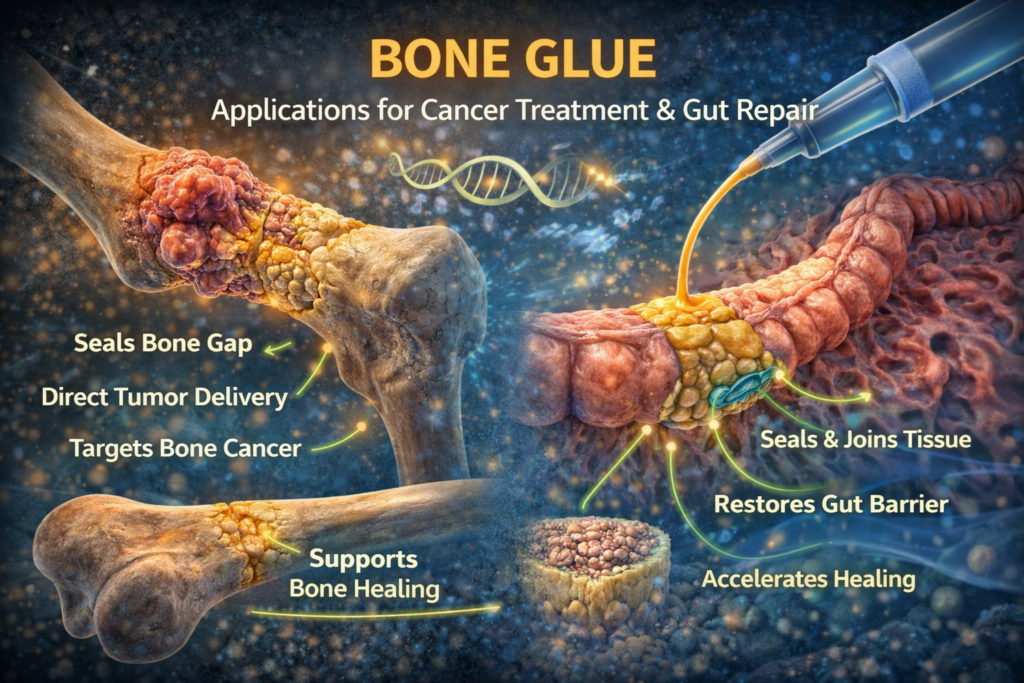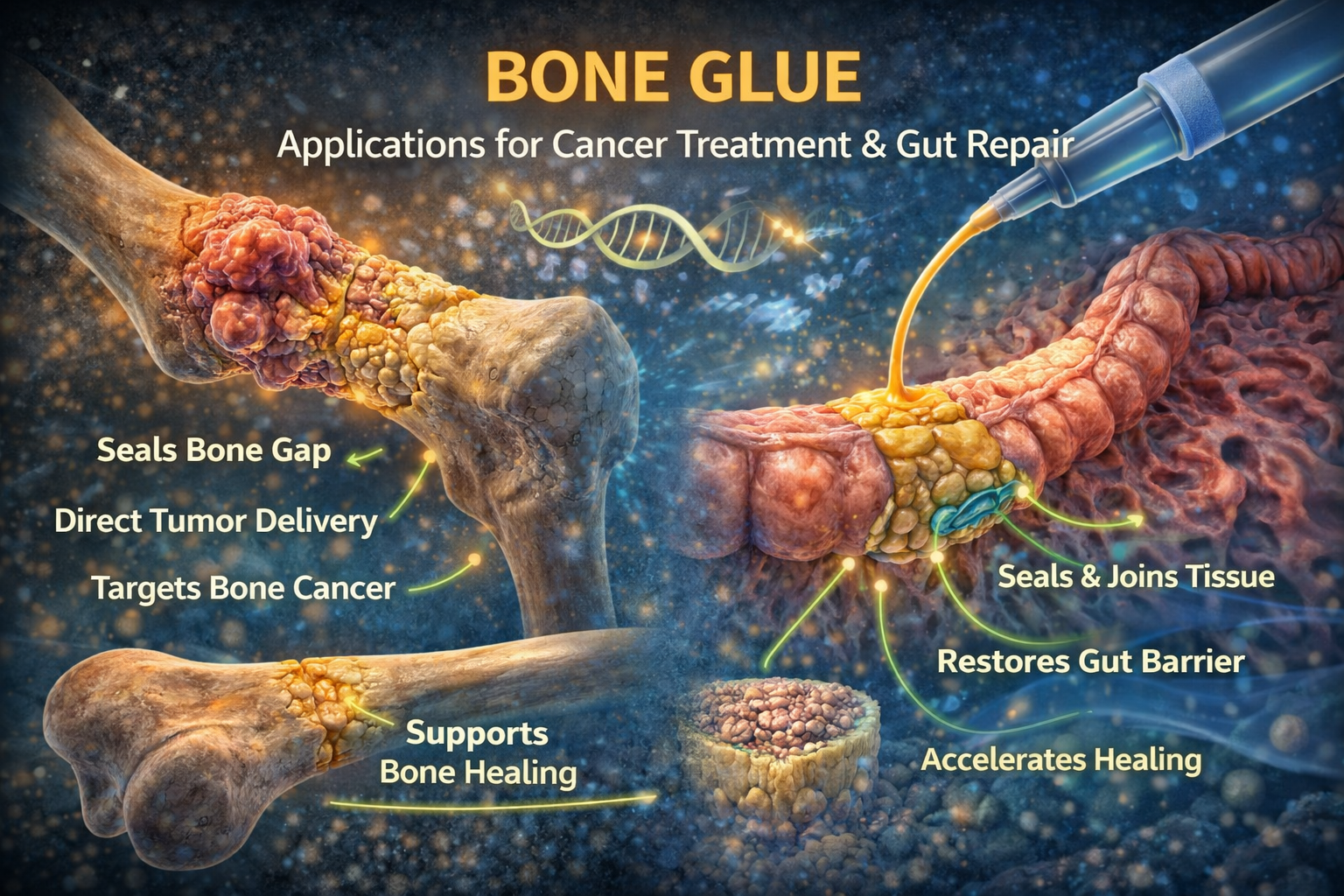
Bone Glue for Gut Healing After Radiation: How to Recover from Cancer Treatment Damage
Introduction: Healing the Gut After Radiation
Radiation to the pelvic, colorectal, or abdominal area can injure healthy intestinal tissue while targeting the tumor. That damage may disrupt the gut barrier, alter the microbiome, trigger inflammation, and lead to diarrhea, malabsorption, and fatigue. This is why gut repair matters so much during cancer recovery.
In this context, “bone glue” refers to a thick, collagen-rich bone broth concentrate used as a gut-support tool. Its main value is not direct anti-cancer action. Its role is supportive: helping rebuild the intestinal lining, calm irritation, and improve recovery after treatment-related gut injury. Evidence for collagen-rich supplements is still emerging, but recent reviews and preclinical work suggest they may support intestinal barrier integrity and reduce inflammation.
To see how recovery support fits into the bigger picture, start with:
https://helping4cancer.com/the-foundation-of-cancer/
Why Radiation Wrecks the Gut
Radiation can damage fast-dividing intestinal cells, weaken the mucus barrier, and disrupt the gut microbiome. This can lead to enteropathy, mucositis, diarrhea, inflammation, and reduced barrier function. When that barrier breaks down, nutrient absorption suffers and infection risk can rise.
That matters in cancer strategy because a damaged gut does more than cause discomfort. It can reduce hydration, lower treatment tolerance, weaken immunity, and make recovery harder. A healthier gut barrier supports better absorption, better resilience, and a stronger foundation for the rest of a recovery protocol.
What Is Bone Glue?
Bone glue is the traditional nickname for a concentrated, gelatin-rich bone broth made by slowly simmering bones, joints, and connective tissue. Compared with regular broth, it is thicker and more concentrated, so a smaller amount can deliver more collagen-derived peptides and amino acids.
Those amino acids include glycine, proline, and glutamine-related building blocks commonly discussed in gut-support nutrition. While direct human cancer-radiation trials on “bone glue” itself are limited, collagen peptides are being studied for barrier support, anti-inflammatory effects, and mucosal healing in gut injury models.
How Bone Glue May Help After Radiation
Gut Barrier and Tight Junction Support
Radiation-related gut injury often involves loss of barrier integrity. When tight junctions weaken, the gut becomes more permeable and more easily inflamed. Collagen peptides are being studied because they may help support barrier structure and reduce inflammation in intestinal injury models.
That is why bone glue fits best as a recovery-support food. It is aimed at helping the lining heal, not at increasing oxidative stress or directly attacking tumor pathways.
Glycine, Collagen, and Mucosal Repair
Bone broth concentrates are valued largely for their glycine- and collagen-rich profile. These compounds are often discussed in gut-healing strategies because they may help support connective tissue repair, mucosal recovery, and barrier resilience. The evidence is stronger in preclinical and gut-barrier literature than in direct oncology trials, so it is best presented as supportive rather than proven cancer-specific therapy.
Nutrient Absorption and Recovery
When the gut lining is inflamed or damaged, nutrient absorption may suffer. Recovery foods that are easy to digest and supportive of barrier repair may help patients better tolerate food, hydration, and supplements during treatment recovery. This is one reason gut-focused support is increasingly tied to broader radiotherapy recovery discussions.
Radiation, Diarrhea, and Why Gut Healing Matters
Radiation-induced diarrhea is a common result of epithelial injury, inflammation, and microbiome disruption. When diarrhea continues, patients may lose fluids, minerals, and calories, which can worsen weakness and slow healing.
Bone glue may help as part of a gut-soothing strategy because it is gentle, easy to sip, and compatible with low-appetite recovery days. It does not replace medical management of severe diarrhea, but it can fit into a broader support plan focused on barrier healing, hydration, and microbiome recovery.
How It Fits in Cancer Strategy
Bone glue is not an attack-phase compound. It does not belong in the same category as ROS-building tools or pathway-targeting metabolic compounds.
Best Fit
- Recovery phase
- Post-radiation gut support
- Low-appetite days
- Rehydration and nourishment windows
- Barrier repair and digestive support
Strategic Role
Its main role is support. It helps the body recover from collateral treatment damage so digestion, hydration, and nutrient uptake can improve. That makes it more connected to tissue repair, gut resilience, and quality of life than to pathways like PI3K/Akt, mTOR, or VEGF.
For broader strategy links, see:
https://helping4cancer.com/redox-balance-cancer/
https://helping4cancer.com/immune-system-cancer/
Combining Bone Glue With Other Gut-Healing Tools
Bone glue works best when paired with other gut-supportive tools that target different parts of the problem.
Psyllium Husk
Psyllium can help bulk stool and reduce urgency in some people, which may be useful when radiation causes loose stools. It works mechanically, while bone glue is more about nourishment and lining support.
Saccharomyces boulardii
Saccharomyces boulardii is one of the better-studied supportive tools for diarrhea. A 2025 pelvic radiotherapy study evaluated S. boulardii for preventing acute GI toxicity, and broader literature supports its barrier and antidiarrheal effects in gastrointestinal illness, though radiation-specific evidence still needs expansion.
Sugar-Free Electrolytes
Electrolytes help replace fluid and mineral losses from diarrhea. They do not repair the gut lining directly, but they are an important partner to any gut-repair strategy during treatment recovery.
Together, these tools make sense as a layered approach:
- Bone glue for nourishment and barrier support
- S. boulardii for microbiome and diarrhea support
- Electrolytes for hydration
- Psyllium for stool consistency when tolerated
When and How to Use Bone Glue
Bone glue is most useful during recovery windows, especially:
- After radiation sessions
- On low-appetite days
- During diarrhea-prone periods
- When digestion feels fragile
A practical food-style approach is 1 to 2 tablespoons per day mixed into warm water or broth and sipped slowly. Because this is a supportive food rather than a standardized drug, real tolerance matters more than forcing a fixed amount.
Key Benefits of Bone Glue in This Context
- Supports gut barrier recovery
- Helps soothe irritated intestinal tissue
- May support tight junction integrity
- Provides collagen-derived amino acids for repair
- Fits well on low-appetite days
- Supports hydration and gentle nourishment
- May help improve nutrient absorption as the gut heals
- Pairs well with probiotics and electrolyte support
Limits and Evidence Gaps
It is important to be clear about what the evidence does and does not show.
- Radiation-related gut injury and microbiome disruption are well documented.
- S. boulardii has emerging evidence for pelvic radiotherapy GI toxicity, but more trials are needed.
- Collagen peptides and gelatin-rich supplements show promise for barrier support and reduced inflammation, but direct clinical evidence for “bone glue” in post-radiation cancer patients remains limited.
So the most accurate framing is this: bone glue is a plausible, practical recovery-support tool grounded in gut-barrier biology, but it is not a proven stand-alone treatment for radiation enteritis.
Final Thoughts: Healing the Gut Helps the Whole System
During cancer treatment, a damaged gut can undermine everything else. It can worsen diarrhea, reduce nutrient absorption, weaken hydration, and make recovery harder. That is why supportive gut repair deserves a place in the bigger cancer system.
Bone glue fits that role well. It is simple, concentrated, easy to tolerate, and aligned with the goal of rebuilding the gut lining after radiation damage. It works best not as a miracle cure, but as part of a broader gut-recovery strategy that may also include S. boulardii, hydration, and careful nutritional support.
Related Topics
Oxidative stress and cancer treatment
https://helping4cancer.com/oxidative-stress-cancer/
Foundation of cancer biology
https://helping4cancer.com/the-foundation-of-cancer/
Redox balance and treatment timing
https://helping4cancer.com/redox-balance-cancer/
Immune system and cancer defense
https://helping4cancer.com/immune-system-cancer/
Cancer metabolism and recovery support
https://helping4cancer.com/cancer-metabolism/
Fasting and cancer support strategy
https://helping4cancer.com/fasting-cancer-plan/

🧪 Clinical & Preclinical Studies
1. S. boulardii for Radiation-Induced GI Toxicity
A randomized trial with 60 patients receiving pelvic radiotherapy for gynecologic cancers. It evaluated 250 mg/day of Saccharomyces boulardii and found a reduced incidence of severe diarrhea by week 3, though results were mixed by week 4 — pointing to the need for more extensive trials mdpi.com+7centerwatch.com+7nmi.health+7en.wikipedia.org+3pubmed.ncbi.nlm.nih.gov+3ageb.be+3.
2. Radiation + Gut Microbiome Interactions
A 2021 open‑access review outlines how radiotherapy alters gut flora, leading to enteropathy, mucositis, and gut-related side effects. It also discusses microbiome-targeting approaches—probiotics, prebiotics, FMT—as potential mitigators .
3. Probiotics & Gut Mucosa Protection (Animal Study)
Older rat studies show probiotics help protect radiation‑damaged intestinal mucosa, reducing inflammation and preserving mucus layers ro-journal.biomedcentral.com+8researchgate.net+8ehoonline.biomedcentral.com+8.
4. Bone Broth Collagen & Gut Barrier Studies
A recent 2025 review found that gelatin-rich supplements (i.e., bone broth or concentrated collagen) support intestinal barrier integrity, reduce inflammation, and may help conditions such as IBD—which could translate well to radiation-induced damage pubmed.ncbi.nlm.nih.gov.
🧬 Key Insights
- Gut microbiome disruption by radiation is well-documented; addressing it via probiotic, prebiotic, and nutrient-based protocols shows promise ro-journal.biomedcentral.com+1ehoonline.biomedcentral.com+1.
- S. boulardii may specifically reduce diarrhea in pelvic radiation patients, though efficacy needs further study en.wikipedia.org+3pubmed.ncbi.nlm.nih.gov+3ageb.be+3.
- Collagen-rich supplements (like bone glue) help rebuild intestinal barrier, tight junctions, and mucosal layers—key to gut healing cancercenterforhealing.com+3health.com+3time.com+3.
✅ Suggested Citation List
- PubMed: Impact of Saccharomyces boulardii on acute gastrointestinal toxicities from pelvic radiotherapy amazon.com+6pubmed.ncbi.nlm.nih.gov+6researchgate.net+6
- BMC Radiation Oncology review: Radiotherapy and the gut microbiome: facts and fiction ro-journal.biomedcentral.com
- BMC Hematology & Oncology: The gut microbiota as a booster for radiotherapy ehoonline.biomedcentral.com
- PubMed: Bone Broth Benefits: How Its Nutrients Fortify Gut Barrier nmi.health+7pubmed.ncbi.nlm.nih.gov+7mdanderson.org+7