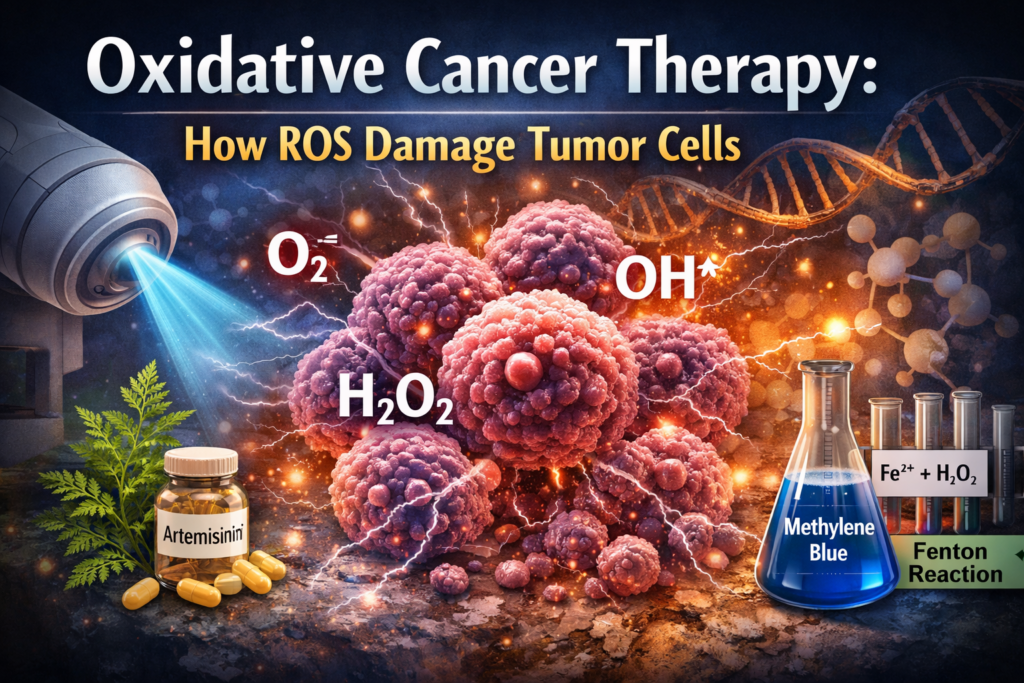
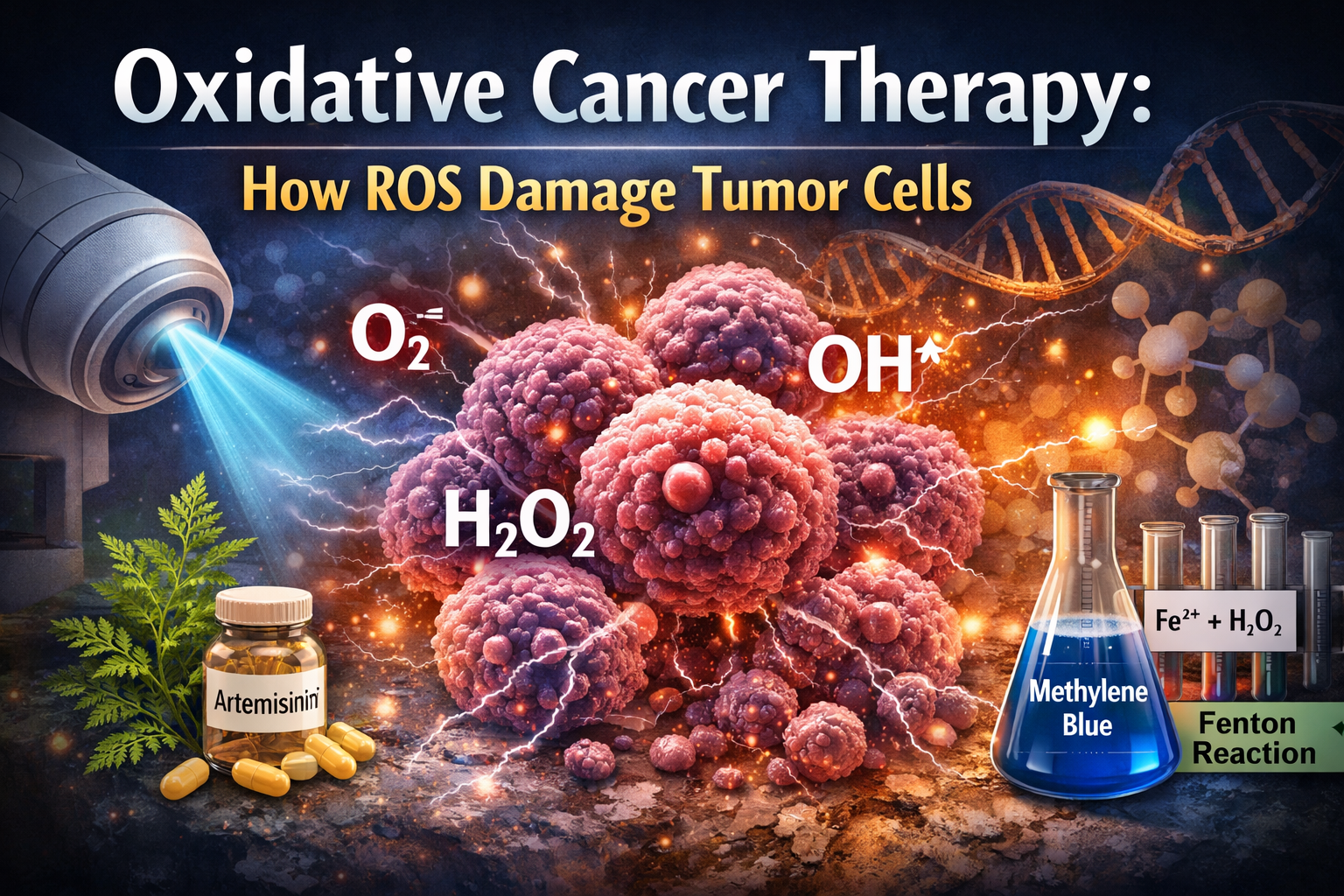
Oxidative Cancer Therapy: Using ROS to Damage Tumor Cells Introduction
Cancer treatment has traditionally focused on surgery, chemotherapy, and radiation. In recent years, researchers have begun to explore another powerful strategy: oxidative cancer therapy.
This approach focuses on increasing reactive oxygen species (ROS) inside tumor cells. ROS are highly reactive molecules that can damage DNA, proteins, and cellular structures. While normal cells can usually manage moderate oxidative stress, cancer cells are often already under high metabolic stress.
When ROS levels rise beyond a certain threshold, cancer cells may undergo apoptosis (programmed cell death) or catastrophic damage.
Because of this vulnerability, several modern cancer treatments — including radiation therapy, artemisinin derivatives, and metabolic therapies — intentionally increase oxidative stress inside tumors.
This guide explains how oxidative therapy works, why cancer cells are vulnerable to ROS damage, and which treatments use this strategy.
What Are Reactive Oxygen Species (ROS)?
Reactive oxygen species are highly reactive molecules produced during normal cellular metabolism.
Common ROS molecules include:
• superoxide (O₂⁻)
• hydrogen peroxide (H₂O₂)
• hydroxyl radicals (OH•)
These molecules are naturally generated inside the mitochondria, the energy-producing structures of cells.
Under normal conditions, the body balances ROS using antioxidants such as:
• glutathione
• catalase
• superoxide dismutase
However, when ROS production exceeds the body’s ability to neutralize them, oxidative stress occurs.
Oxidative stress can damage:
• DNA
• cellular membranes
• mitochondria
• enzymes
In cancer therapy, this destructive effect can be used selectively against tumor cells.
Learn more about oxidative stress:
https://www.ncbi.nlm.nih.gov/books/NBK499907/
Why Cancer Cells Are Vulnerable to Oxidative Stress
Cancer cells often exist in a state of chronic oxidative stress due to their abnormal metabolism.
Several factors contribute to this vulnerability.
1. Rapid Growth
Cancer cells divide quickly and require large amounts of energy. This increased metabolic activity produces more ROS.
2. Mitochondrial Dysfunction
Tumor cells frequently have damaged mitochondria that generate excess reactive oxygen species.
3. Hypoxic Tumor Environments
Many tumors grow in low-oxygen environments, which disrupts normal cellular metabolism and increases oxidative stress.
4. Iron Accumulation
Cancer cells often accumulate iron, which can amplify ROS production through chemical reactions such as the Fenton reaction.
Because tumor cells are already close to the threshold of oxidative damage, therapies that further increase ROS can push them into cell death pathways.
Research overview:
https://www.nature.com/articles/nrc.2017.54
Radiation Therapy and ROS
One of the most well-established oxidative therapies is radiation therapy.
Radiation treatment works largely by generating ROS inside tumor tissue.
When radiation passes through biological tissue, it interacts with water molecules to create hydroxyl radicals, one of the most damaging ROS molecules.
These radicals cause:
• DNA strand breaks
• protein damage
• mitochondrial injury
If enough damage accumulates, the cancer cell can no longer survive.
Radiation is particularly effective against rapidly dividing cells because they have less time to repair DNA damage.
Scientific explanation:
https://www.cancer.gov/about-cancer/treatment/types/radiation-therapy
Artemisinin and Iron-Driven ROS
Artemisinin is a compound originally derived from the plant Artemisia annua, used for decades to treat malaria.
Researchers later discovered that artemisinin can also generate ROS inside cancer cells.
The key reason involves iron metabolism.
Cancer cells often contain elevated levels of iron because they require iron for rapid growth.
Artemisinin molecules contain a peroxide bridge that reacts with iron inside cells.
When this reaction occurs, it produces highly reactive oxygen radicals that damage cellular structures.
This mechanism makes artemisinin particularly interesting in cancer research because the reaction is selectively activated in iron-rich tumor cells.
Scientific reference:
https://www.ncbi.nlm.nih.gov/pmc/articles/PMC3603294/
The Fenton Reaction and Cancer Therapy
One of the most important chemical reactions involved in oxidative therapy is the Fenton reaction.
The Fenton reaction occurs when hydrogen peroxide interacts with iron.
This reaction generates extremely reactive hydroxyl radicals capable of causing severe cellular damage.
These radicals can:
• break DNA strands
• damage lipid membranes
• destroy mitochondrial enzymes
Because cancer cells often accumulate iron, the Fenton reaction may occur more readily inside tumors.
Scientists are actively studying Fenton-based therapies that amplify ROS production in tumors.
For example, some experimental treatments deliver nanoparticles containing iron or catalytic metals designed to trigger localized oxidative stress.
Research overview:
https://pubs.acs.org/doi/10.1021/acsnano.0c10084
Methylene Blue and Mitochondrial ROS
Another compound receiving attention in metabolic cancer research is methylene blue.
Methylene blue interacts with the mitochondrial electron transport chain, where cells produce energy.
Under certain conditions, it can increase electron transfer activity and influence ROS production.
This may lead to increased oxidative stress inside tumor cells that already have impaired mitochondrial function.
In addition, methylene blue has been studied as a photosensitizer, meaning it can generate ROS when activated by light in a process called photodynamic therapy.
This strategy is being investigated for several cancers, including skin and bladder cancers.
Research overview:
https://www.ncbi.nlm.nih.gov/pmc/articles/PMC6770892/
Other Oxidative Cancer Strategies
Several other therapies use oxidative stress as part of their mechanism.
Chemotherapy
Many chemotherapy drugs generate ROS as part of their anti-cancer activity.
Examples include:
• doxorubicin
• cisplatin
• bleomycin
These drugs damage cancer cells partly by overwhelming their antioxidant defenses.
Photodynamic Therapy
Photodynamic therapy uses light-activated molecules called photosensitizers.
When exposed to specific wavelengths of light, these molecules produce ROS that destroy nearby tumor cells.
This therapy is used for:
• skin cancer
• esophageal cancer
• bladder cancer
Learn more:
https://www.cancer.gov/about-cancer/treatment/types/photodynamic-therapy
Hyperbaric Oxygen Therapy
Some researchers are exploring whether hyperbaric oxygen therapy may enhance oxidative cancer treatments.
By increasing oxygen availability, this therapy could potentially increase ROS production in tumors.
However, evidence remains mixed and more clinical research is needed.
Research review:
https://www.ncbi.nlm.nih.gov/pmc/articles/PMC5463831/
Balancing ROS and Antioxidants
While oxidative therapies can damage cancer cells, timing and balance are important.
Antioxidants such as:
• vitamin C
• vitamin E
• glutathione
can neutralize ROS.
In some situations, taking strong antioxidants immediately during radiation or chemotherapy may theoretically reduce treatment effectiveness.
Because of this, oncologists sometimes recommend careful timing of antioxidant supplements during therapy.
Patients should always consult their healthcare team before combining supplements with cancer treatment.
Future Directions in Oxidative Cancer Therapy
Researchers are actively developing new strategies that exploit cancer’s vulnerability to oxidative stress.
Some of the most promising areas include:
Targeted ROS Nanotherapy
Scientists are designing nanoparticles that deliver ROS-generating compounds directly into tumors.
Iron-Targeted Cancer Therapies
Because cancer cells accumulate iron, therapies that exploit iron-dependent ROS generation are being studied.
Ferroptosis Research
Ferroptosis is a recently discovered form of cell death caused by iron-dependent lipid oxidation.
Many researchers believe ferroptosis-inducing therapies could become a major future direction in cancer treatment.
Research overview:
https://www.nature.com/articles/s41568-020-00260-3
Limitations and Safety Considerations
Although oxidative therapy is a promising research area, it has limitations.
Potential concerns include:
• damage to normal tissue
• inflammation
• treatment resistance
Modern oncology aims to maximize oxidative damage in tumors while minimizing harm to healthy cells.
This is why many therapies attempt to target ROS production specifically to tumor environments.
Key Takeaways
Oxidative cancer therapy is based on a simple but powerful concept: cancer cells are vulnerable to oxidative stress.
By increasing reactive oxygen species inside tumors, treatments can overwhelm cancer cell defenses and trigger cell death.
Important oxidative therapies include:
• radiation therapy
• artemisinin compounds
• methylene blue
• chemotherapy drugs
• photodynamic therapy
Many of these treatments rely on chemical reactions such as the Fenton reaction, which generates extremely damaging hydroxyl radicals.
As research advances, oxidative therapies may become even more precise, targeting tumor metabolism while sparing healthy tissue.
Understanding how oxidative stress affects cancer is helping scientists develop new ways to weaken tumors and improve treatment outcomes.
External References
National Cancer Institute – Radiation Therapy
https://www.cancer.gov/about-cancer/treatment/types/radiation-therapy
NIH – Reactive Oxygen Species
https://www.ncbi.nlm.nih.gov/books/NBK499907/
Nature Reviews Cancer – ROS in Cancer
https://www.nature.com/articles/nrc.2017.54
NIH – Artemisinin and Cancer
https://www.ncbi.nlm.nih.gov/pmc/articles/PMC3603294/
ACS Nano – Fenton Reaction Therapy
https://pubs.acs.org/doi/10.1021/acsnano.0c10084
NIH – Methylene Blue and Cancer Research
https://www.ncbi.nlm.nih.gov/pmc/articles/PMC6770892/
Table of Contents