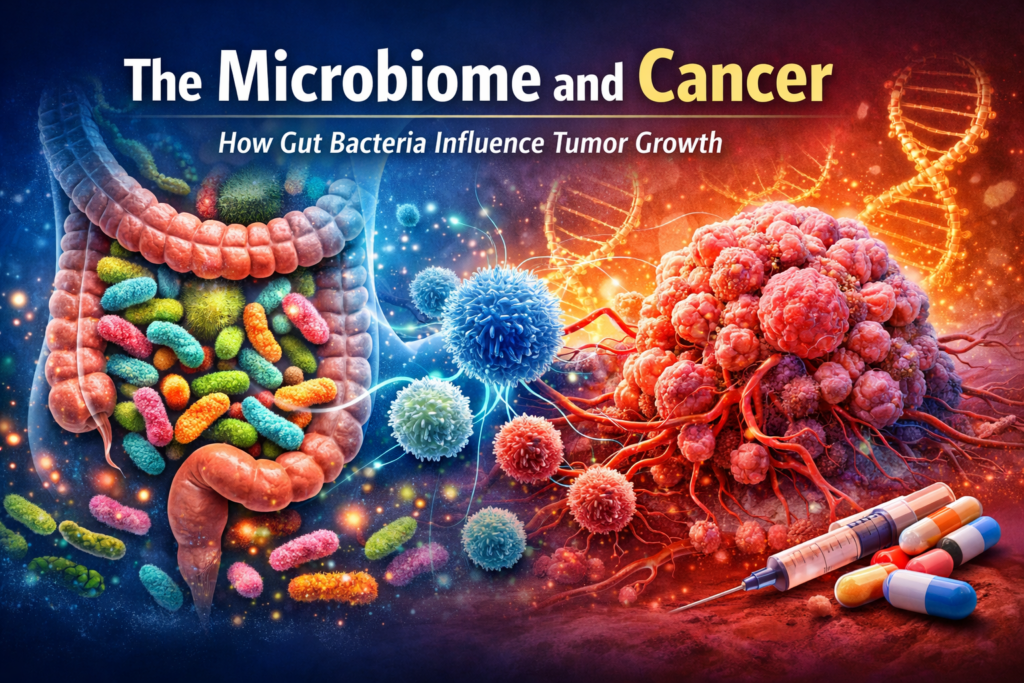
The Microbiome and Cancer: How Gut Bacteria Influence Tumor Growth
The human body is home to trillions of microorganisms that live on the skin, in the mouth, and especially in the digestive tract. Collectively, these microbes are known as the microbiome.
The gut microbiome contains thousands of species of bacteria that play essential roles in digestion, metabolism, immune function, and inflammation control. In recent years, scientists have discovered that the microbiome may also influence cancer development, tumor growth, and response to treatment.
Research suggests that healthy gut bacteria can strengthen immune defenses against tumors, while harmful imbalances in the microbiome may contribute to chronic inflammation and cancer progression.
Understanding how the microbiome affects cancer is becoming one of the most exciting areas in modern oncology.
What Is the Gut Microbiome?
The gut microbiome refers to the complex community of microorganisms living in the digestive system.
These microbes include:
• bacteria
• fungi
• viruses
• archaea
Most are harmless or beneficial.
The microbiome helps regulate many critical biological processes including:
• digestion of food
• production of vitamins
• metabolism of nutrients
• immune system training
• inflammation control
• protection against harmful pathogens
Scientists estimate that the human gut contains over 100 trillion microbes, making it one of the most complex ecosystems in the body.
Learn more about how metabolism affects cancer in this guide:
Cancer Metabolism Explained
https://helping4cancer.com/cancer-metabolism-explained/
How the Microbiome Influences Cancer
Researchers now recognize that the microbiome can affect cancer through several biological mechanisms.
These include:
- Immune system regulation
- Chronic inflammation
- Metabolic signaling
- Chemotherapy response
- Tumor microenvironment changes
Each of these factors can influence how cancer develops and how effectively treatments work.
Microbiome and the Immune System
One of the most important roles of the microbiome is training and regulating the immune system.
Nearly 70% of the immune system is located in the gut, where immune cells constantly interact with gut bacteria.
Healthy microbes help stimulate immune defenses such as:
• T cells
• Natural Killer (NK) cells
• macrophages
• dendritic cells
These immune cells are essential for detecting and destroying abnormal cells before they develop into cancer.
When the microbiome becomes imbalanced — a condition called dysbiosis — immune defenses may weaken.
Dysbiosis can lead to:
• reduced immune surveillance
• increased inflammation
• immune suppression around tumors
Learn more about immune defenses in cancer:
Cancer Immune System
https://helping4cancer.com/cancer-immune-system/
Chronic Inflammation and Cancer
Inflammation is a normal immune response that helps the body fight infection and heal injuries.
However, chronic inflammation can contribute to cancer development.
Certain harmful gut bacteria produce toxins and inflammatory signals that can damage tissues and promote tumor formation.
Examples include:
• activation of inflammatory cytokines
• stimulation of NF-κB signaling
• oxidative stress
• DNA damage
Long-term inflammation can create an environment where cancer cells are more likely to survive and grow.
Research published in Nature Reviews Cancer explains how microbial inflammation contributes to tumor development.
Read more:
https://www.nature.com/articles/nrc.2017.10
The Microbiome and Cancer Metabolism
The microbiome also influences how the body processes nutrients and produces metabolic compounds.
Some gut bacteria produce beneficial molecules called short-chain fatty acids (SCFAs), including:
• butyrate
• acetate
• propionate
These compounds help:
• reduce inflammation
• support colon health
• regulate immune responses
• influence gene expression
Butyrate in particular has been shown to have anti-cancer properties in colon cells.
It may help regulate epigenetic changes, which affect how genes are turned on or off.
Learn more about metabolic therapy in cancer:
Fasting and Cancer
https://helping4cancer.com/fasting-and-cancer/
The Microbiome and Chemotherapy Response
One of the most fascinating discoveries in recent years is that the microbiome may influence how well cancer treatments work.
Several studies have shown that certain gut bacteria improve responses to chemotherapy and immunotherapy.
In particular, beneficial bacteria may enhance the effectiveness of immune checkpoint inhibitors, which are modern drugs designed to activate immune attacks on cancer.
A landmark study published in Science found that patients with certain gut bacteria responded significantly better to immunotherapy.
Study reference:
https://www.science.org/doi/10.1126/science.aao3290
Researchers believe the microbiome may influence treatment through:
• immune activation
• inflammatory signaling
• drug metabolism
• tumor microenvironment changes
This has led scientists to explore whether modifying the microbiome could improve cancer therapy outcomes.
Harmful Bacteria Linked to Cancer
While many microbes support health, certain bacteria have been associated with increased cancer risk.
Examples include:
Helicobacter pylori
This bacterium infects the stomach and is strongly linked to stomach cancer.
Fusobacterium nucleatum
This bacterium has been associated with colorectal cancer and may help tumors evade immune detection.
Escherichia coli (certain strains)
Some strains produce toxins that can damage DNA and promote tumor formation.
These discoveries highlight how the balance of microbes in the gut can influence cancer risk.
The Tumor Microenvironment and the Microbiome
The tumor microenvironment refers to the environment surrounding a tumor.
It includes:
• immune cells
• blood vessels
• signaling molecules
• connective tissue
• microbes
Recent research suggests that bacteria may even exist inside tumors themselves.
These microbes may affect how tumors grow and respond to treatment.
Scientists are still studying this relationship, but early research suggests that microbes may influence:
• tumor metabolism
• immune suppression
• drug resistance
Understanding this interaction may help researchers design better therapies in the future.
Learn more about the tumor environment:
Tumor Microenvironment
https://helping4cancer.com/tumor-microenvironment/
Diet, the Microbiome, and Cancer
Diet is one of the most powerful factors that shapes the microbiome.
Certain foods help promote beneficial bacteria, while others may encourage harmful microbes.
Foods that support a healthy microbiome include:
• fiber-rich vegetables
• fermented foods
• polyphenol-rich plants
• whole grains
• nuts and seeds
Fiber feeds beneficial bacteria that produce short-chain fatty acids like butyrate.
On the other hand, diets high in processed foods, sugar, and refined carbohydrates may disrupt the microbiome and promote inflammation.
Because of this connection, many researchers believe that diet may influence cancer risk partly through its effects on the microbiome.
The Future of Microbiome Research in Cancer
The microbiome is one of the fastest-growing areas of cancer research.
Scientists are currently studying new therapies that modify gut bacteria to improve cancer treatment.
Some experimental approaches include:
Probiotics
Supplements containing beneficial bacteria.
Prebiotics
Fibers that feed healthy microbes.
Fecal microbiota transplantation (FMT)
Transfer of gut bacteria from healthy donors.
Early clinical trials suggest that altering the microbiome may improve responses to immunotherapy and chemotherapy.
While research is still evolving, the microbiome may eventually become a key factor in personalized cancer treatment.
Natural Compounds That Support the Microbiome
Several natural compounds may help support beneficial gut bacteria and immune function.
These include:
Beta-glucans
Found in mushrooms such as turkey tail and reishi, beta-glucans stimulate immune cells including NK cells and macrophages.
Learn more:
Beta-Glucans
https://helping4cancer.com/beta-glucans/
Polyphenols
Plant compounds found in green tea, berries, and herbs that support beneficial microbes.
Fermented foods
Such as yogurt, kefir, and sauerkraut, which introduce helpful bacteria into the gut.
Maintaining a healthy microbiome may support immune defenses and help regulate inflammation.
Key Takeaways
The microbiome is an essential part of human biology and may play a major role in cancer development and treatment.
Research shows that gut bacteria can influence:
• immune surveillance
• inflammation
• metabolism
• tumor growth
• chemotherapy response
A healthy microbiome supports immune defenses and helps maintain balance in the body, while microbial imbalances may contribute to cancer progression.
Although microbiome research is still evolving, scientists increasingly recognize that gut bacteria may become an important target for future cancer therapies.
Sources and Research
National Cancer Institute – Microbiome and Cancer
https://www.cancer.gov/about-cancer/causes-prevention/research/microbiome
Nature Reviews Cancer – Microbiome and Tumor Development
https://www.nature.com/articles/nrc.2017.10
Science – Gut Microbiome Influences Cancer Immunotherapy
https://www.science.org/doi/10.1126/science.aao3290
Harvard School of Public Health – Gut Microbiome Overview
https://www.hsph.harvard.edu/nutritionsource/microbiome/
Table of Contents