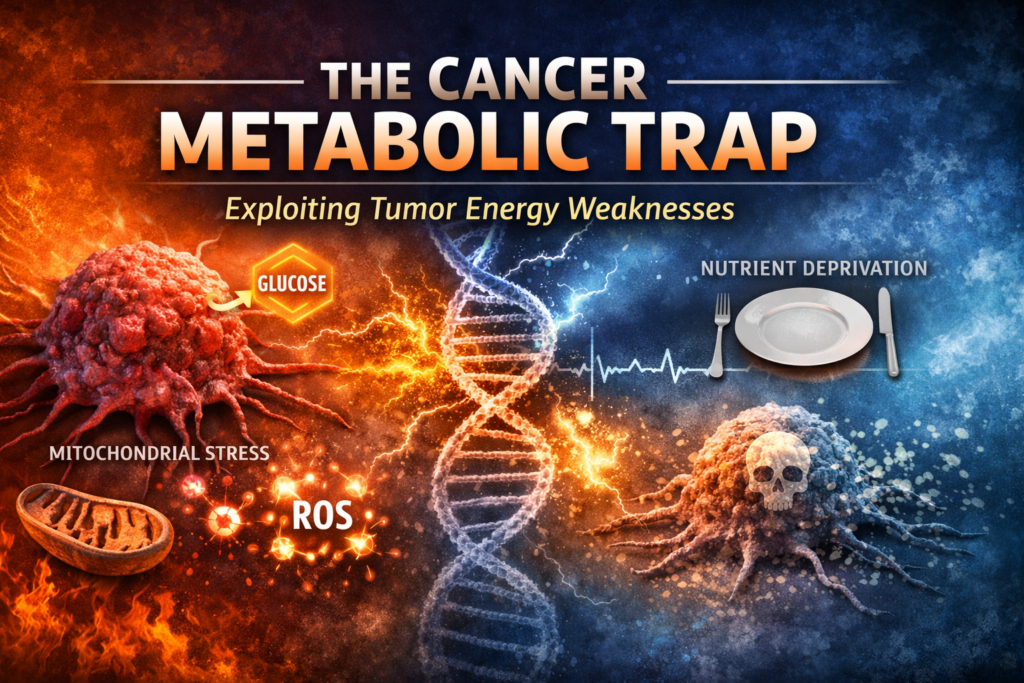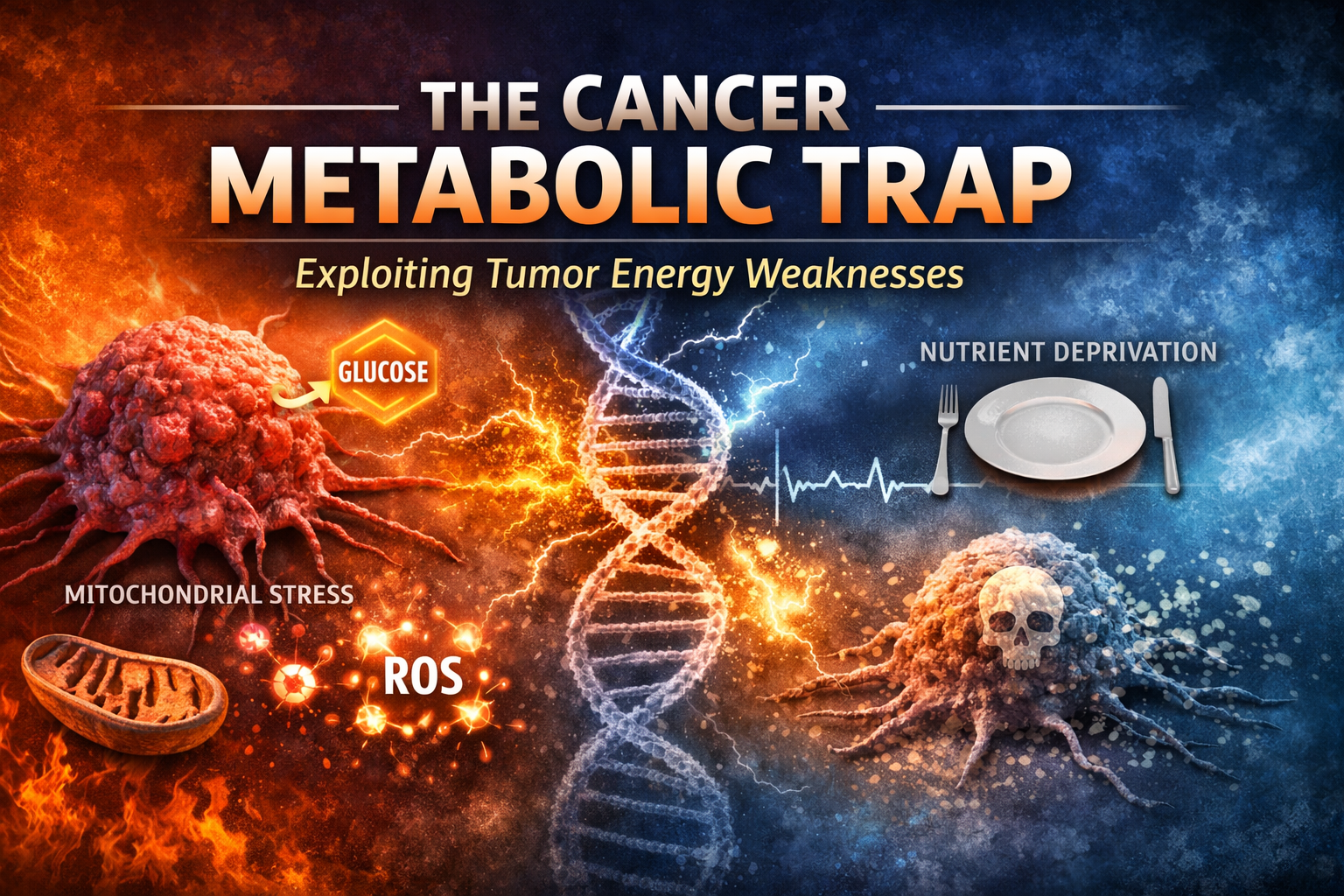
The Cancer Metabolic Trap:
Cancer cells grow quickly, divide rapidly, and consume enormous amounts of energy. But this aggressive growth comes at a cost. To survive and multiply, tumors often rely on fragile metabolic systems that are very different from those used by healthy cells.
Scientists increasingly describe this situation as a “cancer metabolic trap.”
In simple terms, cancer cells become locked into specific metabolic pathways that help them grow—but also create weaknesses that can potentially be targeted by therapy.
Understanding this concept is central to modern research in metabolic cancer therapy, which focuses on disrupting the energy systems that tumors depend on.
This article explains:
- What the cancer metabolic trap means
- Why tumor metabolism is vulnerable
- How glycolysis and mitochondrial stress affect cancer
- Why oxidative stress can harm tumor cells
- How metabolic strategies such as fasting and nutrient restriction are being studied
What Is the Cancer Metabolic Trap?
The cancer metabolic trap describes a biological situation where cancer cells become heavily dependent on specific energy pathways that are less flexible than those used by normal cells.
Healthy cells can generate energy in several ways. They can burn glucose, fatty acids, and ketones while adjusting metabolism depending on oxygen levels and nutrient availability.
Cancer cells often lose this flexibility.
Instead, many tumors become strongly dependent on:
- High glucose consumption
- Rapid glycolysis
- Altered mitochondrial function
- Constant nutrient supply
Because of these dependencies, tumors may struggle to adapt when these pathways are disrupted.
This metabolic rigidity creates what researchers call therapeutic vulnerabilities.
Learn more about cancer energy systems here:
Internal link: Cancer Metabolism
https://helping4cancer.com/cancer-metabolism-explained/
Why Cancer Cells Reprogram Their Metabolism
Cancer metabolism is different from normal metabolism because tumors prioritize rapid growth and replication over efficiency.
Healthy cells produce most of their energy using mitochondria through oxidative phosphorylation.
Cancer cells often rely on a process called aerobic glycolysis, commonly known as the Warburg Effect.
Even when oxygen is available, cancer cells convert glucose into lactate instead of fully oxidizing it in mitochondria.
This inefficient process produces less ATP but provides important growth advantages.
Benefits for tumors include:
- Faster energy generation
- Production of molecules needed for DNA and cell growth
- Adaptation to low oxygen environments
- Increased survival in hostile tumor environments
Because tumors rely so heavily on this metabolic shift, targeting glycolysis is an active area of cancer research.
External reference:
Glycolysis Dependence: A Major Tumor Weakness
One of the most important features of the cancer metabolic trap is glucose addiction.
Many tumors require extremely high levels of glucose to maintain rapid growth.
Cancer cells often:
- Overexpress glucose transporters (GLUT1)
- Increase glycolysis enzymes
- Consume glucose at rates far higher than normal tissue
This phenomenon is so strong that doctors can detect tumors using PET scans, which track glucose uptake in the body.
Because of this dependence, researchers are studying therapies designed to reduce glucose availability or disrupt glycolysis.
Potential strategies include:
- Metabolic therapy approaches
- Fasting or fasting-mimicking diets
- Glycolysis-targeting drugs
- Ketogenic dietary strategies
Internal link:
Fasting and Cancer
https://helping4cancer.com/fasting-cancer-therapy/
External research reference:
Mitochondrial Stress in Tumor Cells
Although cancer cells rely heavily on glycolysis, mitochondria still play an important role in tumor survival.
However, cancer mitochondria are often damaged, unstable, or metabolically altered.
These dysfunctional mitochondria create a dangerous situation for tumor cells.
When stressed, mitochondria can generate large amounts of reactive oxygen species (ROS).
Normal cells have strong antioxidant systems that can neutralize ROS.
Cancer cells often operate near the edge of oxidative stress, meaning even small increases in ROS can push them into cell death pathways.
This is one reason many cancer treatments work by increasing oxidative stress.
Examples include:
- Radiation therapy
- Certain chemotherapies
- Experimental metabolic therapies
Internal link:
Reactive Oxygen Species and Cancer
https://helping4cancer.com/reactive-oxygen-species-cancer/
External reference:
Reactive Oxygen Species and the Metabolic Trap
Reactive Oxygen Species (ROS) are chemically reactive molecules formed during cellular metabolism.
Examples include:
- Superoxide
- Hydrogen peroxide
- Hydroxyl radicals
At moderate levels, ROS help regulate cell signaling.
But when ROS levels rise too high, they can damage:
- DNA
- Proteins
- Cell membranes
- Mitochondria
Cancer cells already produce higher levels of ROS than normal cells due to their rapid metabolism.
This means they are often closer to the threshold of oxidative damage.
Therapies that further increase ROS may overwhelm cancer cells while leaving healthy cells relatively unharmed.
This vulnerability is a key component of the metabolic trap strategy.
External reference:
Nutrient Restriction and Metabolic Pressure
Another important aspect of the cancer metabolic trap involves nutrient availability.
Tumors require large amounts of nutrients to maintain growth, including:
- Glucose
- Glutamine
- Iron
- Lipids
- Amino acids
When nutrient supply decreases, tumors may struggle to adapt.
Several metabolic strategies aim to temporarily reduce nutrient availability to cancer cells.
These include:
- Short-term fasting
- Calorie restriction
- Ketogenic dietary strategies
- Metabolic drugs that limit nutrient use
Research suggests that some of these strategies may increase sensitivity to chemotherapy and radiation by placing tumors under metabolic stress.
External research reference:
The Role of the Tumor Microenvironment
Cancer cells do not exist in isolation. They are surrounded by a complex ecosystem called the tumor microenvironment.
This environment includes:
- Immune cells
- Fibroblasts
- Blood vessels
- Inflammatory signals
- Nutrient gradients
Tumors often manipulate their environment to support their metabolic needs.
For example, cancer cells may:
- Stimulate blood vessel growth to increase nutrient delivery
- Release signals that suppress immune attacks
- Modify surrounding cells to provide metabolic support
These adaptations help tumors survive but can also create additional weaknesses that therapies may exploit.
External reference:
Metabolic Therapy: A Growing Research Field
Because cancer metabolism differs from normal metabolism, researchers are increasingly exploring metabolic therapies as a complementary approach to conventional treatment.
Areas of active investigation include:
- Glycolysis inhibitors
- Mitochondrial targeting drugs
- Fasting-mimicking diets
- Ketogenic metabolic therapy
- ROS-inducing treatments
- Iron metabolism disruption
- Glutamine restriction
The goal of metabolic therapy is not necessarily to replace standard treatment, but to increase tumor vulnerability.
By stressing cancer metabolism, treatments such as chemotherapy or radiation may become more effective.
External research:
Limitations and Ongoing Research
Although metabolic therapy is an exciting area of research, it is important to recognize that much of the science is still evolving.
Tumors are highly adaptable and may shift their metabolism in response to therapy.
Different cancers also use different metabolic strategies.
For example:
- Some tumors rely heavily on glucose
- Others depend on glutamine
- Some use fatty acids for energy
- Certain cancers can even adapt to ketones
Because of this complexity, personalized approaches to metabolic therapy are likely to become increasingly important.
Patients should always discuss any dietary or metabolic interventions with their medical team.
Key Takeaways: Understanding the Cancer Metabolic Trap
The cancer metabolic trap highlights a fundamental weakness in tumor biology.
While cancer cells grow aggressively, their energy systems are often fragile and inflexible.
Major metabolic vulnerabilities include:
- Heavy reliance on glycolysis
- Increased oxidative stress
- Altered mitochondrial function
- High nutrient requirements
- Limited metabolic flexibility
By targeting these weaknesses, researchers hope to develop therapies that place cancer cells under metabolic pressure while sparing healthy tissue.
As our understanding of cancer metabolism continues to improve, exploiting the metabolic trap may become an increasingly important strategy in future cancer treatment.
Internal Links
Cancer Metabolism
https://helping4cancer.com/cancer-metabolism-explained/
Reactive Oxygen Species
https://helping4cancer.com/reactive-oxygen-species-cancer/
Fasting and Cancer
https://helping4cancer.com/fasting-cancer-therapy/
Table of Contents