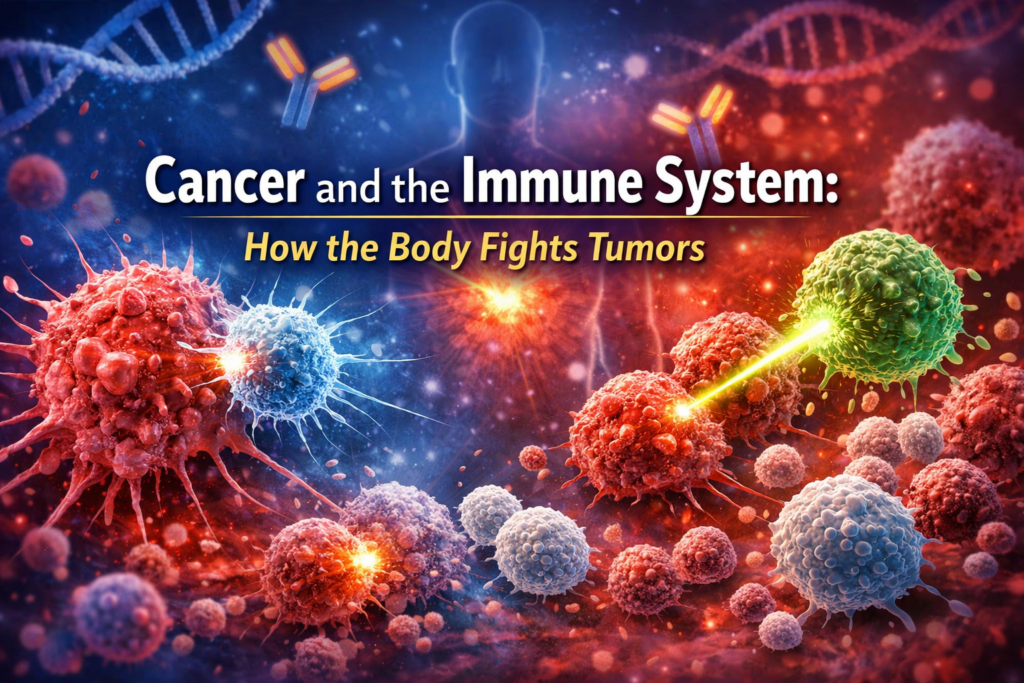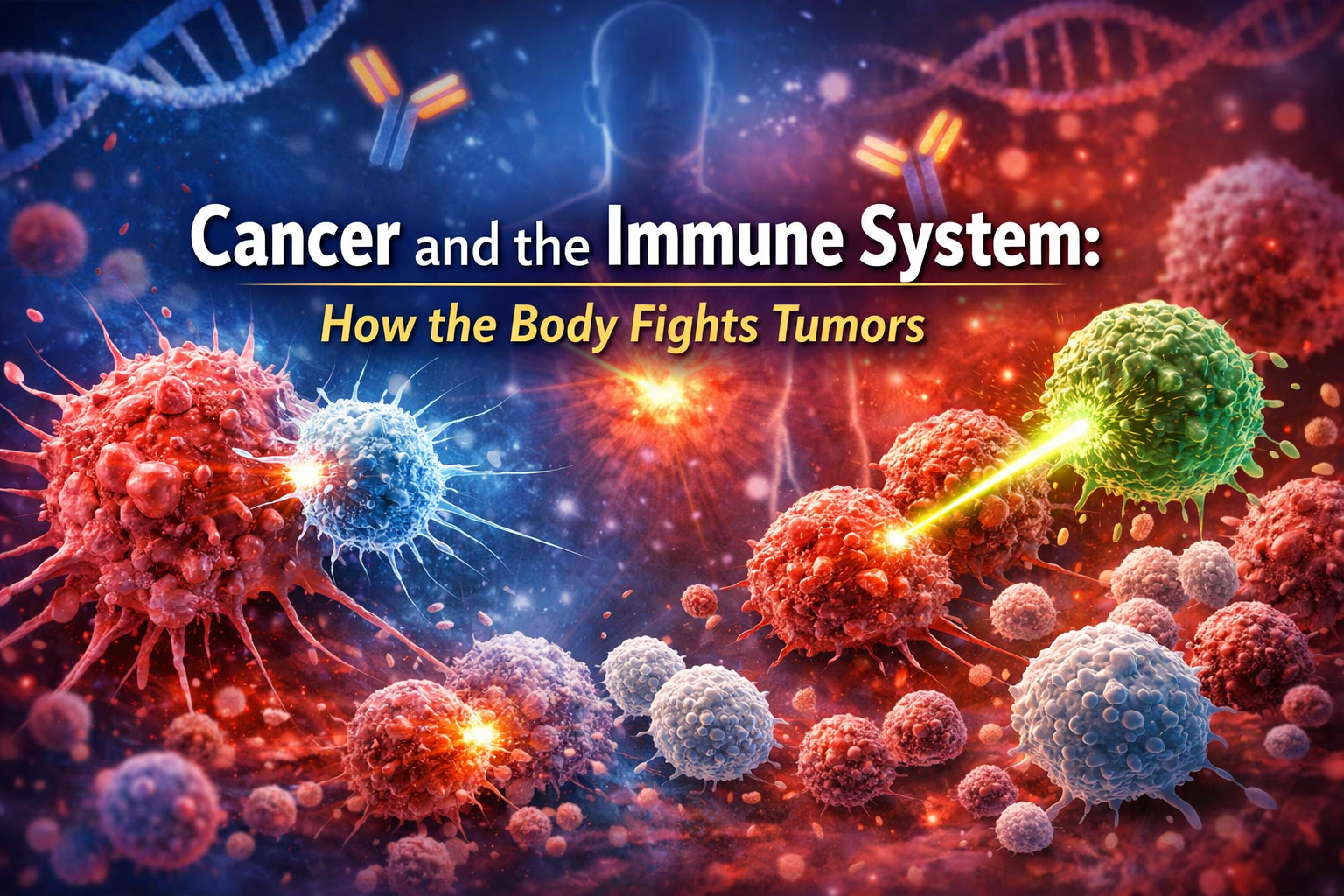
Cancer and the Immune System
Introduction
The human immune system constantly protects the body from infections, viruses, and abnormal cells. One of its most important roles is identifying and eliminating cancer cells before they can form tumors. Every day, the body produces thousands of abnormal cells through natural mutations. Most are destroyed by the immune system before they ever become dangerous.
However, cancer develops when some abnormal cells escape immune detection and begin to grow uncontrollably. Scientists now understand that cancer is not just a disease of uncontrolled cell growth — it is also a disease of immune system failure or immune system evasion.
Understanding how the immune system interacts with cancer is essential for developing modern cancer treatments, including immunotherapy, immune checkpoint inhibitors, and cancer vaccines.
This guide explains how the immune system fights cancer, the role of key immune cells such as natural killer (NK) cells and T cells, and how tumors develop strategies to evade immune destruction.
Immune Surveillance: The Body’s Cancer Detection System
The concept of immune surveillance describes the immune system’s ability to detect and eliminate abnormal cells before they develop into cancer.
Immune surveillance works through a network of immune cells that constantly scan tissues for signs of damage or mutation.
When a cell becomes cancerous, it often displays abnormal proteins known as tumor antigens on its surface. These antigens act like warning signals that alert immune cells something is wrong.
Specialized immune cells then attack and destroy the abnormal cell.
According to research published by the National Cancer Institute, immune surveillance is one of the body’s primary defenses against cancer development.
External reference:
Despite this protective system, some cancer cells evolve mechanisms to avoid detection.
This process leads to tumor development.
Key Immune Cells That Fight Cancer
Several immune cells play important roles in detecting and destroying cancer cells.
Two of the most important are natural killer cells and cytotoxic T cells.
Natural Killer (NK) Cells
Natural killer cells are part of the innate immune system, which provides the body’s first line of defense.
NK cells are unique because they can kill abnormal cells without prior exposure to the cancer.
They identify cells that lack normal immune markers called MHC molecules, which many cancer cells lose during mutation.
Once NK cells recognize a suspicious cell, they release toxic molecules that trigger cancer cell death.
These include:
• perforin
• granzymes
• cytokines
Perforin punches holes in the cancer cell membrane, while granzymes trigger programmed cell death known as apoptosis.
NK cells are particularly important for controlling early tumor formation.
Research published in the journal Nature Reviews Immunology shows NK cell activity is strongly associated with improved cancer outcomes.
External reference:
Many experimental cancer therapies now aim to enhance NK cell activity.
Cytotoxic T Cells (CD8 T Cells)
While NK cells respond rapidly, T cells provide a more targeted immune response.
Cytotoxic T cells recognize cancer cells through specific tumor antigens presented on the cell surface.
Once activated, CD8 T cells bind directly to cancer cells and destroy them.
Their killing mechanism is similar to NK cells and includes:
• perforin
• granzymes
• Fas ligand signaling
However, T cells must first be activated by another immune cell called a dendritic cell, which presents tumor antigens and teaches the immune system what to attack.
Because of this process, T cells can develop immune memory, allowing the body to recognize the same cancer if it returns later.
This is one of the reasons immunotherapy treatments can produce long-lasting responses.
More information:
Immune Editing: The Three Phases of Cancer and Immunity
Scientists describe the relationship between cancer and the immune system using a process called cancer immunoediting.
This process includes three phases.
1. Elimination Phase
During this phase, the immune system detects abnormal cells and destroys them.
NK cells, T cells, macrophages, and other immune cells cooperate to eliminate cancer cells before tumors develop.
This phase represents successful immune surveillance.
2. Equilibrium Phase
Sometimes a small number of cancer cells survive the elimination phase.
In this stage, the immune system contains the tumor but does not completely eliminate it.
Cancer cells remain dormant or grow slowly.
This phase may last years.
This phenomenon helps explain cancer dormancy and late recurrence.
Internal link:
3. Escape Phase
Eventually some cancer cells acquire mutations that allow them to evade immune detection.
Once tumors escape immune control, they begin to grow aggressively.
This is when cancer becomes clinically detectable.
Understanding this escape phase is critical for developing cancer immunotherapies.
How Cancer Evades the Immune System
Cancer cells evolve several strategies to avoid immune destruction.
These strategies are known as immune evasion mechanisms.
1. Immune Checkpoint Activation
Cancer cells often activate proteins that suppress immune responses.
The most well-known checkpoints are:
• PD-1
• PD-L1
• CTLA-4
These molecules act like brakes on the immune system.
When cancer cells express PD-L1, they bind to PD-1 receptors on T cells and shut them down.
Modern immunotherapy drugs called checkpoint inhibitors block these signals and restore immune attack.
Examples include drugs like pembrolizumab and nivolumab.
More information:
2. Creating an Immunosuppressive Tumor Microenvironment
Tumors also manipulate their surrounding environment.
They recruit immune-suppressive cells such as:
• regulatory T cells
• myeloid-derived suppressor cells
• tumor-associated macrophages
These cells release signals that weaken immune responses and protect the tumor.
Internal link:
3. Reducing Antigen Presentation
Some cancer cells stop displaying tumor antigens on their surface.
Without these signals, T cells cannot recognize the cancer.
This process effectively hides tumors from immune detection.
4. Chronic Inflammation
Chronic inflammation can also suppress immune responses and promote cancer growth.
Inflammatory signaling molecules such as NF-κB and cytokines can create a tumor-friendly environment.
Internal link:
Immunotherapy: Harnessing the Immune System to Fight Cancer
One of the most exciting developments in modern medicine is cancer immunotherapy.
Instead of attacking cancer directly with chemotherapy or radiation, immunotherapy strengthens the body’s immune response against tumors.
Major types of immunotherapy include:
Checkpoint Inhibitors
These drugs remove immune system brakes so T cells can attack tumors.
CAR T Cell Therapy
This treatment engineers a patient’s T cells to recognize and destroy cancer cells.
Cancer Vaccines
Vaccines train the immune system to identify tumor antigens.
Cytokine Therapy
Proteins like interferons stimulate immune cell activity.
Immunotherapy has produced remarkable results in cancers such as melanoma, lung cancer, and certain blood cancers.
However, not all tumors respond, which is why researchers continue studying immune-tumor interactions.
The Role of Metabolism in Immune Function
The immune system is closely connected to cellular metabolism.
Cancer cells often compete with immune cells for nutrients such as glucose, amino acids, and oxygen.
Tumors also produce metabolic byproducts that suppress immune responses.
Understanding cancer metabolism may help improve immune-based therapies.
Internal link:
Supporting Immune Surveillance
While cancer immunology is complex, several biological factors influence immune performance.
These include:
• adequate vitamin D levels
• gut microbiome health
• sleep and circadian rhythm
• inflammation control
• metabolic balance
Research continues to explore how nutrition, lifestyle, and microbiome health influence immune responses to cancer.
Internal link:
Conclusion
The immune system plays a critical role in protecting the body from cancer. Through processes like immune surveillance, specialized immune cells such as NK cells and cytotoxic T cells constantly search for abnormal cells and destroy them.
However, cancer is an adaptive disease. Tumors evolve mechanisms to evade immune detection, suppress immune responses, and create environments that allow them to grow.
Modern cancer research increasingly focuses on restoring the immune system’s ability to recognize and eliminate tumors.
Immunotherapy, metabolic therapies, and immune-support strategies are all built on the understanding that the immune system is one of the most powerful tools in the fight against cancer.
As research advances, strengthening immune surveillance may become one of the most important strategies for preventing cancer progression and recurrence.
External References
National Cancer Institute
https://www.cancer.gov
Nature Reviews Immunology
https://www.nature.com/articles/nri3588
American Cancer Society Immunotherapy Guide
https://www.cancer.org/treatment/treatments-and-side-effects/treatment-types/immunotherapy.html
NCBI Immunology Overview
https://www.ncbi.nlm.nih.gov/books/NBK27146/
Table of Contents