What Are Exosomes?
Exosomes are small extracellular vesicles released by nearly all cells, including cancer cells. They typically range from 30 to 150 nanometers in size and carry a complex cargo of proteins, lipids, RNA, and signaling molecules.
These vesicles act as communication tools between cells. In healthy tissue, exosomes help regulate normal physiological processes such as immune signaling and tissue repair. In cancer, however, this system becomes hijacked.
Tumor-derived exosomes become powerful messengers that support cancer survival, growth, and spread. They enable tumors to influence nearby cells, reshape distant tissues, and coordinate complex survival strategies.
How Exosomes Are Formed
Exosomes originate inside the cell through the endosomal pathway. This process begins when the cell membrane folds inward, forming early endosomes.
These structures mature into multivesicular bodies (MVBs), which contain many small vesicles inside them. When MVBs fuse with the cell membrane, they release these vesicles into the extracellular environment as exosomes.
Key features of exosome formation include:
- Selective packaging of proteins and RNA
- Lipid membrane protection for cargo stability
- Targeted release into the tumor microenvironment
This controlled packaging allows cancer cells to send specific signals that promote survival and adaptation.
The Cargo Inside Cancer Exosomes
Cancer-derived exosomes carry biologically active materials that directly influence other cells.
Proteins
Exosomes often contain proteins involved in survival pathways such as:
- PI3K/Akt signaling components
- Growth factors and receptors
- Enzymes that modify the extracellular matrix
These proteins can activate proliferation and resistance mechanisms in recipient cells.
RNA (miRNA and mRNA)
MicroRNAs (miRNAs) inside exosomes can regulate gene expression in target cells. These small molecules can:
- Suppress tumor suppressor genes
- Activate oncogenic pathways
- Reprogram immune cells
Lipids and Metabolic Signals
Exosomes also transport lipids and metabolic enzymes that influence energy production and membrane structure in recipient cells.
This cargo plays a role in metabolic reprogramming, a hallmark of cancer.
Exosomes and the Tumor Microenvironment
The tumor microenvironment is the surrounding ecosystem of cells, blood vessels, immune cells, and structural components that interact with cancer.
Exosomes are central to shaping this environment.
Remodeling Surrounding Tissue
Cancer exosomes can:
- Stimulate fibroblasts to become cancer-associated fibroblasts (CAFs)
- Increase extracellular matrix breakdown
- Promote angiogenesis (new blood vessel formation)
These changes create a supportive environment for tumor expansion.
Promoting Inflammation
Exosomes can trigger chronic inflammation by activating signaling pathways such as:
- NF-κB
- STAT3
This inflammatory environment supports tumor growth and protects cancer cells from destruction.
Exosomes and Immune Suppression
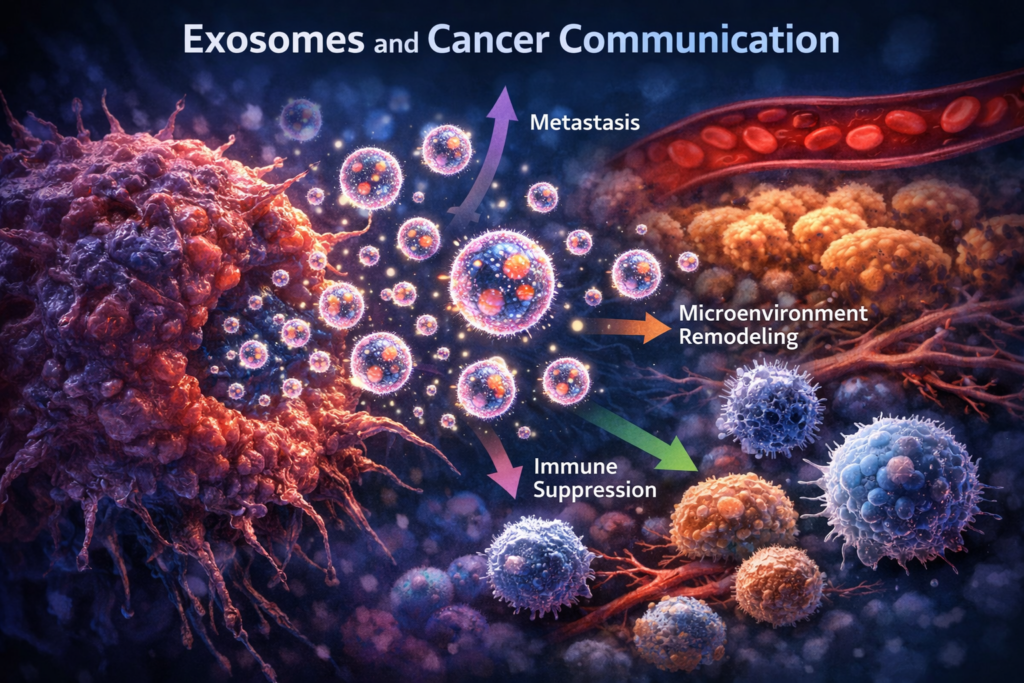
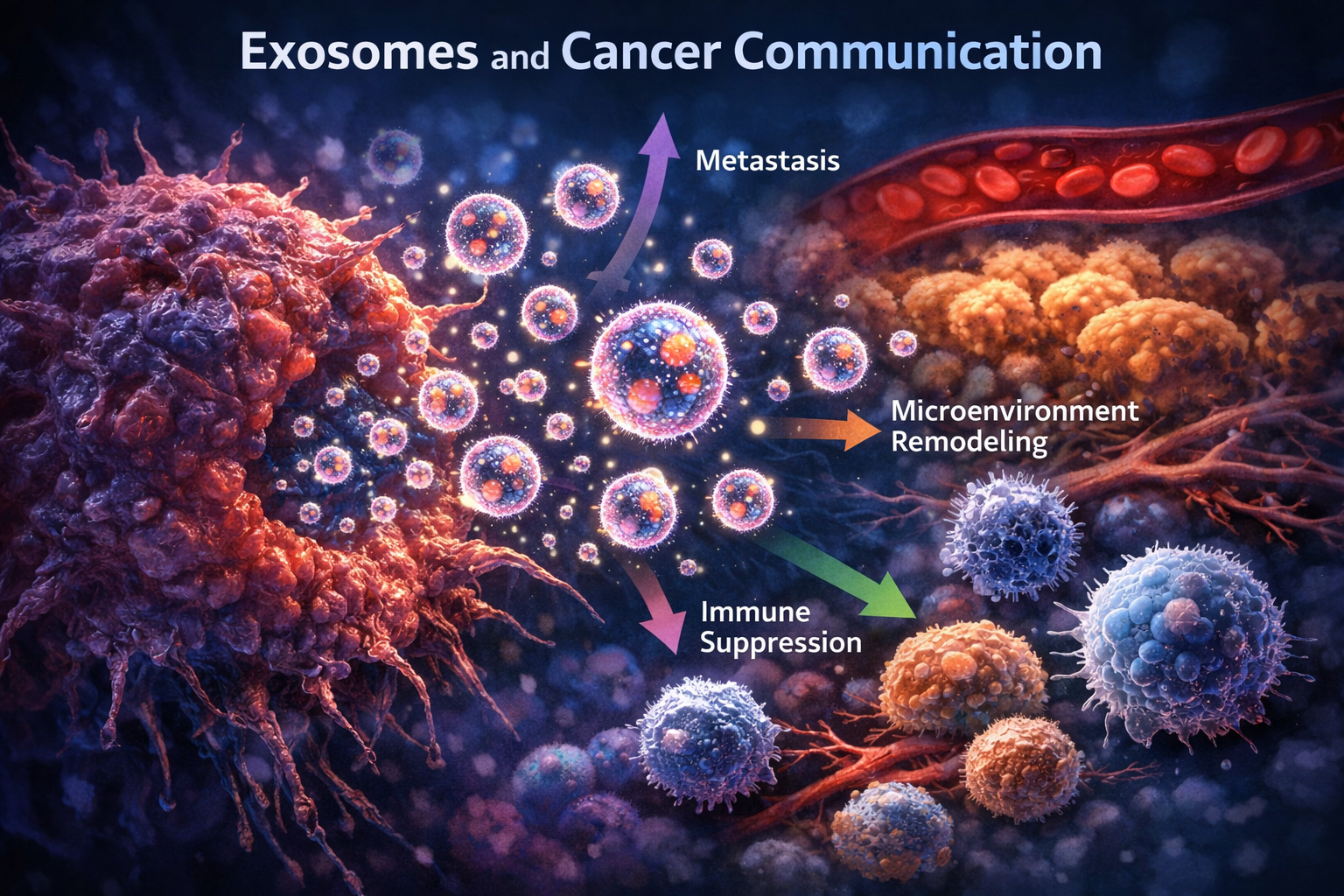
One of the most critical roles of cancer exosomes is suppressing the immune system.
They interfere with both innate and adaptive immunity.
Effects on T Cells
Exosomes can:
- Reduce T cell activation
- Induce T cell exhaustion
- Promote regulatory T cell (Treg) expansion
This weakens the body’s ability to recognize and destroy cancer cells.
Effects on NK Cells
Natural killer (NK) cells are essential for identifying abnormal cells. Tumor exosomes can:
- Downregulate activating receptors on NK cells
- Reduce cytotoxic activity
- Impair immune surveillance
Effects on Macrophages
Exosomes can polarize macrophages toward a tumor-supportive (M2) phenotype, which:
- Promotes tissue repair instead of tumor destruction
- Enhances angiogenesis
- Supports metastasis
Through these mechanisms, cancer creates an immune-privileged environment.
Exosomes and Metastasis
Metastasis is the process by which cancer spreads to distant organs. Exosomes play a key role in preparing these distant sites before cancer cells arrive.
Pre-Metastatic Niche Formation
Tumor-derived exosomes travel through the bloodstream and accumulate in specific organs.
There, they:
- Modify local cells
- Increase vascular permeability
- Recruit bone marrow-derived cells
This creates a “pre-metastatic niche” that is more favorable for cancer cell colonization.
Organ Targeting
Exosomes contain surface molecules that determine where they travel in the body.
For example:
- Certain integrins guide exosomes to the lungs
- Others direct them to the liver or brain
This targeting helps explain why certain cancers preferentially metastasize to specific organs.
Exosomes and Cancer Metabolism
Cancer cells rely heavily on altered metabolism to survive and grow. Exosomes contribute to this metabolic reprogramming.
Enhancing Glycolysis
Exosomes can transfer enzymes and signals that increase glycolysis, also known as the Warburg effect.
This allows cancer cells to:
- Produce energy rapidly
- Generate building blocks for growth
Supporting Mitochondrial Adaptation
Exosomes can influence mitochondrial function in surrounding cells by:
- Delivering mitochondrial DNA or proteins
- Altering oxidative phosphorylation
- Increasing resistance to oxidative stress
Redox Balance and ROS
Exosomes help cancer cells manage reactive oxygen species (ROS). While ROS can damage cells, controlled levels support signaling and growth.
Exosomes may:
- Transfer antioxidant enzymes
- Buffer oxidative stress in tumor cells
- Maintain survival during metabolic stress
This balance allows cancer cells to use ROS strategically without triggering cell death.
Exosomes and Drug Resistance
One of the most challenging aspects of cancer treatment is resistance to therapy. Exosomes contribute significantly to this problem.
Drug Efflux and Detoxification
Exosomes can remove chemotherapy drugs from cancer cells, reducing their effectiveness.
They can also:
- Carry drug-metabolizing enzymes
- Neutralize toxic compounds
Transfer of Resistance Traits
Exosomes can transfer resistance-related molecules between cells, including:
- Drug-resistant proteins
- miRNAs that suppress apoptosis
- Survival pathway activators
This allows resistance to spread across tumor populations.
Exosomes and Angiogenesis
Tumors require a constant blood supply to grow. Exosomes promote angiogenesis by signaling nearby endothelial cells.
They stimulate:
- Vascular endothelial growth factor (VEGF) pathways
- Endothelial cell proliferation
- Blood vessel formation
This ensures tumors receive oxygen and nutrients needed for expansion.
Clinical Implications of Exosomes in Cancer
Understanding exosomes has significant implications for cancer diagnosis and treatment.
Biomarkers for Early Detection
Exosomes are present in blood, urine, and other body fluids, making them valuable for non-invasive testing.
They can provide:
- Tumor-specific RNA signatures
- Protein markers of disease progression
- Real-time monitoring of treatment response
Therapeutic Targets
Blocking exosome production or uptake could disrupt cancer communication networks.
Potential strategies include:
- Inhibiting exosome release pathways
- Targeting exosome surface proteins
- Blocking uptake by recipient cells
Drug Delivery Systems
Researchers are also exploring exosomes as delivery vehicles for therapy.
Because they are naturally occurring and biocompatible, exosomes can:
- Carry drugs directly to tumor cells
- Reduce off-target toxicity
- Improve treatment precision
Why Exosomes Matter in Cancer Survival
Exosomes are not just passive byproducts. They are active participants in cancer biology.
They enable tumors to:
- Communicate across long distances
- Adapt to stress and treatment
- Manipulate the immune system
- Prepare distant organs for metastasis
This makes them a central component of the tumor survival network.
From a metabolic perspective, exosomes help coordinate energy use, redox balance, and cellular adaptation. From a signaling perspective, they amplify pathways such as PI3K/Akt, STAT3, and NF-κB.
These combined effects make cancer more resilient and harder to treat.
Integrating Exosomes Into a Broader Cancer Framework
Exosomes should be understood alongside other key cancer mechanisms.
They interact with:
- Tumor survival pathways
https://helping4cancer.com/tumor-survival-network/ - Cancer and oxidative stress
https://helping4cancer.com/cancer-oxidative-stress/ - Cancer and mitochondria
https://helping4cancer.com/cancer-and-mitochondria/ - Metabolic therapy for cancer
https://helping4cancer.com/metabolic-therapy-cancer/ - EMT and cancer metastasis
https://helping4cancer.com/emt-cancer-metastasis/
Together, these systems form an interconnected network that supports tumor progression.
External Research and References
For deeper exploration, the following sources provide high-quality research on exosomes and cancer:
National Institutes of Health (NIH) – https://www.nih.gov
PubMed – https://pubmed.ncbi.nlm.nih.gov
Nature Reviews Cancer – https://www.nature.com/nrc/
Journal of Extracellular Vesicles – https://www.tandfonline.com/toc/zjev20/current
National Cancer Institute – https://www.cancer.gov
These resources explore the molecular biology, clinical applications, and emerging therapies related to exosomes.
Conclusion
Exosomes represent one of the most advanced communication systems used by cancer. They allow tumors to extend their influence beyond their immediate environment, coordinating growth, immune evasion, and metastasis.
By transporting proteins, RNA, and metabolic signals, exosomes reshape both local and distant tissues to favor cancer survival.
Understanding exosomes provides critical insight into how cancer behaves as a system rather than a single disease. It also opens the door to new diagnostic tools and therapeutic strategies.
As research continues, targeting exosome signaling may become a key approach in disrupting cancer progression and improving treatment outcomes.
Table of Contents