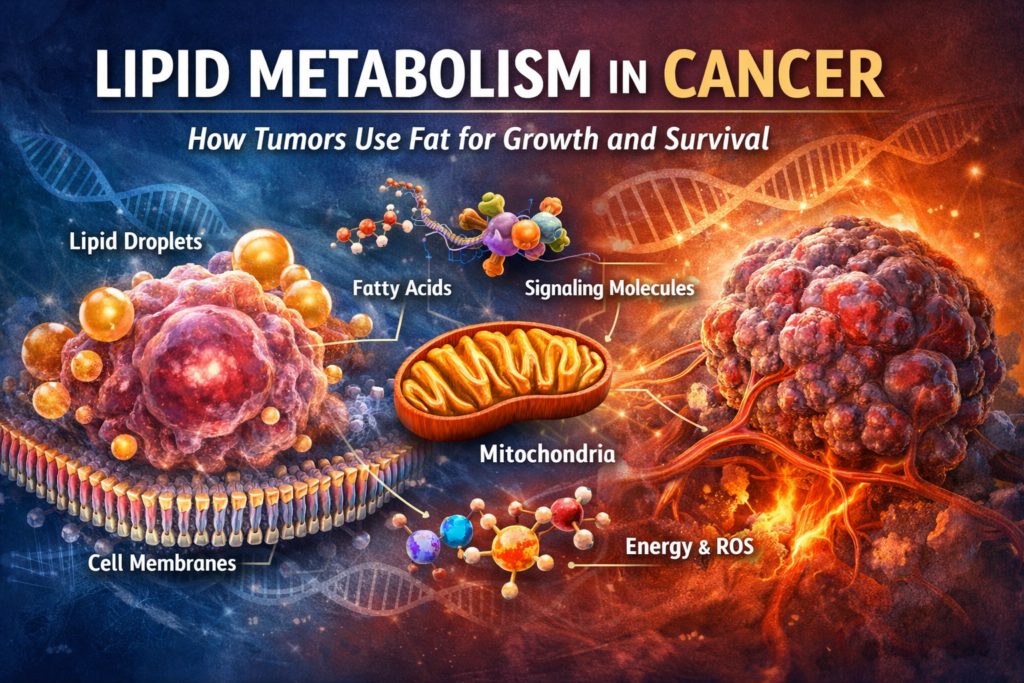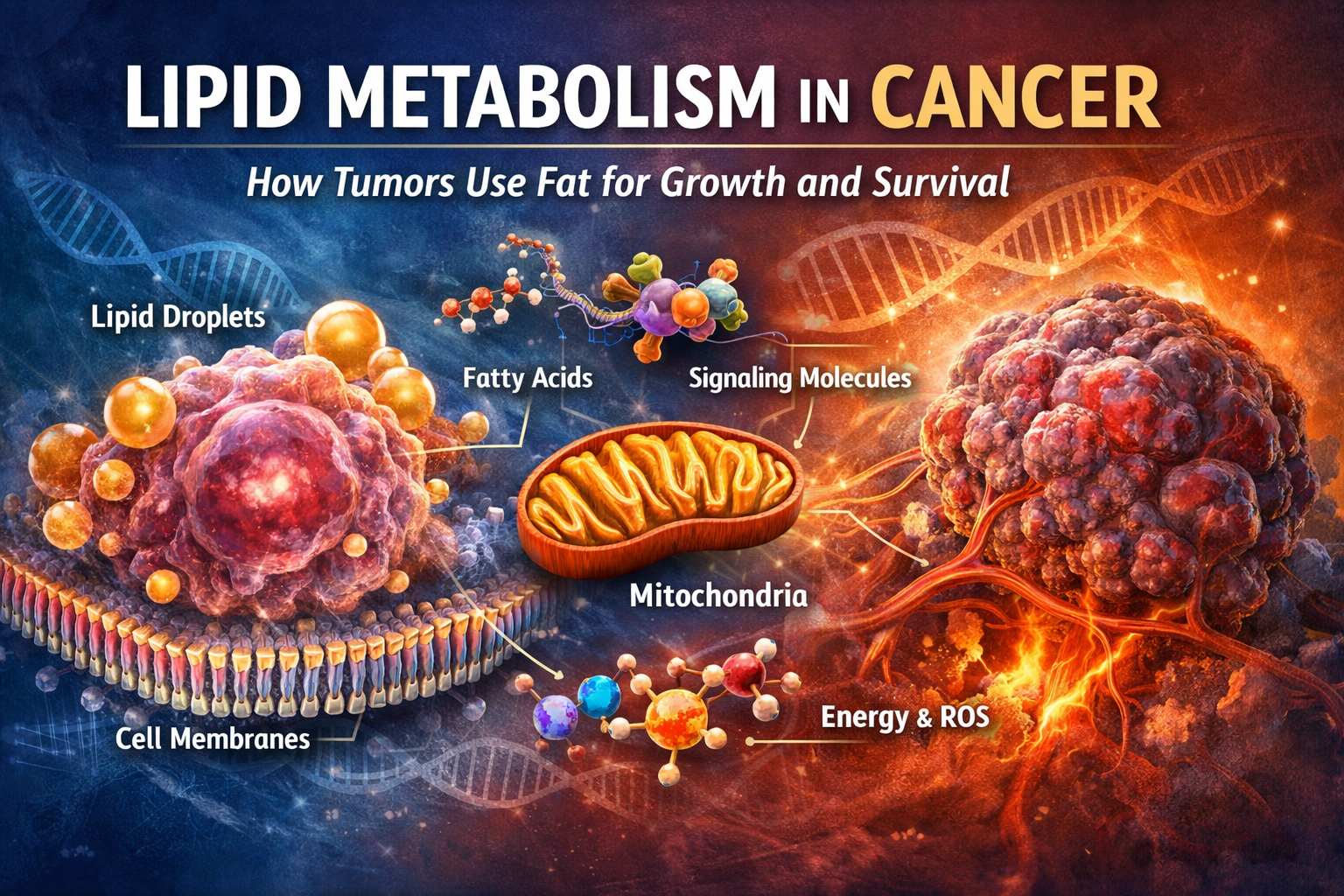
Lipid metabolism plays a central role in cancer biology. While glucose metabolism often receives the most attention, cancer cells also rely heavily on fats to support rapid growth, structural integrity, and survival under stress.
Lipids are not just energy sources. They are essential building blocks for cell membranes, signaling molecules, and regulators of cellular processes. Cancer cells reprogram lipid metabolism to meet these demands, creating a flexible system that supports tumor progression even when nutrients are limited.
Understanding how lipid metabolism works in cancer reveals why tumors are so resilient and highlights potential metabolic vulnerabilities.
What Is Lipid Metabolism?
Lipid metabolism refers to how cells synthesize, store, and break down fats. In normal cells, lipid metabolism is tightly regulated and responds to energy needs.
In cancer cells, this regulation is altered. Tumors increase lipid production and uptake to support uncontrolled proliferation and survival.
Key components of lipid metabolism include:
- Fatty acid synthesis (creating new fats)
- Fatty acid oxidation (breaking down fats for energy)
- Lipid storage in droplets
- Lipid signaling pathways
These processes are often simultaneously activated in cancer, creating a highly adaptive metabolic system.
Why Cancer Cells Depend on Lipids
Cancer cells require lipids for three major reasons:
1. Membrane Production
Rapidly dividing cancer cells must constantly build new cell membranes. Lipids such as phospholipids and cholesterol are essential components.
Without sufficient lipid supply, cell division cannot proceed efficiently.
2. Energy Production
Although cancer cells often rely on glycolysis, they can switch to fatty acid oxidation when needed. This provides a dense energy source during metabolic stress.
Fatty acids produce more ATP per molecule than glucose, making them valuable during nutrient scarcity.
3. Signaling and Survival
Lipids act as signaling molecules that regulate:
- Cell growth pathways (PI3K/Akt, mTOR)
- Inflammation (eicosanoids)
- Apoptosis resistance
This allows cancer cells to adapt to hostile environments, including chemotherapy and immune attack.
De Novo Lipid Synthesis in Cancer
One of the defining features of cancer metabolism is the activation of de novo lipid synthesis.
Instead of relying on dietary fats, cancer cells produce their own lipids internally.
Key Enzymes Involved
- Fatty acid synthase (FASN)
- Acetyl-CoA carboxylase (ACC)
- ATP citrate lyase (ACLY)
These enzymes convert glucose-derived carbon into fatty acids.
Why This Matters
Even in lipid-rich environments, cancer cells prefer to synthesize their own fats. This provides:
- Control over lipid composition
- Rapid availability for membrane production
- Resistance to external nutrient fluctuations
Overexpression of FASN is associated with aggressive tumors and poor prognosis.
Fatty Acid Oxidation (FAO) and Cancer Survival
Fatty acid oxidation allows cancer cells to break down fats for energy and metabolic intermediates.
This pathway becomes especially important under stress conditions such as:
- Low glucose availability
- Hypoxia
- Treatment-induced metabolic pressure
Benefits of FAO in Cancer
- Sustains ATP production during stress
- Supports NADPH generation for redox balance
- Helps maintain mitochondrial function
FAO is commonly upregulated in metastatic and therapy-resistant cancer cells.
Lipid Uptake and the Tumor Microenvironment
Cancer cells do not rely solely on internal lipid production. They also increase lipid uptake from their surroundings.
Mechanisms of Lipid Uptake
- CD36 transporter for fatty acids
- LDL receptors for cholesterol
- Uptake of lipoproteins from circulation
Role of the Tumor Microenvironment
The tumor microenvironment often supplies lipids through:
- Adipocytes (fat cells)
- Circulating lipoproteins
- Inflammatory cells
This creates a metabolic partnership where surrounding tissues support tumor growth.
Lipid Droplets and Energy Storage
Cancer cells store excess lipids in structures called lipid droplets.
These droplets act as reservoirs that can be used during metabolic stress.
Functions of Lipid Droplets
- Provide fuel during nutrient deprivation
- Protect cells from lipotoxicity
- Support rapid membrane synthesis when needed
In aggressive cancers, increased lipid droplet accumulation is often observed.
Lipid Signaling and Tumor Progression
Lipids are not just structural or energy molecules—they are powerful signaling agents.
Key Lipid Signaling Molecules
- Prostaglandins
- Leukotrienes
- Sphingolipids
- Lysophosphatidic acid (LPA)
These molecules influence:
- Inflammation
- Angiogenesis
- Cell migration
- Immune suppression
Chronic activation of lipid signaling pathways helps tumors grow, invade, and evade immune detection.
Lipid Metabolism and Reactive Oxygen Species (ROS)
Lipid metabolism is closely linked to redox balance and reactive oxygen species.
Lipid Oxidation and ROS
Fatty acid oxidation in mitochondria generates ROS as a byproduct. While excessive ROS can damage cells, moderate levels support cancer progression by:
- Activating survival signaling pathways
- Promoting genetic mutations
- Enhancing adaptation to stress
Lipid Peroxidation
Oxidation of lipids can damage membranes, but cancer cells develop mechanisms to control this process and avoid cell death.
Balancing ROS is critical for tumor survival.
Mitochondria and Lipid Metabolism
Mitochondria play a central role in lipid metabolism, particularly in fatty acid oxidation.
Cancer cells often reprogram mitochondrial function to support both energy production and biosynthesis.
Key Mitochondrial Roles
- Oxidation of fatty acids for ATP
- Production of metabolic intermediates
- Regulation of apoptosis
By maintaining mitochondrial flexibility, cancer cells can switch between fuel sources depending on environmental conditions.
Metabolic Flexibility: The Key Advantage
One of the most important features of cancer metabolism is flexibility.
Cancer cells can shift between:
- Glucose metabolism (glycolysis)
- Glutamine metabolism
- Lipid metabolism
This adaptability allows tumors to survive:
- Nutrient deprivation
- Hypoxia
- Chemotherapy
- Immune system pressure
Lipid metabolism plays a central role in this flexibility by providing both energy and structural resources.
Lipid Metabolism and Treatment Resistance
Altered lipid metabolism contributes to resistance against many cancer therapies.
Mechanisms of Resistance
- Enhanced membrane repair
- Increased antioxidant capacity
- Activation of survival pathways (PI3K/Akt, NF-κB)
- Protection against drug-induced stress
Cancer cells that rely on fatty acid oxidation are often more resistant to chemotherapy and radiation.
Therapeutic Targeting of Lipid Metabolism
Because lipid metabolism is essential for tumor survival, it has become a target of interest in cancer research.
Potential Targets
- FASN inhibitors (block lipid synthesis)
- ACC inhibitors (reduce fatty acid production)
- CPT1 inhibitors (block fatty acid oxidation)
- CD36 inhibitors (reduce lipid uptake)
Challenges
Targeting lipid metabolism must be carefully balanced because normal cells also rely on these pathways.
However, cancer cells often show a higher dependence, creating a potential therapeutic window.
How Lipid Metabolism Integrates With Other Cancer Pathways
Lipid metabolism does not operate in isolation. It is deeply interconnected with major cancer survival pathways:
- PI3K/Akt/mTOR increases lipid synthesis
- MYC enhances metabolic reprogramming
- HIF-1α supports lipid adaptation under hypoxia
- NF-κB links lipid signaling to inflammation
This integration makes lipid metabolism a central hub in the tumor survival network.
For a broader understanding of how these pathways interact, see:
https://helping4cancer.com/tumor-survival-network/
Why Lipid Metabolism Matters in Cancer Treatment
Understanding lipid metabolism helps explain several key aspects of cancer:
- Why tumors continue growing even when glucose is limited
- How cancer cells survive under metabolic stress
- Why some tumors resist treatment
- How metabolic therapies may influence outcomes
Lipid metabolism represents both a strength and a vulnerability for cancer cells.
By targeting these pathways, future therapies may disrupt the metabolic flexibility that tumors rely on.
Related Metabolic Pathways
Lipid metabolism works alongside other metabolic systems that support tumor growth.
Explore related topics:
- Fatty Acid Oxidation in Cancer
https://helping4cancer.com/fatty-acid-oxidation-cancer/ - Cholesterol and Cancer Metabolism
https://helping4cancer.com/cholesterol-cancer/ - Mitochondria and Cancer
https://helping4cancer.com/mitochondria-cancer/
External Research and References
For deeper scientific understanding, see:
- National Cancer Institute – Cancer Metabolism
https://www.cancer.gov/about-cancer/understanding/what-is-cancer - PubMed – Lipid Metabolism in Cancer
https://pubmed.ncbi.nlm.nih.gov/ - Nature Reviews Cancer – Lipid Metabolism
https://www.nature.com/ - NIH – Metabolic Reprogramming in Cancer
https://www.nih.gov/
These sources provide peer-reviewed insights into how lipid metabolism supports tumor biology.
Conclusion
Lipid metabolism is a critical component of cancer survival and progression. By producing, storing, and utilizing fats, cancer cells gain the ability to grow rapidly, adapt to stress, and resist treatment.
This metabolic flexibility allows tumors to thrive in challenging environments and makes them difficult to eliminate.
At the same time, the dependence on lipid metabolism creates potential targets for therapy. As research continues, disrupting lipid pathways may become an important strategy in weakening cancer’s ability to survive.
Understanding lipid metabolism is essential for anyone exploring cancer biology, metabolic therapy, and future treatment strategies.
Table of Contents