What This Page Explains
This page explains:
- What zinc is
- How it affects dormant cancer cells
- How it supports the immune system
- Why balance is critical
- Where it may help
- Where it may create risk
What Is Zinc?
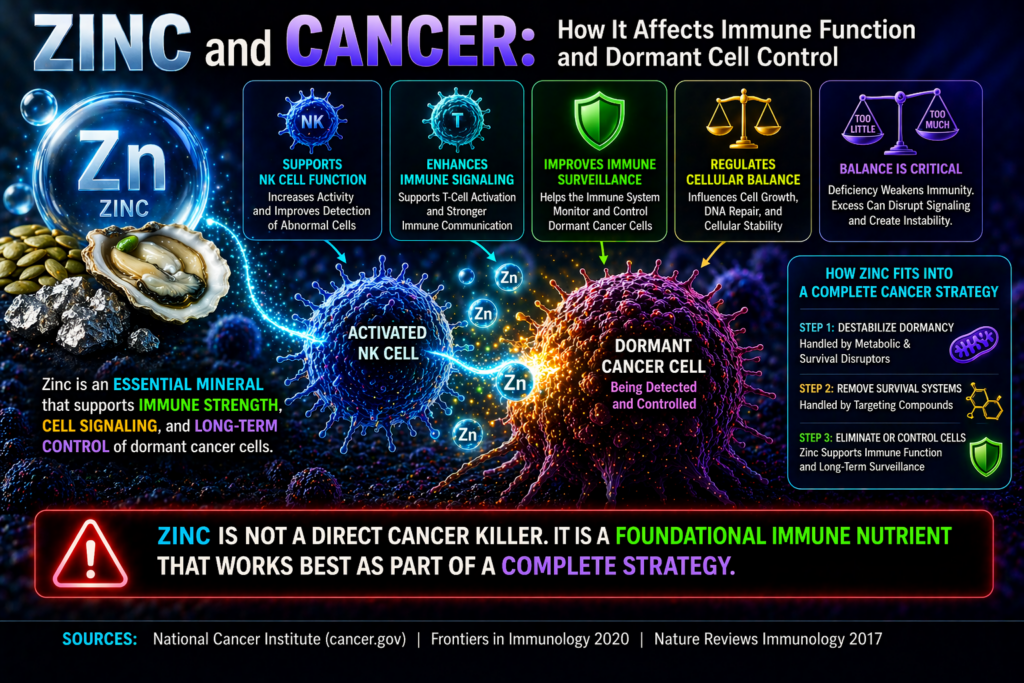
Zinc is an essential mineral required for:
- Immune function
- Cell signaling
- Cellular repair
Simple Explanation
- It helps immune cells function
- It controls signaling between cells
- It affects how cells grow and respond
Why Zinc Matters in Cancer
Zinc affects BOTH:
- Immune cells
- Cancer cells
This makes it powerful—but also sensitive to balance.
Where This Fits in the System
Start here:
Zinc primarily affects:
- Immune function
- NK cells
- Cell signaling
- Cellular stability
How Zinc Affects Dormant Cancer Cells
Dormant cells are controlled by:
- Immune surveillance
- Cellular signaling
- Environmental balance
Zinc influences all of these.
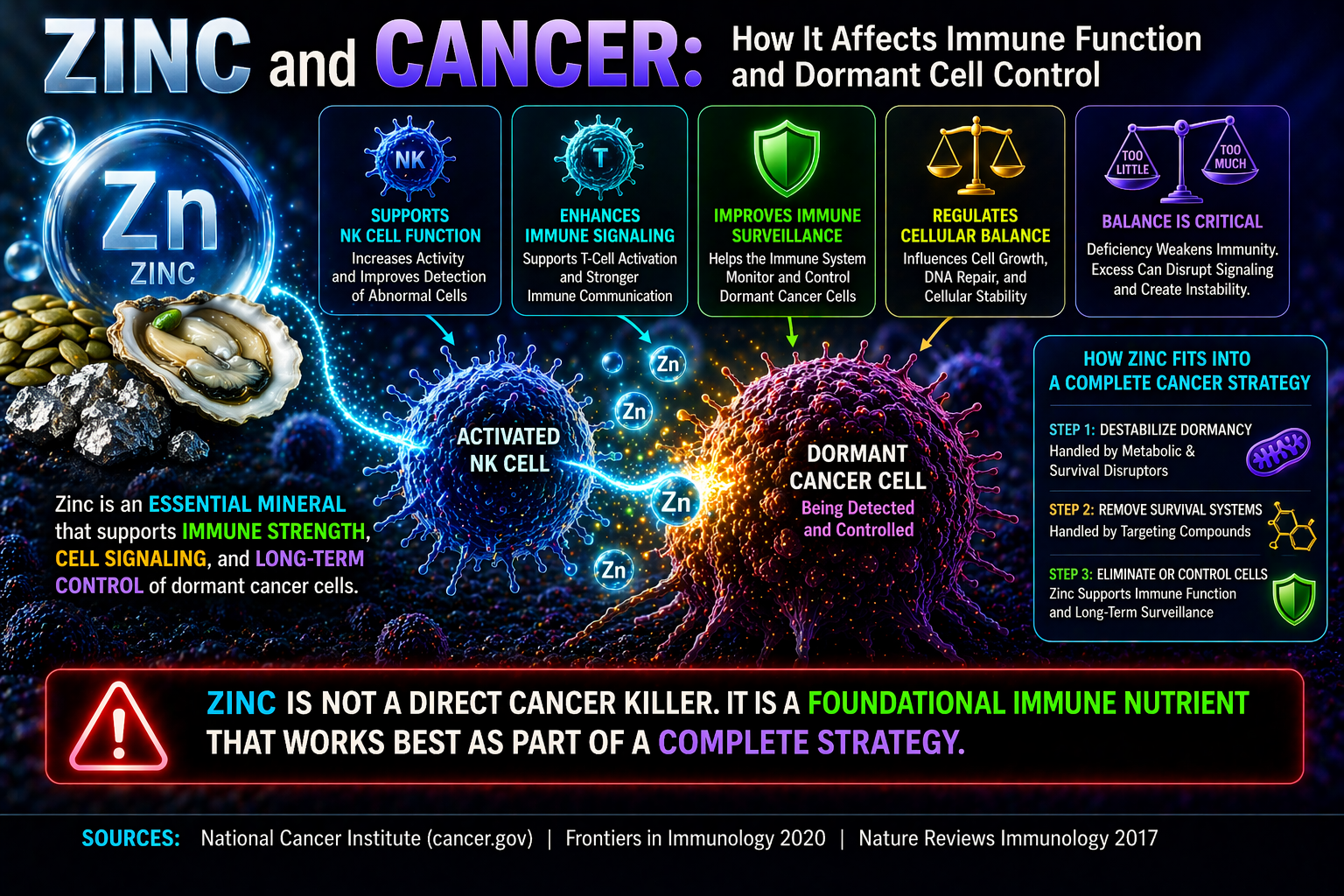
1. NK Cell Function (Primary Effect)
NK cells destroy abnormal cells.
What Zinc Does
- Supports NK cell activity
- Improves immune response
- Enhances detection ability
Result
Dormant cancer cells are more likely to be recognized.
2. T-Cell and Immune Signaling
The immune system depends on communication.
What Zinc Does
- Regulates immune signaling pathways
- Supports T-cell activation
- Improves coordination
Result
More effective immune response.
3. Immune Surveillance
Dormant cancer cells must be monitored over time.
What Zinc Does
- Supports long-term immune vigilance
- Helps maintain detection systems
Result
Better control over hidden cancer cells.
4. Cellular Stability and Growth Signals
Zinc affects how cells behave.
What Zinc Does
- Influences cell growth signals
- Affects DNA repair and stability
Result
Can impact both healthy and cancer cells.
Where Zinc Can Help
Zinc may help when:
- Supporting immune function
- Improving NK cell activity
- Enhancing immune signaling
- Maintaining long-term surveillance
Where Zinc Can Create Risk (Critical Section)
Zinc must be balanced.
Too Little Zinc
Leads to:
- Weak immune system
- Poor NK cell function
- Reduced cancer surveillance
Result
Dormant cells may escape detection.
Too Much Zinc
Can lead to:
- Immune imbalance
- Disrupted signaling
- Potential support of unwanted cell activity
Result
The system becomes unstable.
Zinc Is Not a “More Is Better” Compound
It must stay within a balanced range.
Zinc Does NOT Directly Kill Cancer Cells
It:
- Supports immune function
- Helps control and monitor cells
But it does NOT:
- Destroy cancer cells directly
- Replace metabolic targeting
- Replace treatment
Strategic Role of Zinc
Zinc is best understood as:
- A foundational immune nutrient
- A signaling regulator
- A system stabilizer
How It Fits Into a Complete Strategy
From the system:
Step 1: Destabilize Dormancy
Zinc does NOT do this
Step 2: Remove Survival Systems
Zinc does NOT do this
Step 3: Eliminate or Control Cells
Zinc supports immune function here
Why Zinc Is Important
Even strong immune systems can fail without proper nutrients.
Zinc supports:
- Immune strength
- Detection ability
- Long-term control
Why Zinc Alone Is Not Enough
Zinc can:
- Strengthen immune function
- Improve detection
But it does NOT:
- Eliminate cancer cells directly
- Replace targeted strategies
- Replace treatment
Key Takeaways
- Zinc is essential for immune system function
- It supports NK cells and immune signaling
- It helps control dormant cancer cells
- Balance is critical (too little or too much is harmful)
- It is not a direct cancer treatment
- It works best as part of a complete strategy
External References
National Cancer Institute
https://www.cancer.gov/about-cancer/understanding/what-is-cancer
Frontiers in Immunology
https://www.frontiersin.org/articles/10.3389/fimmu.2020.00001/full
Nature Reviews Immunology
https://www.nature.com/articles/nri.2017.15
Continue Learning
Main system:
Related pages:
https://helping4cancer.com/astragalus-cancer/
https://helping4cancer.com/beta-glucan-cancer/
https://helping4cancer.com/nk-t-cell-cancer/
Disclaimer
This content is for educational purposes only and is not medical advice.