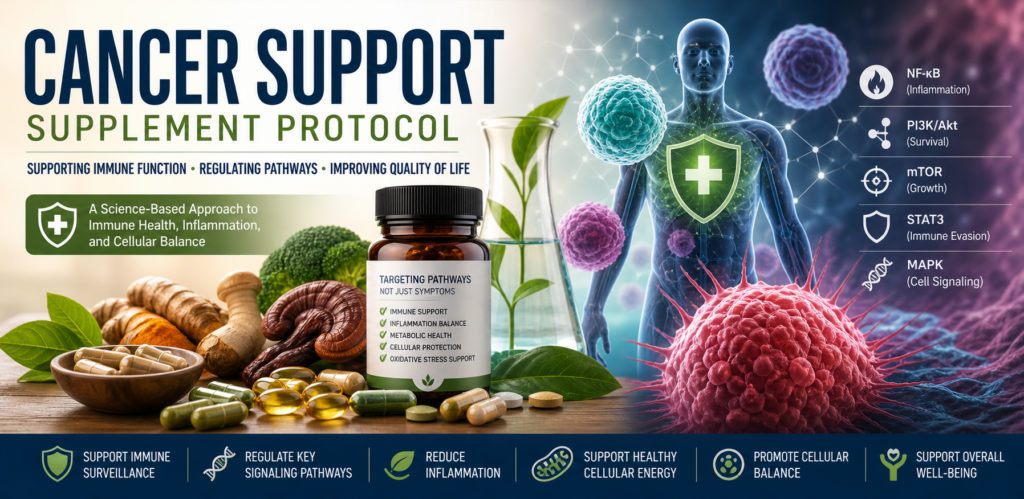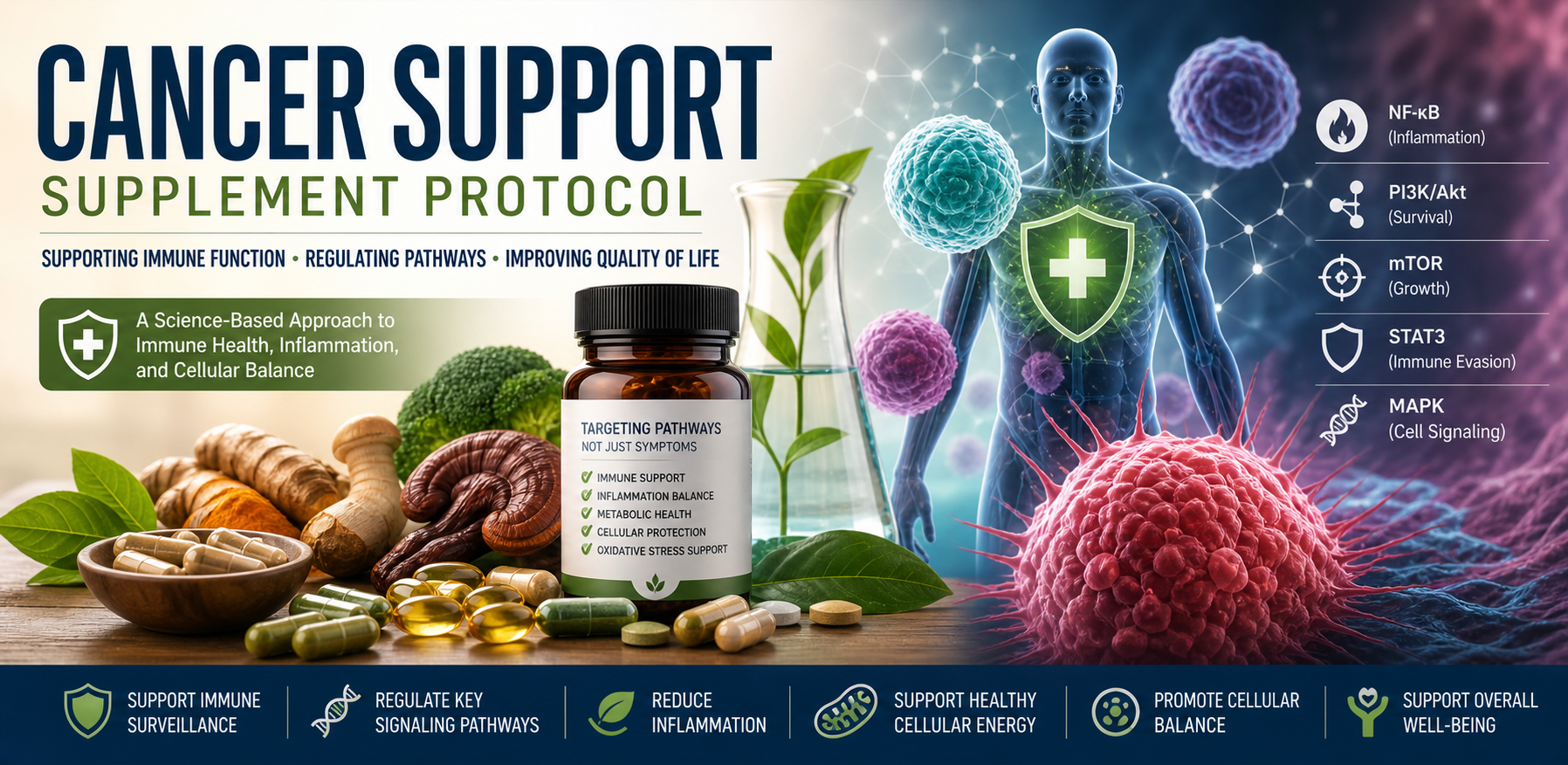
A lot of people talk about supplements and cancer, and it’s important to keep things real. No supplement stack can prevent cancer or guarantee anything. Cancer is complex. It can come from genetics, environment, lifestyle, and random cell mistakes. But that doesn’t mean we can’t support the body. A smart supplement approach can help improve the environment inside the body, and that matters.
The goal of this type of stack is not to “block” cancer. It’s to make the body a harder place for damaged cells to survive. That means supporting the immune system, lowering chronic inflammation, and keeping metabolism stable. When those systems are working well, the body is better at handling abnormal cells before they become a bigger problem.
Immune System Support and Surveillance
The immune system is one of the most important parts of this. Compounds like Turkey Tail Mushroom, Vitamin D3, and Zinc help support immune cells like NK cells and T cells. These cells are constantly scanning the body and removing damaged or abnormal cells. A stronger immune system doesn’t mean perfect protection, but it improves the body’s ability to respond.
Immune surveillance is critical because cancer cells often develop ways to hide from detection. Supporting immune function helps counteract pathways like STAT3 and TGF-β, which are involved in immune suppression and evasion.
Metabolic Control and Energy Pathways
Metabolism is another key piece. When blood sugar and energy systems are unstable, cells are under more stress. Berberine helps regulate pathways like PI3K/Akt and mTOR, which are tied to cell growth and survival. When these pathways are more balanced, cells are less likely to shift into abnormal growth patterns.
Stable metabolism also reduces insulin spikes and cellular stress signals that can push cells toward uncontrolled growth.
Inflammation and Cellular Signaling
Inflammation is closely tied to these pathways. Long-term inflammation can activate signals like NF-κB and STAT3, which are linked to cell survival and immune evasion. Omega-3 fatty acids help lower baseline inflammation by improving how cell membranes send signals. This creates a calmer internal environment where harmful signaling is less active.
Lower inflammation also reduces oxidative stress that contributes to DNA damage over time.
Rotating Compounds and Pathway Modulation
The stack also uses rotating compounds that affect different pathways. Compounds like Curcumin can influence NF-κB and inflammation signals. Resveratrol affects pathways like MAPK and cellular stress responses. Quercetin can support immune balance and help regulate oxidative stress. These are not cures, but they help guide how cells behave.
Rotation prevents overloading the body and allows different pathways to be influenced over time rather than all at once.
Key Cancer-Related Pathways Explained
Several major pathways play a role in cancer development and survival:
PI3K/Akt controls energy use and cell survival
mTOR regulates growth and nutrient sensing
NF-κB drives inflammation and survival signals
STAT3 supports immune evasion and growth
MAPK/ERK controls cell division and response to stress
HIF-1α helps cells survive low oxygen environments
WNT/β-catenin is linked to stem cell renewal
VEGF controls blood vessel growth
TGF-β is involved in invasion and immune suppression
MYC and cyclins regulate cell division
The stack is designed to gently influence these pathways without shutting them down completely.
Apoptosis and Cellular Cleanup
Another important part is apoptosis, which is the body’s way of removing damaged cells. Certain compounds can help support this process, but they don’t turn it on everywhere. Instead, they make it easier for unhealthy cells to be recognized and removed when needed. This keeps the system balanced instead of forcing it.
The Importance of Rest and Recovery
Rest days are just as important as supplement days. When you take a break, your body resets. Mitochondria, which produce energy in cells, respond to stress and recovery cycles. The immune system also recalibrates. Without rest, even good supplements can lose effectiveness over time.
Lifestyle Still Leads the System
It’s also important to understand that supplements are only one part of the picture. Physical activity improves mitochondrial strength and helps immune cells circulate. Diet helps control blood sugar and inflammation. Sleep and stress management affect hormones and recovery. The stack works best when it supports these things, not replaces them.
The Structured Supplement Protocol
The structured supplement protocol is built around a stable base and a rotating system.
Morning Daily Base (Foundation Layer) Taken Daily
Turkey Tail Mushroom
Vitamin D3
Zinc
Berberine
Omega-3 fatty acids
This base creates a stable internal environment before adding rotating compounds.
Afternoon or Night = Rotation
Take your rotating compounds later in the day:
Rotation System (3-Day Cycle)
Day A – Metabolic and Inflammation Focus
This supports NF-κB, mTOR, and inflammation control.
Day B – Growth and Signaling Focus
This targets MAPK, STAT3, MYC, and WNT pathways.
Day C – Immune and Recovery Focus
Lactoferrin
Astragalus Root
EGCG
This supports immune strength and system balance.
Day D – Reset Day
Only the base is used, or supplements are minimized.
This allows signaling to reset, supports mitochondrial adaptation, and prevents long-term suppression.
This cycle is then repeated.
Final Thoughts on the Protocol
In the end, this kind of supplement system is a tool. It helps guide important pathways like PI3K/Akt, mTOR, NF-κB, and STAT3 in a healthier direction. It supports immune function, reduces unnecessary inflammation, and helps maintain balance inside the body. It is not a guarantee and not a prevention, but when used correctly, it can be part of a smart, long-term strategy to support overall health.
But here’s the part most people overlook:
Supplements don’t lead the system.
Lifestyle does.
Movement strengthens mitochondria.
Diet stabilizes blood sugar.
Sleep regulates recovery and hormones.
The supplement protocol works best
when it supports those foundations—
not replaces them.
Healing Takes Rest—But Energy Comes Back Through Movement
Over the past month and a half, after returning to work following my battle with cancer, I’ve noticed something important—my energy levels have steadily increased, almost back to where they were before the disease.
This experience has made me reflect on a common misconception: that rest alone brings energy back. Rest is absolutely critical during illness. When the body is fighting disease, it shifts into a repair-focused state—directing energy toward healing tissues, supporting the immune system, and recovering from damage. In that phase, rest isn’t optional; it’s necessary.
But what I’ve learned firsthand is that rest and energy are not the same thing.
Once the body begins to recover, it needs a new signal to rebuild energy—and that signal is physical activity.
Energy production in the body is largely driven by mitochondria, the small structures inside cells responsible for producing ATP, the body’s usable energy. During illness, mitochondrial function often declines. They become fewer in number and less efficient, which contributes to the fatigue many people feel during and after treatment.
Physical activity changes that.
When we move—whether it’s working, walking, or exercising—we create a demand for energy. The body responds by adapting. It increases the number of mitochondria, improves their efficiency, and enhances oxygen use. This process, known as mitochondrial biogenesis, is one of the main reasons energy levels can rise again after a period of illness.
In simple terms, cells respond to demand.
If cells are not challenged, they conserve energy and operate at a lower level. But when they are used consistently, they become more efficient and capable. You could think of it as the difference between inactive cells and active cells—what some might call “lazy” versus “working” cells. The more they are required to perform, the better they become at producing and using energy.
Returning to work created that demand in my own body. Increased movement, routine, and physical effort all contributed to restoring my energy systems. It wasn’t just that I had recovered—it was that my body was being pushed, in a healthy way, to function again.
There’s another layer to this that goes beyond energy.
As cells become more active and efficient, they don’t just produce more energy—they function better overall. Physical activity supports mitochondrial health, improves metabolic balance, and strengthens how cells respond to stress and damage. This creates an internal environment that is less favorable for disease to develop.
The immune system plays a major role here as well. Cells like Natural Killer cells and T cells are constantly circulating and looking for abnormal or damaged cells. Physical activity helps keep these immune cells active and mobile, improving the body’s ability to detect and remove potential problems early.
Mitochondria also help regulate apoptosis, the process where damaged cells self-destruct before becoming a larger issue. When mitochondrial function improves, this quality control system works more effectively.
At the same time, regular movement helps reduce chronic inflammation and improves oxygen and nutrient delivery throughout the body—factors that support healthy cell behavior and reduce conditions that disease can take advantage of.
This doesn’t mean physical activity prevents cancer completely. There are many factors involved, including genetics and environmental exposures. But it does mean that an active, well-functioning system becomes a much harder environment for disease to develop, survive, and progress.
The takeaway is balance.
Rest is essential during the fight and early recovery phase. But rebuilding energy—and supporting long-term health—requires movement. Too much rest for too long can slow that process, while gradual physical activity helps restore strength, efficiency, and resilience at the cellular level.
For me, the shift from recovery to rebuilding has been clear. Rest helped me heal—but movement is what brought my energy back.
Michael Duffy
Aggarwal, B. B., & Harikumar, K. B. (2009). Potential therapeutic effects of curcumin, the anti-inflammatory agent, against cancer. International Journal of Biochemistry & Cell Biology, 41(1), 40–59. https://doi.org/10.1016/j.biocel.2008.06.010
Anand, P., Sundaram, C., Jhurani, S., Kunnumakkara, A. B., & Aggarwal, B. B. (2008). Curcumin and cancer: An “old-age” disease with an “age-old” solution. Cancer Letters, 267(1), 133–164. https://doi.org/10.1016/j.canlet.2008.03.025
Bai, X., et al. (2020). Targeting PI3K/Akt/mTOR signaling pathway by natural products in cancer treatment. Journal of Hematology & Oncology, 13(1), 80. https://doi.org/10.1186/s13045-020-00923-7
Bharti, A. C., Donato, N., & Aggarwal, B. B. (2003). Curcumin (diferuloylmethane) inhibits constitutive and IL-6-inducible STAT3 phosphorylation. Journal of Immunology, 171(7), 3863–3871. https://doi.org/10.4049/jimmunol.171.7.3863
Chen, D., et al. (2011). EGCG, green tea polyphenols, and their effects on cancer. Cancer Letters, 306(2), 115–122. https://doi.org/10.1016/j.canlet.2011.03.003
Goel, A., Kunnumakkara, A. B., & Aggarwal, B. B. (2008). Curcumin as “Curecumin”: From kitchen to clinic. Biochemical Pharmacology, 75(4), 787–809. https://doi.org/10.1016/j.bcp.2007.08.016
Gupta, S. C., Patchva, S., & Aggarwal, B. B. (2013). Therapeutic roles of curcumin: Lessons learned from clinical trials. AAPS Journal, 15(1), 195–218. https://doi.org/10.1208/s12248-012-9432-8
Hsieh, T. C., & Wu, J. M. (1999). Differential effects on growth, cell cycle arrest, and induction of apoptosis by resveratrol in human prostate cancer cell lines. Experimental Cell Research, 249(1), 109–115. https://doi.org/10.1006/excr.1999.4478
Jemal, A., et al. (2011). Global cancer statistics. CA: A Cancer Journal for Clinicians, 61(2), 69–90. https://doi.org/10.3322/caac.20107
Khan, N., & Mukhtar, H. (2010). Tea polyphenols for health promotion. Life Sciences, 81(7–8), 519–533. https://doi.org/10.1016/j.lfs.2007.06.011
Kunnumakkara, A. B., et al. (2017). Curcumin, the golden nutraceutical: Multitargeting for multiple chronic diseases. British Journal of Pharmacology, 174(11), 1325–1348. https://doi.org/10.1111/bph.13621
Liu, Y., et al. (2018). Berberine inhibits tumor growth via the AMPK/mTOR pathway. Oncology Reports, 39(6), 2845–2852. https://doi.org/10.3892/or.2018.6360
Mocellin, S., et al. (2005). The dual role of cytokines in cancer. Journal of Immunotherapy, 28(6), 546–557. https://doi.org/10.1097/01.cji.0000171305.58317.96
Pan, M. H., Lai, C. S., & Ho, C. T. (2010). Anti-inflammatory activity of natural dietary flavonoids. Food & Function, 1(1), 15–31. https://doi.org/10.1039/C0FO00103A
Pérez-Herrera, A., & Rojas-Morales, P. (2021). Apoptosis regulation and cancer therapy. International Journal of Molecular Sciences, 22(11), 6003. https://doi.org/10.3390/ijms22116003
Shanmugam, M. K., et al. (2015). The multifaceted role of curcumin in cancer prevention and treatment. Molecules, 20(2), 2728–2769. https://doi.org/10.3390/molecules20022728
Singh, S., & Aggarwal, B. B. (1995). Activation of transcription factor NF-κB is suppressed by curcumin. Journal of Biological Chemistry, 270(42), 24995–25000. https://doi.org/10.1074/jbc.270.42.24995
Vallée, A., & Lecarpentier, Y. (2018). Crosstalk between peroxisome proliferator-activated receptor gamma and the canonical WNT/β-catenin pathway. Frontiers in Immunology, 9, 745. https://doi.org/10.3389/fimmu.2018.00745
Wang, H., et al. (2012). Role of NF-κB in cancer and inflammation. International Journal of Biological Sciences, 8(3), 349–358. https://doi.org/10.7150/ijbs.3693
Yuan, J., et al. (2019). The role of mitochondria in apoptosis and cancer. Journal of Cancer, 10(21), 4898–4905. https://doi.org/10.7150/jca.34894
Zhang, Y., et al. (2016). Sulforaphane and its effects on cancer, epigenetics, and signaling pathways. Current Pharmacology Reports, 2(5), 291–300. https://doi.org/10.1007/s40495-016-0078-6
Zhou, Y., et al. (2014). Resveratrol targeting cancer cell metabolism and survival pathways. Cancer Letters, 356(2), 315–322. https://doi.org/10.1016/j.canlet.2014.09.014