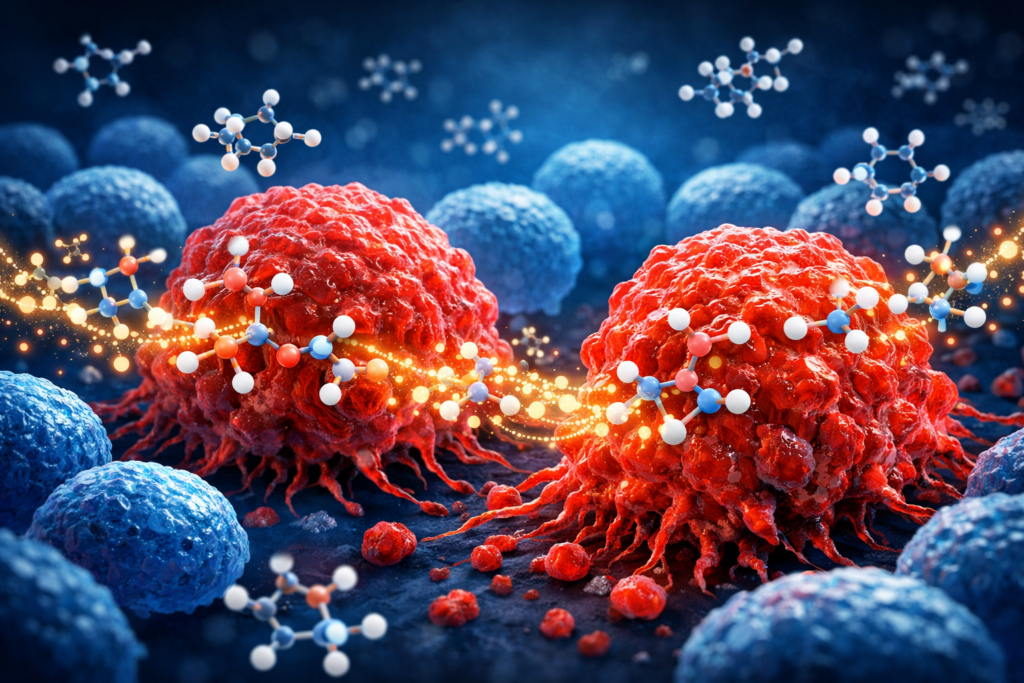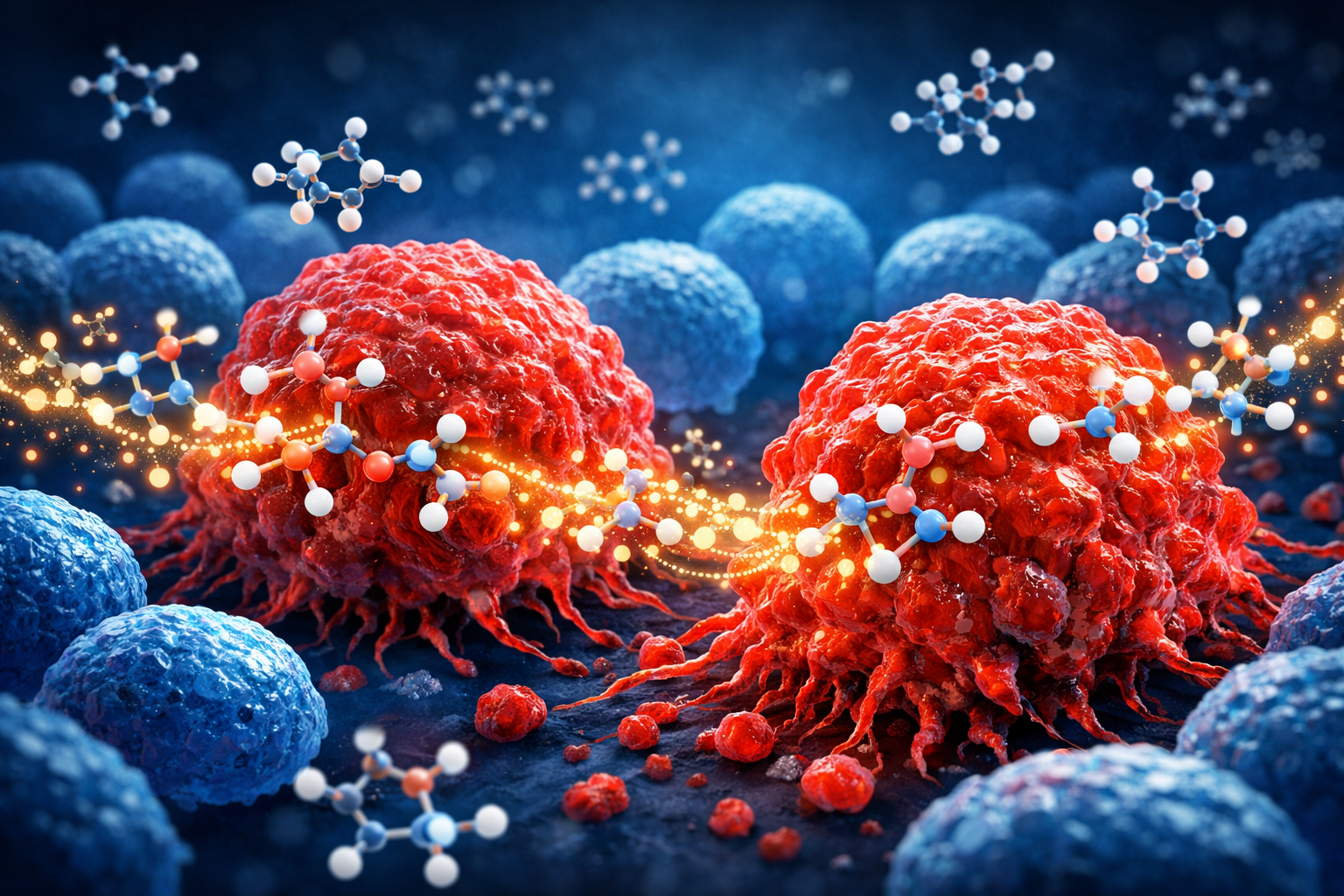
Why Cancer Cells Love Sugar
Cancer cells behave very differently from normal cells, especially when it comes to how they produce energy. One of the most important discoveries in cancer biology is that tumors consume large amounts of glucose (sugar) to fuel their growth.
This unusual behavior is known as the Warburg Effect, a metabolic shift that allows cancer cells to rapidly generate energy and the building blocks needed for tumor growth.
Understanding why cancer cells love sugar helps researchers develop better diagnostic tools, treatments, and metabolic therapies.
The Warburg Effect Explained
Nearly a century ago, German scientist Otto Warburg discovered something unusual about cancer cells.
Normal cells produce most of their energy using mitochondria, which generate energy efficiently using oxygen.
Cancer cells often do something different.
Even when oxygen is available, many cancer cells rely heavily on glycolysis, a faster but less efficient process that breaks down glucose to produce energy.
This metabolic behavior became known as the Warburg Effect.
Instead of producing energy slowly and efficiently, cancer cells choose a pathway that allows them to consume glucose rapidly and support rapid growth.
External reference:
https://www.ncbi.nlm.nih.gov/pmc/articles/PMC4783224/
How Normal Cells Produce Energy
To understand the Warburg Effect, it helps to compare normal cellular metabolism with cancer metabolism.
Healthy cells typically produce energy through a process called oxidative phosphorylation.
This occurs inside mitochondria and uses oxygen to produce large amounts of ATP, the molecule that powers cellular functions.
In simple terms:
Normal cell metabolism
- Glucose enters the cell
- Glycolysis breaks glucose into smaller molecules
- Mitochondria convert those molecules into large amounts of ATP
This process is very efficient and generates about 30–36 ATP molecules per glucose molecule.
Because it is efficient, healthy cells do not need to consume large amounts of glucose.
How Cancer Cells Produce Energy
Cancer cells behave differently.
Instead of relying primarily on mitochondria, many tumors rely heavily on glycolysis, even when oxygen is present.
This means they produce only about 2 ATP per glucose molecule, which is much less efficient.
So why would cancer cells use such an inefficient system?
Because glycolysis allows them to do something important:
Grow faster.
Rapid glycolysis provides the raw materials needed to build:
- DNA
- RNA
- amino acids
- lipids
- cell membranes
These components are necessary for rapid cell division.
As a result, cancer cells consume large amounts of glucose.
This metabolic shift is a hallmark of many tumors.
Learn more:
https://www.cancer.gov/publications/dictionaries/cancer-terms/def/warburg-effect
Glycolysis: The Sugar Engine of Tumors
Glycolysis is a biochemical pathway that breaks glucose into smaller molecules called pyruvate.
This process occurs in the cytoplasm of cells and does not require oxygen.
Because glycolysis happens quickly, cancer cells can rapidly generate the molecules needed to build new cells.
Tumors often increase glycolysis by:
- increasing glucose transporters (GLUT1)
- activating growth pathways
- reprogramming metabolism
These changes allow cancer cells to pull large amounts of sugar from the bloodstream.
This is why many tumors are sometimes described as “glucose addicted.”
Why Tumors Need So Much Glucose
Cancer cells require enormous amounts of energy and molecular building blocks.
Glucose supports several key processes in tumors.
Rapid Cell Division
Tumors grow by continuously dividing. This requires large quantities of cellular components.
Glucose helps generate the molecules needed for:
- DNA replication
- protein synthesis
- membrane formation
Biosynthesis
Glucose feeds pathways that produce:
- nucleotides
- amino acids
- lipids
These materials allow cancer cells to build new structures.
Antioxidant Protection
Rapid tumor growth produces oxidative stress.
Glucose metabolism helps generate NADPH, which protects cells from damage caused by reactive oxygen species.
Tumor Microenvironment Adaptation
Many tumors grow in low-oxygen environments.
Glycolysis allows cancer cells to survive even when oxygen levels are low.
External reference:
https://www.nature.com/articles/nrc.2017.112
PET Scans Detect Sugar-Hungry Tumors
One of the most powerful diagnostic tools in oncology relies directly on the glucose appetite of cancer cells.
This imaging test is called a PET scan.
PET stands for Positron Emission Tomography.
During the scan, doctors inject a small amount of radioactive glucose called FDG (fluorodeoxyglucose) into the bloodstream.
Because cancer cells absorb large amounts of glucose, they take up the FDG tracer.
The PET scanner detects these areas of high glucose uptake.
This allows doctors to:
- locate tumors
- detect metastases
- monitor treatment response
The Warburg Effect is the reason PET scans are so effective.
External reference:
https://radiologyinfo.org/en/info/pet
Tumor Metabolism Is Highly Flexible
Although many cancers rely heavily on glucose, tumor metabolism is extremely adaptable.
Cancer cells can also use other fuels such as:
- glutamine
- fatty acids
- ketones
- lactate
This flexibility allows tumors to survive under difficult conditions.
However, glucose metabolism remains a central feature of many cancers.
Researchers continue studying how metabolic pathways influence cancer growth and therapy response.
Metabolic Therapy and Cancer
Because tumors rely heavily on glucose metabolism, some researchers have explored strategies that target cancer metabolism.
This area of study is often called metabolic therapy.
Possible strategies include:
- targeting glycolysis enzymes
- altering glucose availability
- interfering with mitochondrial function
- increasing oxidative stress in tumors
Some therapies attempt to exploit the metabolic vulnerabilities of cancer cells.
For example:
- certain chemotherapy drugs increase oxidative stress
- radiation therapy damages cells through reactive oxygen species (ROS)
These strategies take advantage of the metabolic weaknesses of tumors.
Learn more:
https://www.ncbi.nlm.nih.gov/pmc/articles/PMC6520897/
The Role of Fasting and Metabolism
Another area of research examines how metabolic changes influence cancer treatment.
Some studies suggest that fasting or metabolic shifts may influence tumor biology.
Researchers are exploring whether metabolic interventions might:
- reduce tumor growth signals
- alter glucose metabolism
- improve therapy response
However, fasting and metabolic therapies should only be considered under medical supervision, especially during cancer treatment.
Research is ongoing and many questions remain.
External reference:
https://www.cell.com/cell-metabolism/fulltext/S1550-4131(17)30072-2
Why Understanding Tumor Metabolism Matters
The discovery of cancer metabolism has transformed oncology.
Understanding how tumors use glucose has helped researchers:
- develop imaging technologies
- identify new drug targets
- improve treatment strategies
- understand tumor survival mechanisms
Cancer is not just a genetic disease.
It is also a metabolic disease, meaning that changes in cellular energy production play a major role in tumor development.
As research continues, targeting tumor metabolism may become an increasingly important part of cancer treatment.
Key Takeaways
Cancer cells often rely on high levels of glucose metabolism to support rapid growth.
The Warburg Effect describes how tumors favor glycolysis even when oxygen is available.
This metabolic shift allows cancer cells to:
- generate energy quickly
- build cellular components
- survive in low-oxygen environments
Because tumors consume large amounts of glucose, imaging tests like PET scans can detect cancer activity.
Understanding cancer metabolism continues to guide new research into diagnostics and treatments.
Internal Links
Learn more about related topics:
- Glycolysis and Cancer
https://helping4cancer.com/glycolysis-and-cancer/ - Cancer Metabolism
https://helping4cancer.com/cancer-metabolism-explained/ - Fasting and Cancer
https://helping4cancer.com/fasting-and-cancer/
References
National Cancer Institute
https://www.cancer.gov
Nature Reviews Cancer – Tumor Metabolism
https://www.nature.com/articles/nrc.2017.112
NCBI – Cancer Metabolism Review
https://www.ncbi.nlm.nih.gov/pmc/articles/PMC6520897/
RadiologyInfo – PET Scan
https://radiologyinfo.org/en/info/pet
Table of Contents