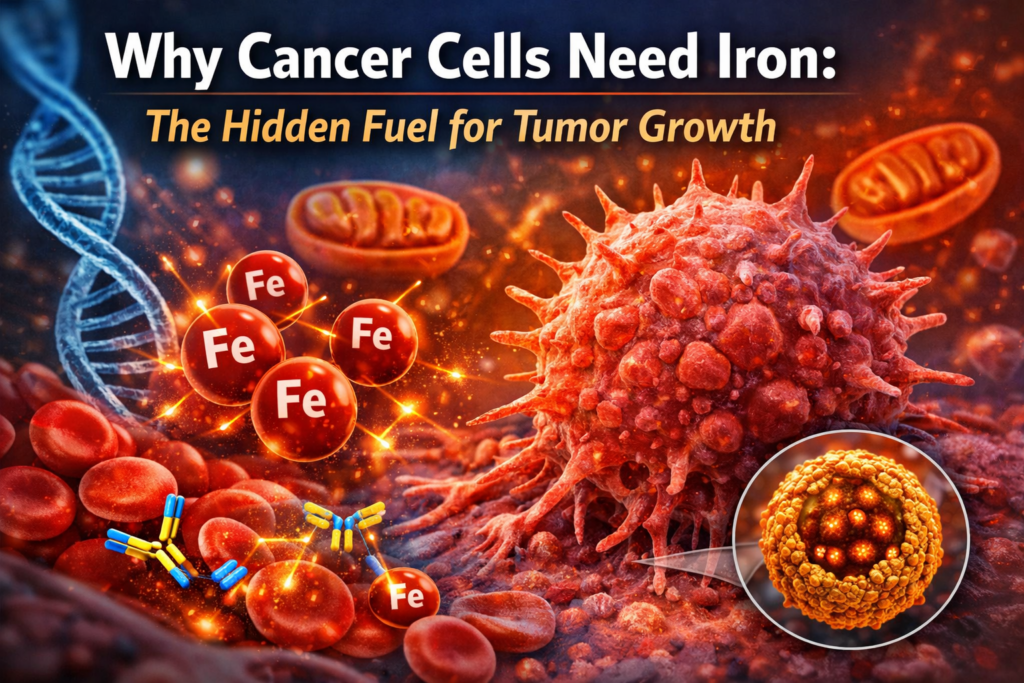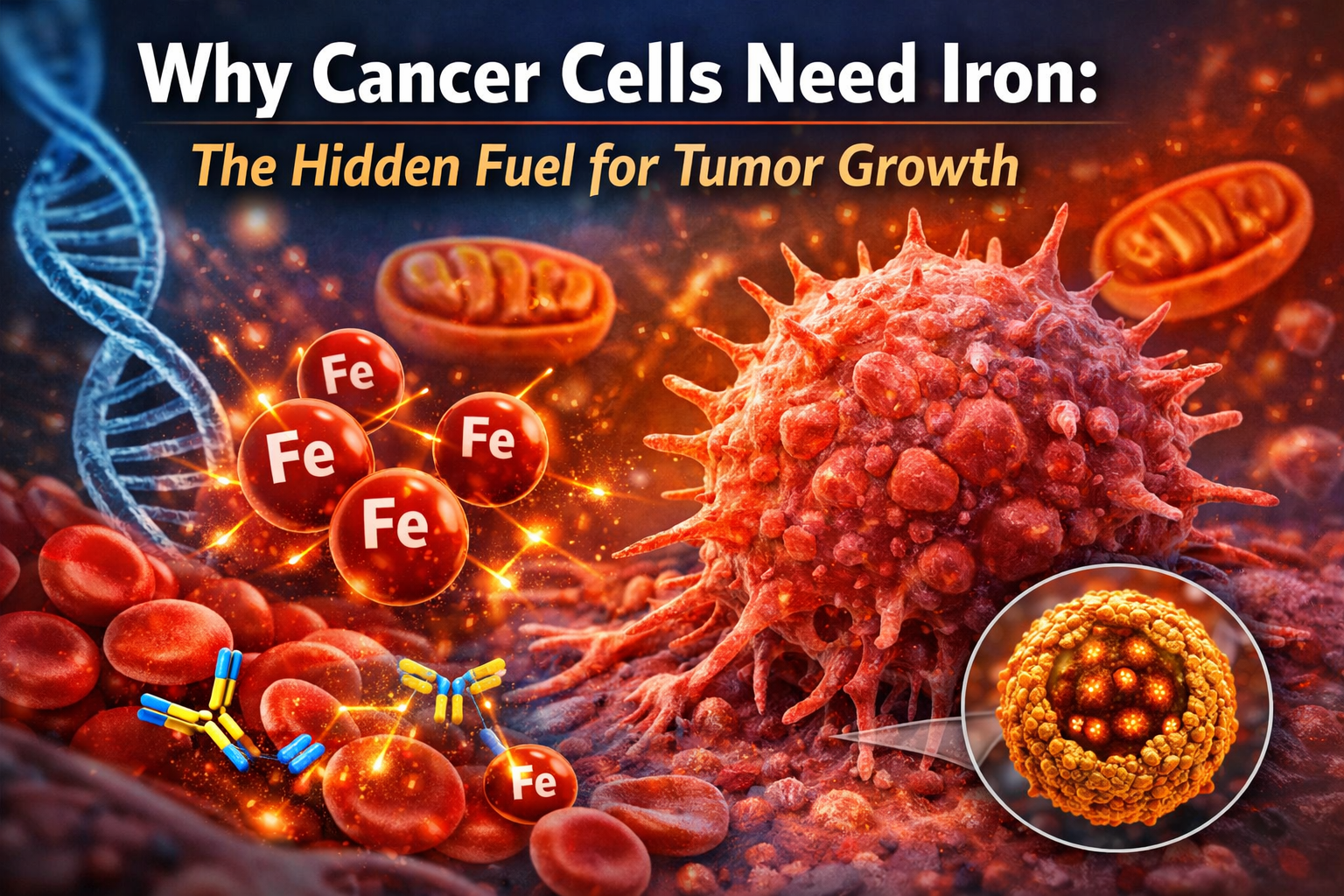
Why Cancer Cells Need Iron
Iron is one of the most important minerals in the human body. It helps carry oxygen in the blood, supports energy production, and allows cells to divide and grow.
However, iron also plays a critical role in cancer biology.
Many tumors require unusually large amounts of iron to survive. In fact, cancer cells often change the way they absorb and store iron in order to support rapid growth.
Scientists now recognize iron metabolism as a key part of cancer metabolism, tumor proliferation, and even cancer treatment strategies.
Understanding why cancer cells depend on iron helps researchers develop therapies that starve tumors of this essential resource.
This guide explains:
- why cancer cells need iron
- how tumors absorb and store iron
- the role of iron in DNA synthesis and metabolism
- how iron can both support and destroy cancer cells
Iron: A Critical Element for Cellular Life
Iron is essential for almost every living organism.
Inside the body, iron participates in many important biological processes including:
- oxygen transport through hemoglobin
- mitochondrial energy production
- DNA synthesis
- enzyme activation
- immune function
Healthy cells carefully regulate iron levels. Too little iron prevents cells from functioning properly, while too much iron can damage cells through oxidative stress.
Cancer cells exploit this system.
Because tumors grow rapidly and divide constantly, they require significantly more iron than normal cells.
This increased demand is sometimes called “iron addiction” in cancer cells.
How Cancer Cells Increase Iron Uptake
Tumor cells actively modify their metabolism to capture more iron from the bloodstream.
One of the main ways they do this is by increasing proteins that transport iron into the cell.
The most important protein involved is transferrin receptor 1 (TfR1).
Transferrin is a protein in the blood that carries iron. Cancer cells increase the number of transferrin receptors on their surface, allowing them to pull more iron into the cell.
Studies show many tumors dramatically increase transferrin receptor expression.
Examples include:
- breast cancer
- colorectal cancer
- lung cancer
- liver cancer
- leukemia
This allows cancer cells to absorb iron much more efficiently than surrounding healthy tissue.
Because of this behavior, transferrin receptors are sometimes used as targets for experimental cancer therapies.
Ferritin: How Tumor Cells Store Iron
Once iron enters the cell, it must be stored safely.
This is where ferritin comes in.
Ferritin is a protein that stores iron and prevents it from causing damage inside the cell.
Cancer cells often increase ferritin production because they accumulate large amounts of iron.
High ferritin levels are commonly observed in many cancer patients.
Elevated ferritin may indicate:
- inflammation
- tumor growth
- increased iron metabolism
In some cancers, ferritin levels are even used as a biomarker for disease progression.
Iron and DNA Synthesis
One of the most important reasons cancer cells need iron is for DNA replication.
Cells must copy their DNA before dividing.
This process requires a key enzyme called ribonucleotide reductase.
Ribonucleotide reductase depends on iron to function.
Without iron, cells cannot synthesize the building blocks needed to produce DNA.
Because cancer cells divide rapidly, they rely heavily on this iron-dependent enzyme.
This means iron availability directly influences tumor growth.
Reducing iron levels can slow cell division and limit tumor expansion.
Iron and Mitochondrial Energy Production
Iron is also essential for mitochondrial metabolism.
Inside mitochondria, iron helps form proteins called iron-sulfur clusters.
These clusters play a key role in:
- cellular respiration
- ATP energy production
- electron transport chains
Even though many tumors rely heavily on glycolysis (known as the Warburg effect), mitochondrial metabolism still contributes to cancer survival.
Iron helps maintain mitochondrial function, allowing cancer cells to generate energy needed for growth.
Learn more about tumor metabolism here:
Internal Link
Cancer Metabolism Explained
https://helping4cancer.com/cancer-metabolism-explained/
Iron and Tumor Proliferation
Because iron supports both DNA synthesis and energy production, it directly contributes to tumor proliferation.
Cancer cells use iron to support:
- rapid cell division
- metabolic activity
- DNA repair
- oxidative stress tolerance
Many tumors increase the expression of proteins that help them retain iron inside the cell.
These include:
- transferrin receptors
- ferritin
- iron transport proteins
At the same time, tumors may decrease iron export proteins that normally remove iron from cells.
The result is a cellular environment rich in iron that supports tumor survival.
The Dark Side of Iron: Oxidative Stress
Iron has another powerful property.
It can catalyze chemical reactions that produce reactive oxygen species (ROS).
These reactions are called Fenton reactions.
Iron interacts with hydrogen peroxide to generate highly reactive free radicals.
These free radicals can damage:
- DNA
- proteins
- cell membranes
Normally, cells protect themselves from this damage using antioxidant systems.
However, cancer therapies sometimes exploit this vulnerability.
By increasing oxidative stress in iron-rich tumor cells, treatments can trigger cancer cell death.
Learn more about ROS and cancer here:
Internal Link
Reactive Oxygen Species and Cancer
https://helping4cancer.com/reactive-oxygen-species-cancer/
Ferroptosis: Iron-Dependent Cancer Cell Death
One of the most exciting discoveries in cancer biology is a form of cell death called ferroptosis.
Ferroptosis is a type of programmed cell death that depends on iron.
It occurs when iron triggers massive lipid oxidation inside cell membranes.
This causes the cell membrane to break down, leading to cell death.
Unlike traditional apoptosis, ferroptosis specifically depends on iron-driven oxidative damage.
Researchers are exploring ferroptosis as a potential strategy to kill cancer cells.
Some experimental therapies aim to:
- increase iron accumulation in tumors
- block antioxidant defenses
- trigger ferroptosis
This approach may be particularly effective against cancers that are resistant to chemotherapy.
External Reference
Ferroptosis and cancer research
https://www.nature.com/articles/s41418-020-0530-4
Iron and Cancer Risk
While iron is essential for health, excessive iron levels may increase cancer risk.
High iron levels can promote:
- oxidative DNA damage
- chronic inflammation
- increased cell proliferation
Some epidemiological studies suggest that high body iron stores may be associated with higher risk of certain cancers.
These include:
- colorectal cancer
- liver cancer
- pancreatic cancer
Dietary sources of iron include:
- red meat
- organ meats
- shellfish
- fortified foods
However, iron intake from food is usually tightly regulated by the body.
The relationship between iron intake and cancer risk is complex and still under investigation.
External Reference
Iron and cancer risk review
https://www.ncbi.nlm.nih.gov/pmc/articles/PMC7094072/
Targeting Iron in Cancer Therapy
Because cancer cells depend on iron, researchers are exploring ways to target iron metabolism in cancer treatment.
Several strategies are currently being studied.
Iron Chelation
Iron chelators are drugs that bind iron and remove it from cells.
By lowering iron levels, these drugs can slow tumor growth.
Some examples include:
- deferoxamine
- deferasirox
These medications are traditionally used to treat iron overload disorders but are being investigated for cancer therapy.
Transferrin Receptor Targeting
Because cancer cells overexpress transferrin receptors, researchers are developing therapies that target these receptors.
These strategies may allow drugs to be delivered directly into tumor cells.
Ferroptosis Induction
Another strategy is to intentionally trigger ferroptosis in cancer cells.
Some experimental treatments increase iron-driven oxidative stress until the tumor cell dies.
This approach is an active area of research in oncology.
Iron and Cancer Metabolism
Iron metabolism is now recognized as a central component of cancer biology.
Tumors reprogram metabolic pathways to acquire nutrients that support growth.
Iron supports several of these metabolic pathways, including:
- DNA synthesis
- mitochondrial respiration
- oxidative stress regulation
- tumor proliferation
This connection places iron metabolism alongside other major metabolic drivers such as:
- glucose metabolism
- glutamine metabolism
- lipid metabolism
Learn more about these pathways here:
Internal Link
Cancer Metabolism Explained
https://helping4cancer.com/cancer-metabolism-explained/
Why Understanding Iron Matters
Research into iron metabolism is changing how scientists think about cancer.
Instead of focusing only on genetic mutations, researchers are increasingly examining how tumors manipulate nutrients and metabolic pathways.
Iron is one of the most important of these nutrients.
Cancer cells depend on iron to support:
- DNA replication
- metabolic activity
- tumor growth
- survival under stress
At the same time, iron can also become a weakness for tumors.
By increasing oxidative stress or triggering ferroptosis, therapies may exploit the very iron that cancer cells rely on.
This dual role makes iron metabolism a promising target for future cancer treatments.
Key Takeaways
Cancer cells require iron for many critical biological processes.
Tumors increase iron uptake by overexpressing transferrin receptors and storing iron in ferritin.
Iron supports tumor growth by enabling DNA synthesis, mitochondrial metabolism, and rapid cell division.
However, excess iron can also produce reactive oxygen species that damage cells.
Researchers are exploring therapies that manipulate iron metabolism to slow tumor growth or trigger ferroptosis.
Understanding the relationship between iron and cancer may lead to new strategies for treatment and prevention.
External References
National Cancer Institute – Cancer Metabolism
https://www.cancer.gov/research/areas/biology/cancer-metabolism
Nature Reviews Cancer – Iron Metabolism in Cancer
https://www.nature.com/articles/nrc.2017.11
NIH – Iron and Cancer Risk
https://www.ncbi.nlm.nih.gov/pmc/articles/PMC7094072/
Cell Death & Differentiation – Ferroptosis
https://www.nature.com/articles/s41418-020-0530-4
Table of Contents