Introduction
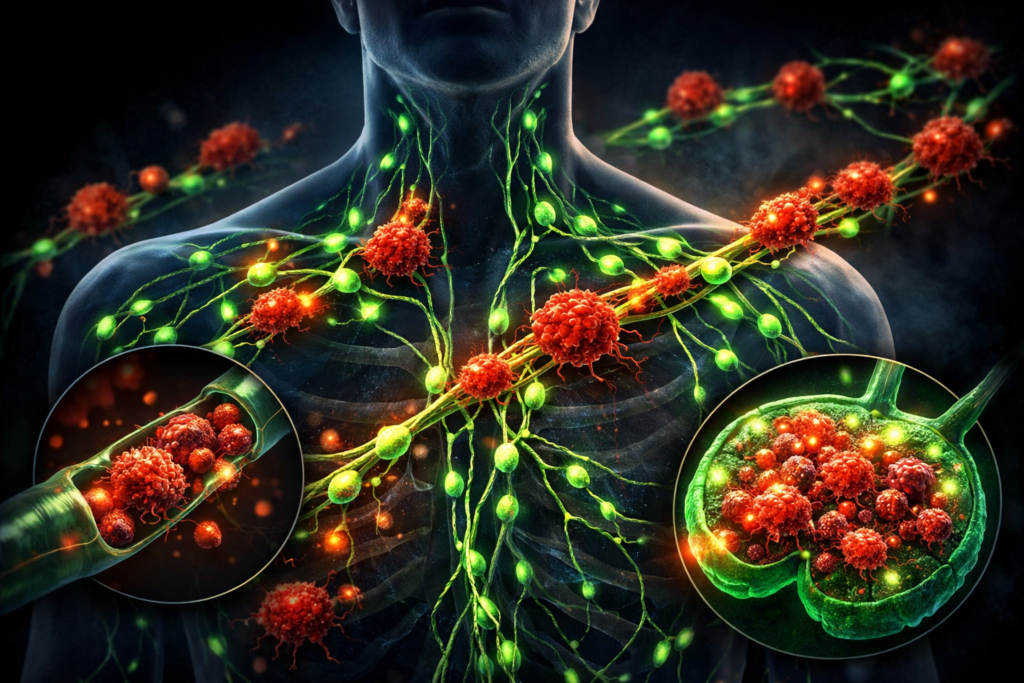
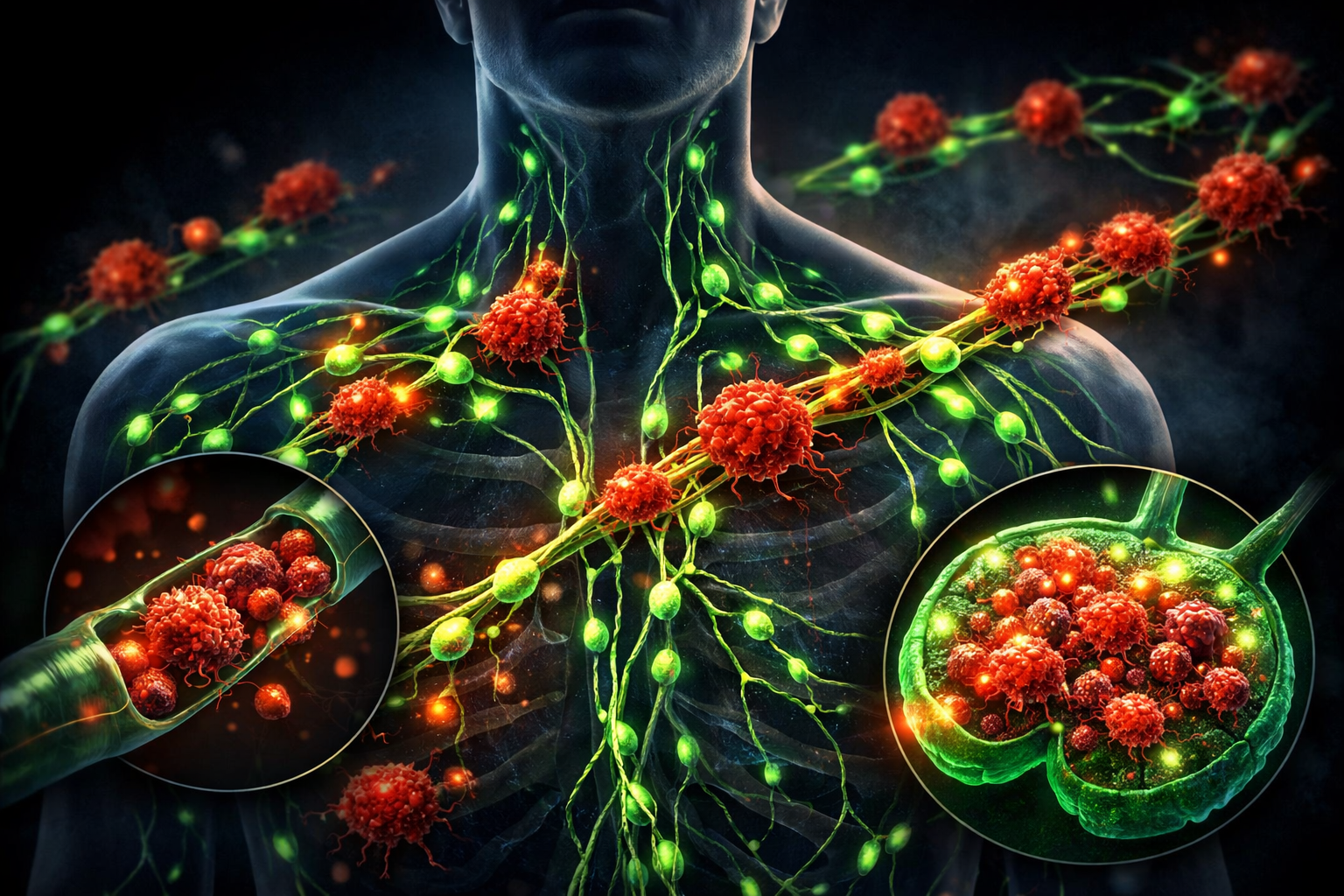
The lymphatic system plays a central role in both immune defense and cancer progression. While it is designed to protect the body by filtering harmful substances and supporting immune surveillance, cancer cells can hijack this system to spread to other parts of the body.
Understanding how cancer interacts with the lymphatic system is critical for detecting metastasis, staging disease, and guiding treatment decisions. Many cancers—including breast, colon, melanoma, and lung cancer—commonly spread through lymphatic pathways before entering the bloodstream.
This guide explains how the lymphatic system works, how cancer spreads through lymph nodes, and why immune signaling within this system can either suppress or support tumor growth.
What Is the Lymphatic System?
The lymphatic system is a network of vessels, nodes, and organs that helps maintain fluid balance and defend the body against infection.
Key Components
- Lymph fluid – contains immune cells, proteins, and waste products
- Lymphatic vessels – transport lymph throughout the body
- Lymph nodes – act as filters and immune activation hubs
- Organs – spleen, thymus, tonsils
This system works alongside the circulatory system but operates as a one-way drainage network that returns fluid to the bloodstream.
How the Lymphatic System Protects Against Cancer
The lymphatic system is a key part of immune surveillance. It helps detect abnormal cells—including early cancer cells—and initiate immune responses.
Immune Functions
- Activates T cells and B cells
- Filters pathogens and abnormal cells
- Coordinates immune signaling through cytokines
When functioning properly, the lymphatic system can identify and eliminate cancer cells before they form tumors.
👉 Related:
- https://helping4cancer.com/cancer-immune-system/
- https://helping4cancer.com/immune-exhaustion-cancer/
How Cancer Cells Enter the Lymphatic System
Cancer cells can invade nearby lymphatic vessels through a process called lymphatic invasion.
Steps of Entry
- Tumor grows near lymphatic vessels
- Cancer cells break through surrounding tissue
- Cells enter lymphatic channels
- Cells are transported to nearby lymph nodes
Unlike blood vessels, lymphatic vessels have thinner walls, making them easier for cancer cells to penetrate.
Lymph Nodes and Cancer Spread
Lymph nodes are small, bean-shaped structures that act as filters for lymph fluid. They are often the first place cancer spreads.
What Happens in Lymph Nodes
- Cancer cells become trapped in the node
- Some are destroyed by immune cells
- Others survive and begin to grow
If cancer cells establish themselves in lymph nodes, they can multiply and eventually spread further.
Why Lymph Node Involvement Matters
- Indicates cancer progression
- Helps determine cancer stage
- Influences treatment decisions
Doctors often examine lymph nodes during diagnosis to assess how far cancer has spread.
Metastasis Through the Lymphatic System
Metastasis is the process by which cancer spreads from its original site to other parts of the body.
Lymphatic Metastasis Pathway
- Tumor invasion
- Entry into lymphatic vessels
- Transport to lymph nodes
- Escape into bloodstream or nearby tissues
Once cancer reaches the lymph nodes, it has a higher chance of spreading to distant organs.
👉 Related:
- https://helping4cancer.com/cancer-metabolic-trap/
- https://helping4cancer.com/cancer-drug-resistance/
Sentinel Lymph Nodes: The First Warning Sign
The sentinel lymph node is the first lymph node that drains fluid from a tumor site.
Why It Matters
- First location where cancer is likely to spread
- Used in biopsy procedures
- Helps determine if metastasis has begun
Sentinel node biopsy is commonly used in breast cancer and melanoma to guide treatment decisions.
Immune Signaling in the Lymphatic System
The lymphatic system is not just a transport network—it is also a communication hub for immune signaling.
Key Signaling Molecules
- Cytokines – regulate immune responses
- Chemokines – guide immune cell movement
- Growth factors – influence tissue and tumor behavior
These signals determine whether immune cells attack or tolerate cancer cells.
How Tumors Manipulate the Lymphatic System
Cancer cells can alter the lymphatic system to support their survival and spread.
Tumor Strategies
- Suppress immune responses
- Promote lymphatic vessel growth (lymphangiogenesis)
- Alter signaling to avoid detection
By manipulating immune signaling, tumors can create an environment that allows them to grow and spread more easily.
Lymphangiogenesis and Tumor Growth
Lymphangiogenesis is the formation of new lymphatic vessels. Tumors can stimulate this process to increase their ability to spread.
Key Drivers
- VEGF-C and VEGF-D (growth factors)
- Inflammatory signals
- Tumor-secreted proteins
More lymphatic vessels mean more pathways for cancer cells to escape the primary tumor.
Why the Lymphatic System Is a Target in Cancer Therapy
Because of its role in metastasis, the lymphatic system is a major focus of cancer research.
Therapeutic Approaches
- Blocking lymphangiogenesis
- Enhancing immune response
- Targeting lymph node metastases
Modern treatments aim to prevent cancer cells from spreading through lymphatic pathways.
👉 Related:
- https://helping4cancer.com/radiation-therapy-kills-cancer-cells/
- https://helping4cancer.com/ferroptosis-cancer/
Lymphatic System and Immune Exhaustion
In advanced cancer, immune cells within lymph nodes can become exhausted.
What Happens
- T cells lose effectiveness
- Immune response weakens
- Tumors evade destruction
This is why therapies like checkpoint inhibitors aim to reactivate immune cells.
👉 Related:
Key Takeaways
- The lymphatic system is essential for immune defense and fluid balance
- Cancer commonly spreads through lymphatic vessels to lymph nodes
- Lymph node involvement is a key indicator of cancer progression
- Tumors can manipulate immune signaling to survive and spread
- Targeting the lymphatic system is a major focus in cancer treatment
Conclusion
The lymphatic system is both a defender and a pathway in cancer biology. While it plays a critical role in immune surveillance, it can also be exploited by cancer cells to spread throughout the body.
Understanding how cancer interacts with lymph nodes, immune signaling, and lymphatic vessels provides valuable insight into metastasis and treatment strategies. As research advances, targeting the lymphatic system may offer new ways to limit cancer progression and improve patient outcomes.
External References
- https://www.cancer.gov/publications/dictionaries/cancer-terms/def/lymphatic-system
- https://www.ncbi.nlm.nih.gov/pmc/articles/PMC6494253/
- https://www.nature.com/articles/nrc.2016.10
- https://www.cancerresearchuk.org/about-cancer/what-is-cancer/how-cancer-spreads
Table of Contents