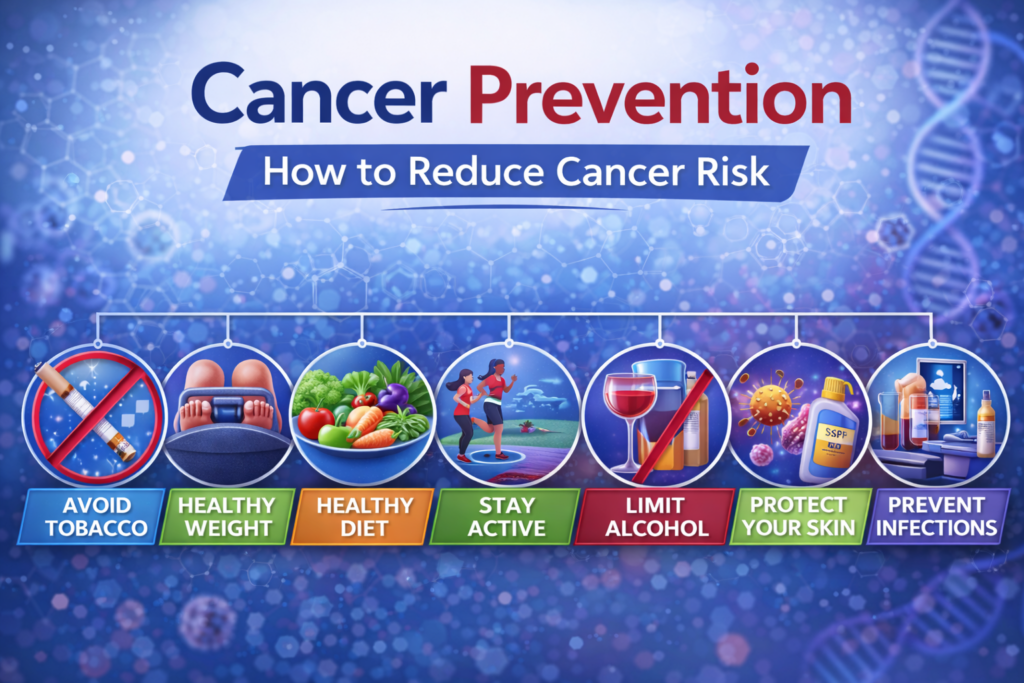
Understanding Cancer Prevention
Cancer prevention means taking steps to reduce the risk of developing cancer. While not all cancers can be prevented, many cancers are linked to lifestyle and environmental factors that can be changed.
Prevention focuses on reducing risk factors and protecting cells from DNA damage that can lead to cancer.
This guide explains cancer prevention and how to reduce cancer risk.
This information is educational only and not medical advice.
How Cancer Prevention Works
Cancer develops when DNA damage causes cells to grow out of control.
Prevention works by:
- reducing DNA damage
- lowering inflammation
- avoiding harmful exposures
- detecting cancer early
Learn more:
Cancer Overview
https://helping4cancer.com/cancer/
What Causes Cancer
https://helping4cancer.com/what-causes-cancer/
Avoid Tobacco
Avoiding tobacco is one of the most important cancer prevention steps.
Tobacco increases risk of:
- lung cancer
- throat cancer
- mouth cancer
- bladder cancer
- pancreatic cancer
Tobacco smoke contains chemicals that damage DNA.
Quitting smoking reduces cancer risk over time.
Maintain a Healthy Weight
Excess body weight increases cancer risk.
Obesity is linked to:
- colon cancer
- breast cancer
- pancreatic cancer
- prostate cancer
Healthy weight helps regulate hormones and inflammation.
Eat a Healthy Diet
Diet influences cancer risk.
Healthy foods include:
- vegetables
- fruits
- whole grains
- fiber-rich foods
These foods support normal cell function.
Limiting processed foods may help reduce risk.
Physical Activity
Regular physical activity helps reduce cancer risk.
Exercise helps:
- regulate hormones
- reduce inflammation
- improve immune function
Even moderate activity provides benefits.
Limit Alcohol
Alcohol increases cancer risk.
Alcohol is linked to:
- liver cancer
- breast cancer
- colon cancer
Limiting alcohol reduces cancer risk.
Protect Skin from Sun Exposure
Ultraviolet radiation can damage DNA.
UV exposure increases risk of:
- skin cancer
- melanoma
Protection includes:
- sunscreen
- protective clothing
- avoiding excessive sun exposure
Prevent Infections Linked to Cancer
Some infections increase cancer risk.
Examples include:
- HPV virus
- hepatitis B
- hepatitis C
Vaccination can reduce risk.
Medical treatment may reduce infection-related risk.
Avoid Harmful Chemicals
Some chemicals increase cancer risk.
Examples include:
- asbestos
- benzene
- industrial chemicals
Limiting exposure reduces risk.
Workplace safety is important.
Regular Cancer Screening
Screening can detect cancer early.
Early detection improves outcomes.
Examples include:
- colonoscopy
- mammograms
- PSA testing
Learn more:
Cancer Diagnosis Explained
https://helping4cancer.com/cancer-diagnosis/
Cancer Symptoms
https://helping4cancer.com/cancer-symptoms/
Genetic Risk and Prevention
Some people have inherited cancer risk.
Genetic testing can identify risk.
Examples include:
- BRCA mutations
- Lynch syndrome
Monitoring may help detect cancer early.
Can Cancer Always Be Prevented
Not all cancers can be prevented.
Some cancers develop from:
- aging
- inherited mutations
- random DNA changes
Prevention reduces risk but does not eliminate it.
Major Cancer Prevention Steps
Important prevention strategies include:
- avoid tobacco
- maintain healthy weight
- eat a balanced diet
- exercise regularly
- limit alcohol
- protect skin
- get screening tests
These steps reduce overall cancer risk.
Why Prevention Matters
Cancer prevention can:
- reduce cancer risk
- improve long-term health
- reduce mortality
Prevention is one of the most effective ways to reduce cancer burden.
Related Cancer Guides
Cancer Overview
https://helping4cancer.com/cancer/
Cancer Symptoms
https://helping4cancer.com/cancer-symptoms/
What Causes Cancer
https://helping4cancer.com/what-causes-cancer/
How Cancer Forms
https://helping4cancer.com/how-cancer-forms/
Cancer Treatment Explained
https://helping4cancer.com/cancer-treatment/
Cancer Diagnosis Explained
https://helping4cancer.com/cancer-diagnosis/
Medical References
National Cancer Institute
https://www.cancer.gov
American Cancer Society
https://www.cancer.org
Mayo Clinic
https://www.mayoclinic.org
Table of Contents