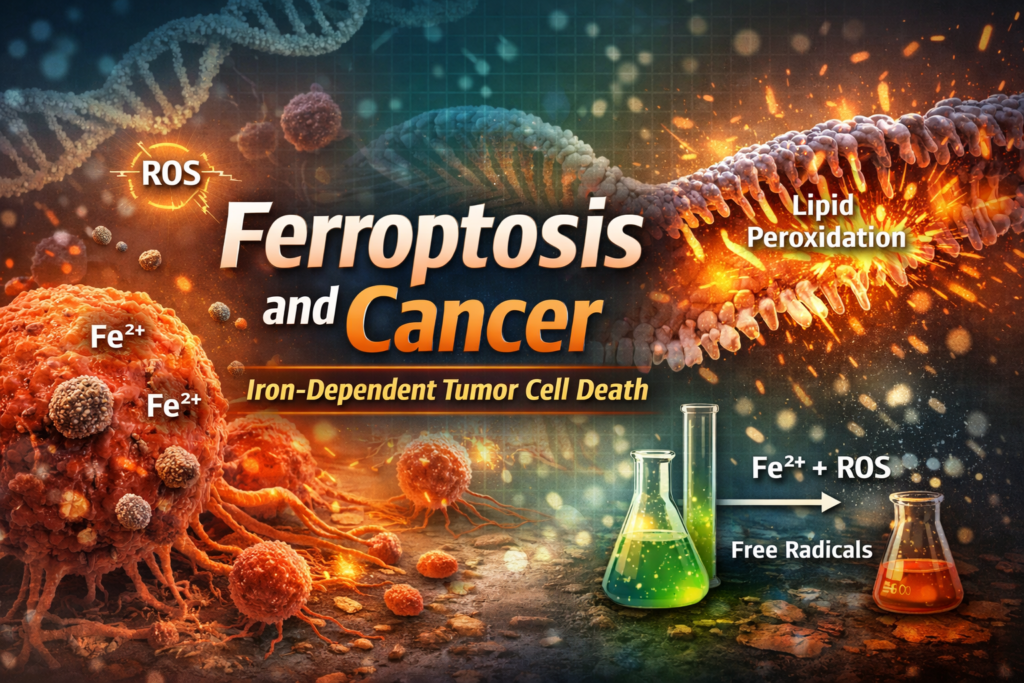
Ferroptosis is an emerging concept in cancer biology that describes a unique form of cell death driven by iron metabolism, lipid peroxidation, and reactive oxygen species (ROS). Unlike traditional mechanisms such as apoptosis, ferroptosis is caused by overwhelming oxidative damage to the cell membrane.
In recent years, researchers have discovered that many cancer cells are particularly vulnerable to ferroptosis because of their dependence on iron and their already elevated levels of oxidative stress. This has made ferroptosis an important focus in modern cancer research, especially in the field of metabolic and oxidative therapies.
Understanding ferroptosis helps explain how cancer cells can be targeted by exploiting their own biological weaknesses.
What Is Ferroptosis?
Ferroptosis is a regulated form of cell death that occurs when iron-dependent chemical reactions cause damage to cell membranes. The name comes from “ferro,” meaning iron, and “ptosis,” meaning falling.
Unlike apoptosis, which involves controlled cellular shutdown and DNA fragmentation, ferroptosis is driven by oxidative destruction of lipids within the cell membrane.
Key Features of Ferroptosis
- Iron accumulation inside cells
- Increased production of reactive oxygen species (ROS)
- Lipid peroxidation of cell membranes
- Failure of antioxidant defenses such as glutathione
When these processes occur simultaneously, the cell loses its structural integrity and dies.
Why Iron Metabolism Matters in Cancer
Iron plays a critical role in normal cellular function, including:
- DNA synthesis
- Energy production
- Oxygen transport
- Cell division
Cancer cells require significantly more iron than normal cells because they divide rapidly and have increased metabolic demands.
How Tumors Increase Iron Uptake
Tumors adapt by increasing proteins involved in iron transport, such as:
- Transferrin receptors
- Ferritin storage proteins
- Iron transport channels
This allows cancer cells to accumulate large amounts of iron.
Internal link:
https://helping4cancer.com/cancer-cells-need-iron/
Iron as a Double-Edged Sword
While iron supports tumor growth, it also creates vulnerability. Excess iron can generate highly reactive molecules through chemical reactions that produce oxidative stress.
This makes cancer cells more susceptible to ferroptosis.
Lipid Peroxidation: The Core of Ferroptosis
The defining event in ferroptosis is lipid peroxidation, a process where reactive oxygen species attack fatty acids in cell membranes.
Cell membranes contain polyunsaturated fatty acids (PUFAs), which are highly sensitive to oxidative damage.
What Happens During Lipid Peroxidation
- ROS attack membrane lipids
- Lipid peroxides accumulate
- Membrane structure weakens
- Cellular integrity collapses
Once enough damage occurs, the membrane can no longer function, and the cell dies.
Unlike apoptosis, this process is not controlled or reversible. It is a chemical breakdown of the cell’s structure.
Reactive Oxygen Species (ROS) and Cancer
Reactive oxygen species are molecules produced during normal metabolism. In cancer cells, ROS levels are typically higher due to increased metabolic activity.
Common Types of ROS
- Superoxide
- Hydrogen peroxide
- Hydroxyl radicals
At moderate levels, ROS can promote cancer growth. However, excessive ROS becomes toxic.
Internal link:
https://helping4cancer.com/oxidative-cancer-therapy-ros/
ROS and Ferroptosis
Ferroptosis occurs when ROS levels exceed the cell’s ability to control oxidative damage. This leads to rapid lipid peroxidation and cell death.
Many cancer therapies, including radiation and certain chemotherapies, work by increasing ROS to push cancer cells beyond their survival threshold.
The Role of Antioxidant Defenses
Cells have built-in systems to protect against oxidative damage. The most important system involved in ferroptosis prevention is the glutathione pathway.
Key Components
- Glutathione (GSH)
- GPX4 enzyme (glutathione peroxidase 4)
GPX4 uses glutathione to neutralize lipid peroxides and prevent membrane damage.
What Triggers Ferroptosis
Ferroptosis occurs when:
- Glutathione levels are depleted
- GPX4 activity is inhibited
- Lipid peroxides accumulate
Once these defenses fail, oxidative damage becomes uncontrollable.
Why Ferroptosis Is Important in Cancer Treatment
Ferroptosis represents a new way to target cancer cells, especially those resistant to traditional therapies.
Why Cancer Cells Are Vulnerable
Cancer cells often have:
- High iron levels
- Elevated ROS
- Altered lipid metabolism
- Increased metabolic stress
These conditions place them close to the threshold of oxidative damage.
Therapeutic Strategies Being Explored
Researchers are studying ways to trigger ferroptosis through:
- Increasing iron levels inside tumors
- Blocking glutathione production
- Inhibiting GPX4
- Enhancing ROS generation
By pushing cancer cells beyond their oxidative limit, ferroptosis may selectively destroy tumor cells.
Ferroptosis and the Cancer Metabolic Trap
Cancer cells rely on fragile metabolic systems to survive. This concept is often described as the cancer metabolic trap.
Internal link:
https://helping4cancer.com/cancer-metabolic-trap/
How Ferroptosis Fits In
Cancer cells operate under high stress:
- Increased energy demand
- Elevated ROS production
- Dependence on antioxidant systems
If this balance is disrupted, oxidative damage rapidly increases, leading to ferroptosis.
This makes ferroptosis a powerful example of how metabolic weaknesses can be exploited.
Ferroptosis and Tumor Metabolism
Tumor metabolism directly influences ferroptosis sensitivity.
Internal link:
https://helping4cancer.com/cancer-metabolism-explained/
Key Metabolic Factors
- Glycolysis increases ROS production
- Mitochondrial dysfunction alters oxidative balance
- Lipid metabolism affects membrane vulnerability
Glutamine and Ferroptosis
Glutamine metabolism helps maintain antioxidant defenses.
Internal link:
https://helping4cancer.com/why-cancer-cells-need-glutamine/
If glutamine pathways are disrupted, cancer cells may become more sensitive to oxidative stress and ferroptosis.
Ferroptosis vs Apoptosis
Ferroptosis differs significantly from traditional cell death pathways.
Key Differences
- Ferroptosis is driven by iron and oxidative damage
- Apoptosis is genetically programmed
- Ferroptosis damages cell membranes
- Apoptosis targets DNA and internal structures
Because ferroptosis operates through a different mechanism, it may be effective against cancers that resist apoptosis.
Future Directions in Ferroptosis Research
Ferroptosis is a rapidly growing area of study in oncology.
Researchers are investigating:
- Ferroptosis-inducing drugs
- Biomarkers for ferroptosis sensitivity
- Combination therapies with chemotherapy and radiation
- Personalized metabolic treatments
Some cancers appear highly sensitive to ferroptosis, while others develop resistance through stronger antioxidant systems.
Understanding these differences may lead to more targeted cancer treatments.
Conclusion
Ferroptosis is a powerful and emerging concept in cancer biology. It represents a form of cell death driven by iron-dependent oxidative damage and lipid peroxidation.
Because cancer cells rely heavily on iron and operate under high oxidative stress, they may be uniquely vulnerable to this pathway.
By targeting iron metabolism, increasing ROS, and disrupting antioxidant defenses, ferroptosis may provide a new strategy for eliminating cancer cells.
As research continues, ferroptosis has the potential to become an important part of future cancer therapies focused on metabolic and oxidative vulnerabilities.
External References
National Cancer Institute
https://www.cancer.gov
Nature Reviews Cancer – Ferroptosis
https://www.nature.com
PubMed Research Database
https://pubmed.ncbi.nlm.nih.gov
Cell Journal – Ferroptosis Mechanisms
https://www.cell.com
Table of Contents