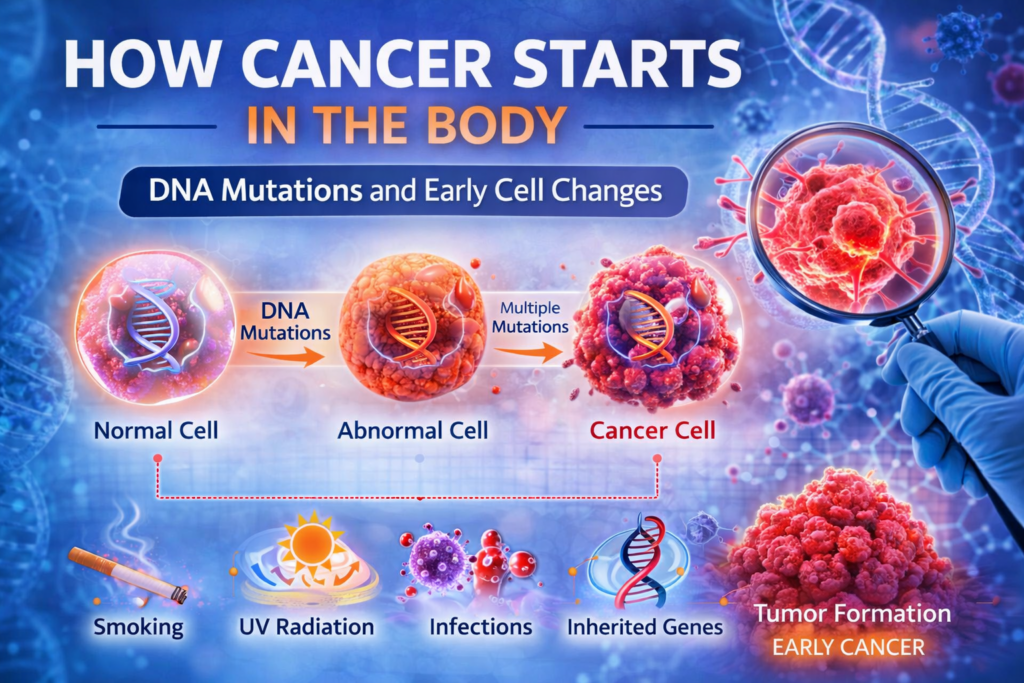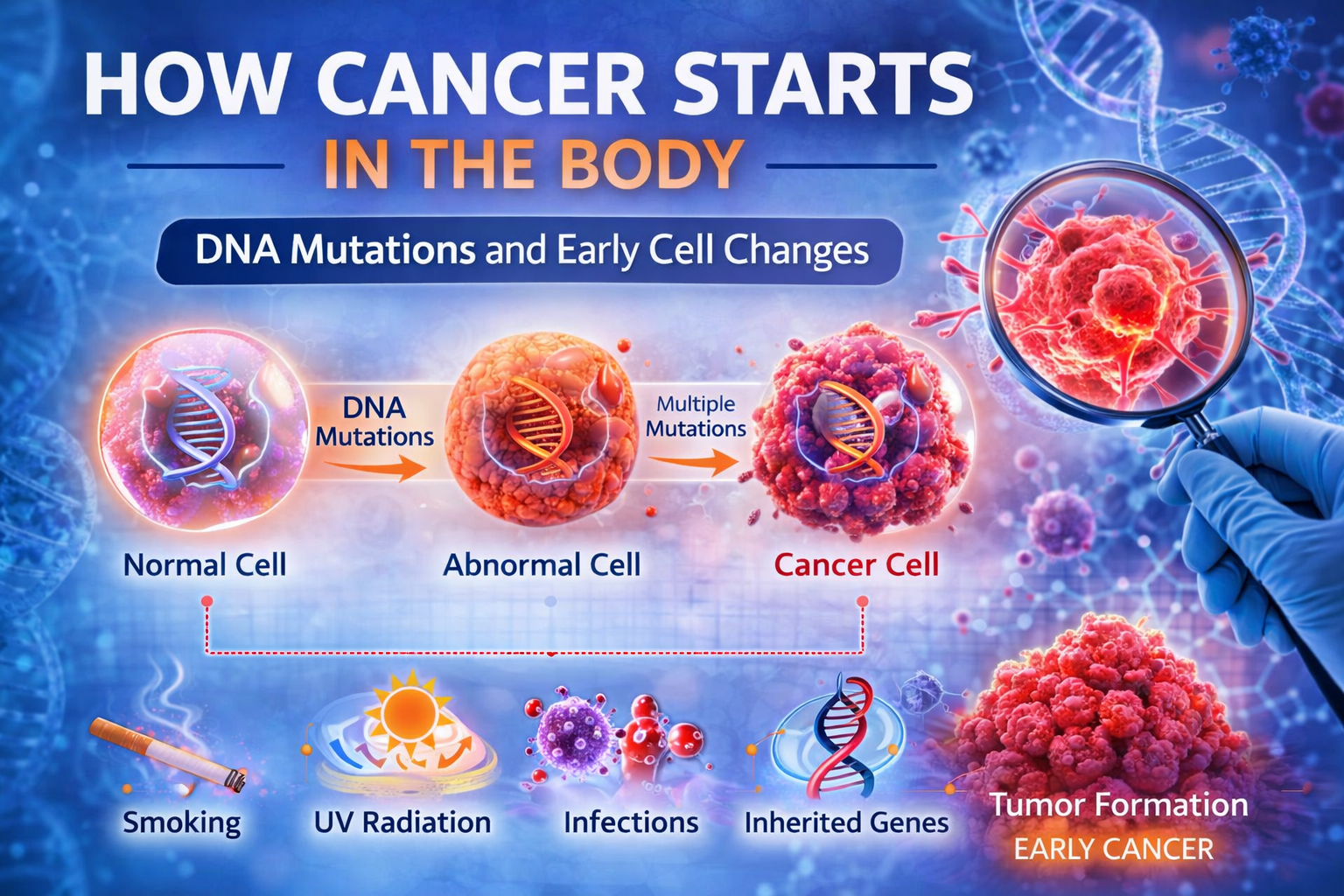
Cancer begins when normal cells in the body develop changes in their DNA that disrupt how those cells grow, divide, and die. Instead of following the body’s normal control systems, damaged cells continue multiplying and may eventually form tumors.
Understanding how cancer starts helps explain why cancer develops, why it can take years to appear, and why early detection is so important.
Cancer is not a single disease. It is a group of diseases that all begin with similar biological changes inside cells.
The Role of Normal Cells in the Body
The human body contains trillions of cells. These cells constantly grow, divide, and replace older or damaged cells to keep the body functioning properly.
Normal cells follow strict biological rules that control their behavior.
Healthy cells:
• divide only when needed
• repair damage in their DNA
• stop growing when they reach normal limits
• die when they become damaged or old
This process helps maintain balance in tissues and organs.
When these controls break down, abnormal cells can begin to grow in ways that the body cannot regulate.
DNA Mutations: The First Step in Cancer
The most important event that starts cancer is damage to DNA.
DNA is the genetic instruction system inside every cell. It contains the information that tells cells how to grow, divide, and perform their functions.
When DNA becomes damaged, the instructions controlling the cell can change. These changes are known as mutations.
Mutations can cause cells to behave abnormally. For example, mutated cells may:
• divide too quickly
• ignore signals that stop cell growth
• avoid normal cell death
• accumulate additional mutations over time
As these mutations build up, the cell may gradually transform into a cancer cell.
Types of Genes Involved in Cancer
Several types of genes normally control cell growth. When these genes are damaged, cancer may begin to develop.
Proto-Oncogenes
Proto-oncogenes normally help cells grow and divide. When these genes mutate, they can become oncogenes, which push cells to divide continuously.
This uncontrolled growth is one of the earliest steps in cancer development.
Tumor Suppressor Genes
Tumor suppressor genes help stop abnormal cell growth. They act like biological brakes that prevent cells from dividing too rapidly.
If tumor suppressor genes stop working, damaged cells may continue growing when they should stop.
One well-known tumor suppressor gene is p53, which helps prevent damaged cells from becoming cancerous.
DNA Repair Genes
DNA repair genes fix mistakes that occur when DNA is copied during cell division.
If these repair systems fail, mutations can accumulate much faster, increasing the risk of cancer.
How DNA Damage Occurs
DNA mutations can occur in several different ways.
Random Errors During Cell Division
Cells divide billions of times throughout a person’s lifetime. During this process, small errors sometimes occur when DNA is copied.
These random mutations are a natural part of aging and may contribute to cancer development over time.
Environmental Exposures
Certain environmental factors can damage DNA and increase the risk of cancer.
Examples include:
• tobacco smoke
• ultraviolet radiation from sunlight
• air pollution
• chemical exposure in workplaces
• radiation exposure
These factors may increase the number of mutations inside cells.
Infections
Some infections can contribute to cancer development by causing chronic inflammation or altering cellular DNA.
Examples include:
• human papillomavirus (HPV)
• hepatitis B and hepatitis C viruses
• Helicobacter pylori bacteria
These infections are linked to several types of cancer.
Inherited Genetic Mutations
In some cases, people inherit genetic mutations from their parents that increase cancer risk.
Examples include mutations in genes such as BRCA1 and BRCA2, which are associated with increased risk of breast and ovarian cancers.
Inherited mutations account for a small percentage of total cancer cases but can significantly increase individual risk.
From Abnormal Cells to Tumors
Cancer usually does not develop from a single mutation. Instead, multiple genetic changes accumulate over time.
As abnormal cells continue dividing, they may form a cluster of cells called a tumor.
Tumors can be classified as:
Benign tumors
These tumors grow slowly and do not spread to other parts of the body.
Malignant tumors
These tumors invade nearby tissues and may spread through the bloodstream or lymphatic system.
Malignant tumors are considered cancer.
Early Cancer Development
In the early stages, cancer often develops without causing noticeable symptoms.
During this time:
• abnormal cells multiply
• mutations accumulate
• the tumor gradually grows
This process may take many years or even decades.
Because early cancer can develop silently, screening tests such as mammograms, colonoscopies, and other imaging tests are important for detecting cancer before symptoms appear.
The Immune System and Cancer
The immune system constantly scans the body for abnormal cells.
In many cases, immune cells identify and destroy damaged or mutated cells before they can develop into cancer.
However, some cancer cells evolve ways to hide from the immune system or suppress immune responses. This allows tumors to grow and survive.
Modern treatments such as immunotherapy are designed to help the immune system recognize and attack cancer cells.
Key Takeaways
Cancer begins when DNA mutations disrupt normal cell growth and death.
These mutations may result from aging, environmental exposures, infections, or inherited genetic changes.
Most cancers develop slowly as multiple mutations accumulate over time.
Understanding how cancer starts helps scientists develop better strategies for prevention, early detection, and treatment.
External References
National Cancer Institute
https://www.cancer.gov/about-cancer/understanding/what-is-cancer
American Cancer Society
https://www.cancer.org/cancer/cancer-basics/what-is-cancer.html
World Health Organization
https://www.who.int/news-room/fact-sheets/detail/cancer
Mayo Clinic
https://www.mayoclinic.org/diseases-conditions/cancer/symptoms-causes/syc-20370588
National Human Genome Research Institute
https://www.genome.gov/genetics-glossary/Mutation
Table of Contents