Introduction
Every day, the human body produces abnormal cells. Most of these cells are quickly detected and destroyed before they can grow into tumors. This natural defense system is known as immune surveillance.
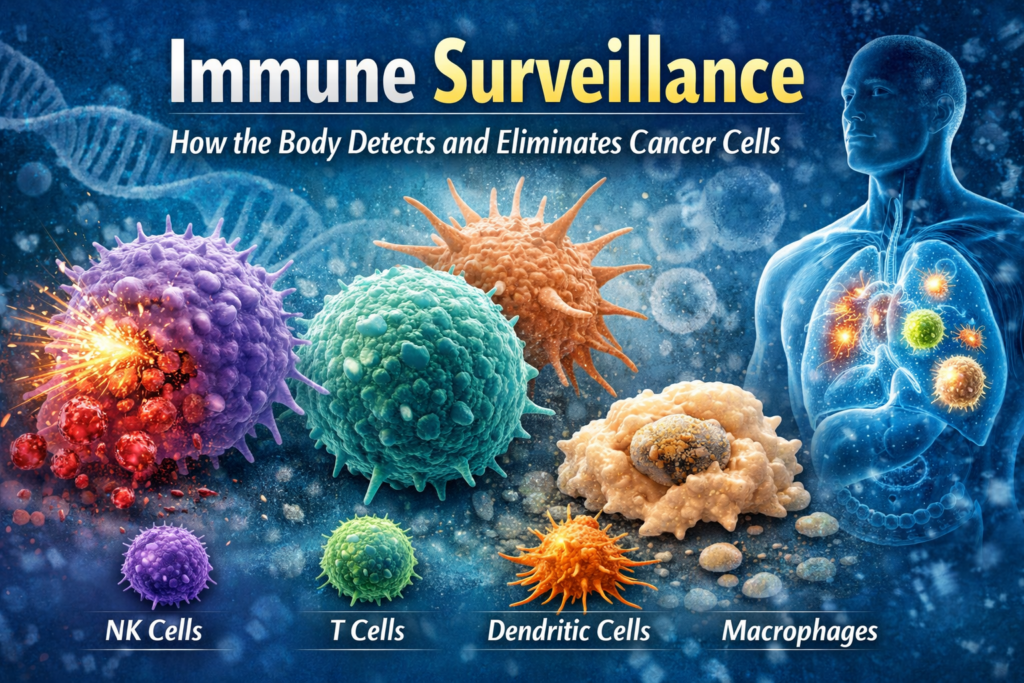
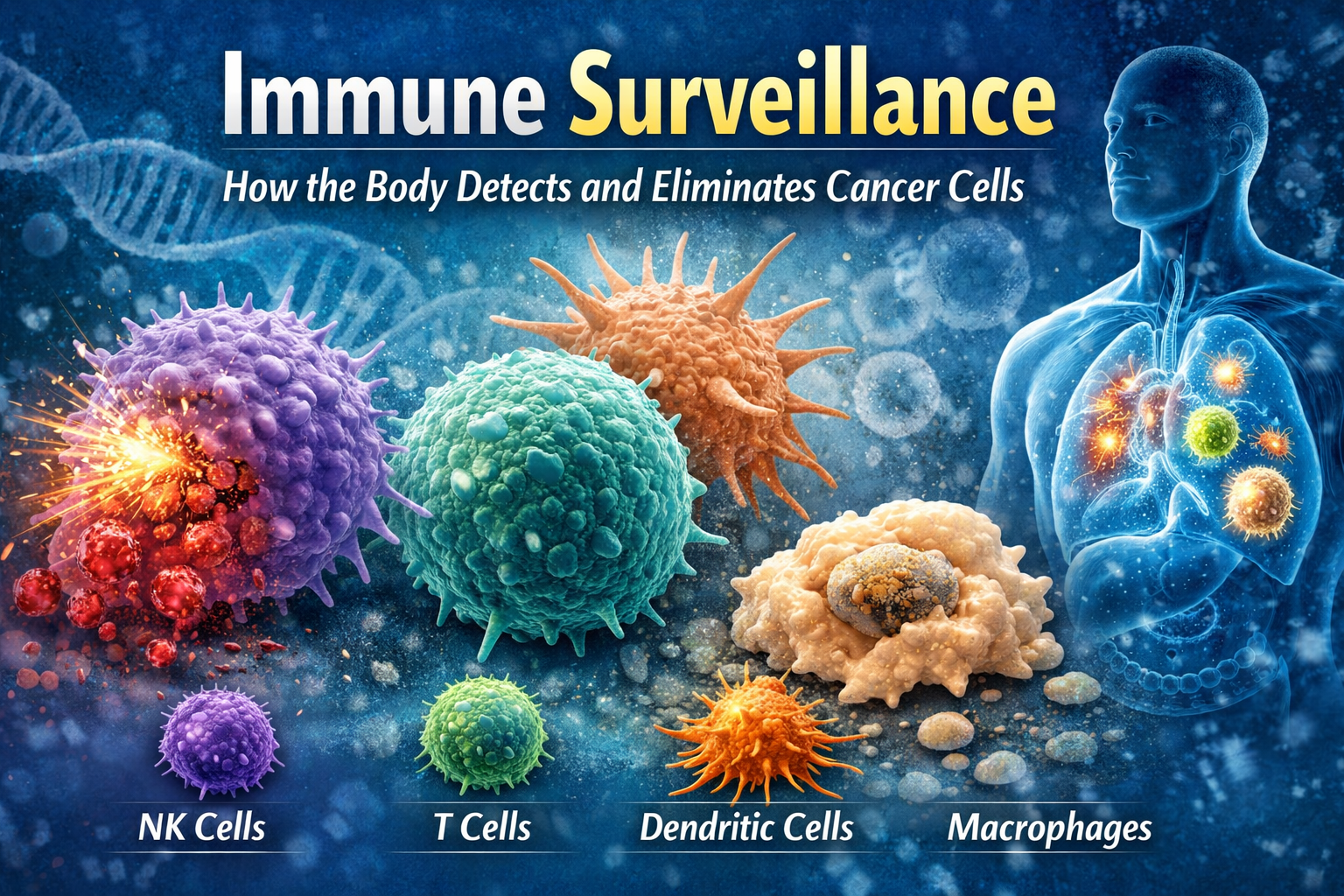
Immune surveillance refers to the ability of the immune system to identify and eliminate cancerous or pre-cancerous cells before they develop into clinically detectable tumors. This process involves multiple components of the immune system working together, especially natural killer (NK) cells, cytotoxic T cells, macrophages, and dendritic cells.
Scientists first proposed the concept of immune surveillance in the 1950s, and decades of research have confirmed that the immune system plays a critical role in preventing cancer development.
When immune surveillance works effectively, cancer cells are destroyed early. When it fails or becomes suppressed, tumors can grow and spread.
Understanding immune surveillance helps explain why supporting immune function is so important during cancer prevention and recovery.
What Is Immune Surveillance?
Immune surveillance is the process by which the immune system continuously monitors the body for abnormal cells.
These abnormal cells may appear due to:
- DNA mutations
- viral infections
- environmental toxins
- oxidative stress
- aging
Many mutated cells never become cancer because the immune system recognizes them as dangerous and eliminates them quickly.
This constant monitoring system is sometimes described as the immune system acting like a security patrol for the body.
When functioning properly, immune surveillance performs three critical tasks:
- Detection – identifying abnormal or mutated cells
- Destruction – eliminating dangerous cells
- Memory – recognizing similar threats faster in the future
If this system weakens, cancer cells may escape detection and begin forming tumors.
Learn more about how tumors develop in our guide to the Hallmarks of Cancer.
The Key Immune Cells That Fight Cancer
Several types of immune cells participate in immune surveillance. Each plays a unique role in detecting and destroying cancer cells.
Natural Killer (NK) Cells
Natural killer cells are one of the body’s first lines of defense against cancer.
Unlike many immune cells, NK cells do not require prior exposure to a threat. They can recognize abnormal cells immediately.
NK cells identify cancer cells by detecting missing or altered surface proteins, particularly molecules called MHC class I proteins.
Once a target cell is identified, NK cells release toxic molecules such as:
- perforin
- granzymes
These compounds puncture the cancer cell membrane and trigger apoptosis (programmed cell death).
Research shows that people with stronger NK cell activity often have lower cancer risk and better outcomes.
Learn more in our guide:
Boosting Natural Killer Cells
Cytotoxic T Cells (CD8+ T Cells)
While NK cells provide rapid response, cytotoxic T cells provide precision targeting.
T cells recognize cancer cells when tumor proteins are presented on the cell surface.
Once activated, cytotoxic T cells:
- attach to cancer cells
- release cytotoxic enzymes
- trigger apoptosis
This process allows the immune system to target specific cancer cells with high accuracy.
Modern cancer immunotherapies such as checkpoint inhibitors work by enhancing the activity of T cells.
Learn more:
- https://www.cancer.gov/about-cancer/treatment/types/immunotherapy
- https://www.nature.com/articles/nri.2016.93
Dendritic Cells
Dendritic cells act as messengers between the innate and adaptive immune systems.
Their primary role is to:
- capture abnormal proteins from cancer cells
- present those proteins to T cells
- activate a targeted immune response
Without dendritic cells, T cells would struggle to recognize tumors effectively.
This is why dendritic cell vaccines are being explored as a form of cancer immunotherapy.
Macrophages
Macrophages are immune cells responsible for cleaning up damaged or abnormal cells.
They perform several functions during immune surveillance:
- engulfing cancer cells
- releasing inflammatory signals
- activating other immune cells
However, some tumors can manipulate macrophages and convert them into tumor-associated macrophages (TAMs) that actually support tumor growth.
Understanding this interaction is a major focus of cancer research.
How Cancer Evades Immune Surveillance
Cancer does not simply grow unnoticed. Tumors actively evolve ways to escape immune detection.
Some common escape mechanisms include:
1. Immune Checkpoint Activation
Tumors may activate proteins such as:
- PD-1
- PD-L1
- CTLA-4
These molecules act like “off switches” for immune cells.
Checkpoint inhibitor drugs block these signals and restore immune activity.
Learn more:
https://www.cancer.gov/about-cancer/treatment/types/immunotherapy/checkpoint-inhibitors
2. Reduced Antigen Presentation
Some tumors stop displaying identifying proteins on their surface.
Without these signals, T cells cannot recognize them.
3. Immunosuppressive Tumor Microenvironment
Tumors often create an environment filled with:
- regulatory T cells
- suppressive cytokines
- metabolic waste products
This environment weakens immune activity around the tumor.
Learn more about the Tumor Microenvironment.
4. Rapid Mutation
Cancer cells mutate quickly.
These mutations help them avoid immune detection or resist immune attack.
This evolutionary arms race between tumors and immune defenses is known as cancer immunoediting.
The Three Phases of Cancer Immunoediting
Modern research describes immune surveillance as part of a larger process called immunoediting, which includes three stages.
Elimination
The immune system detects and destroys early cancer cells.
Most tumors are stopped at this stage.
Equilibrium
Some cancer cells survive but remain controlled by the immune system.
This stage can last for years.
Escape
Cancer cells develop strategies to evade the immune system and begin growing uncontrollably.
This stage leads to detectable tumors and cancer progression.
Learn more:
https://www.ncbi.nlm.nih.gov/pmc/articles/PMC4539376/
Supporting Immune Surveillance
Because immune surveillance depends heavily on NK cells and T cells, strategies that support immune function may play a role in cancer prevention and recovery.
Several natural compounds have been studied for their ability to support immune defenses.
Beta-Glucans
Beta-glucans are polysaccharides found in:
- medicinal mushrooms
- yeast
- oats and barley
They help activate immune cells including:
- macrophages
- dendritic cells
- NK cells
Beta-glucans can improve the immune system’s ability to recognize abnormal cells.
Learn more:
Beta-Glucans and Cancer
https://helping4cancer.com/beta-glucans-and-cancer/
Research:
https://pubmed.ncbi.nlm.nih.gov/25401784/
Turkey Tail Mushroom
Turkey Tail mushroom (Trametes versicolor) is one of the most researched medicinal mushrooms in oncology.
Its active compounds include:
- PSK (polysaccharide-K)
- PSP (polysaccharopeptide)
These compounds stimulate:
- NK cell activity
- T cell responses
- dendritic cell activation
Turkey Tail extracts are used in some countries as adjunct cancer therapy alongside chemotherapy.
Learn more:
Turkey Tail Mushroom and Cancer
Research:
https://www.ncbi.nlm.nih.gov/pmc/articles/PMC4684115/
Vitamin D
Vitamin D plays an important role in immune regulation.
Low vitamin D levels are associated with increased cancer risk and weaker immune responses.
Vitamin D helps:
- regulate T cell function
- support immune surveillance
- reduce inflammatory signaling
Research:
https://pubmed.ncbi.nlm.nih.gov/29025278/
Healthy Immune Function
Lifestyle factors that support immune surveillance include:
- quality sleep
- regular exercise
- balanced nutrition
- maintaining healthy vitamin levels
- reducing chronic inflammation
These factors help maintain strong immune activity over time.
Why Immune Surveillance Matters in Cancer Treatment
Modern cancer therapy increasingly focuses on enhancing the immune system’s natural ability to fight tumors.
This approach has led to major advances including:
Immunotherapy
Checkpoint inhibitors and other immune therapies stimulate immune cells to attack cancer.
Examples include:
- pembrolizumab
- nivolumab
- ipilimumab
These drugs have transformed treatment for cancers such as melanoma and lung cancer.
Cancer Vaccines
Researchers are developing vaccines designed to train the immune system to recognize tumor antigens.
These therapies aim to strengthen immune surveillance against cancer cells.
CAR-T Cell Therapy
CAR-T therapy modifies a patient’s T cells so they can recognize and attack cancer cells more effectively.
This technology has produced remarkable results in some blood cancers.
The Future of Immune Surveillance Research
Scientists continue to explore new ways to enhance immune surveillance.
Current research focuses on:
- improving NK cell therapies
- developing personalized cancer vaccines
- targeting the tumor microenvironment
- combining metabolic therapy with immunotherapy
Understanding how the immune system interacts with cancer will likely shape the next generation of cancer treatments.
Conclusion
Immune surveillance is one of the body’s most powerful defenses against cancer. Through the coordinated actions of NK cells, T cells, dendritic cells, and macrophages, the immune system constantly monitors the body for abnormal cells.
Most potential cancers are eliminated long before they can form tumors. However, when cancer cells develop ways to escape immune detection, tumors can grow and spread.
Research into immune surveillance has already led to revolutionary treatments such as immunotherapy and CAR-T therapy, and future discoveries may continue to improve cancer outcomes.
Supporting healthy immune function — including NK cell and T cell activity — remains a key focus of cancer research and prevention strategies.
External References
National Cancer Institute
https://www.cancer.gov/about-cancer/understanding/what-is-cancer
Nature Reviews Immunology
https://www.nature.com/articles/nri.2016.93
National Library of Medicine – Cancer Immunoediting
https://www.ncbi.nlm.nih.gov/pmc/articles/PMC4539376/
Beta-Glucans and Immune Function
https://pubmed.ncbi.nlm.nih.gov/25401784/
Turkey Tail Mushroom Research
https://www.ncbi.nlm.nih.gov/pmc/articles/PMC4684115/
Table of Contents