What Is Nucleotide Synthesis?
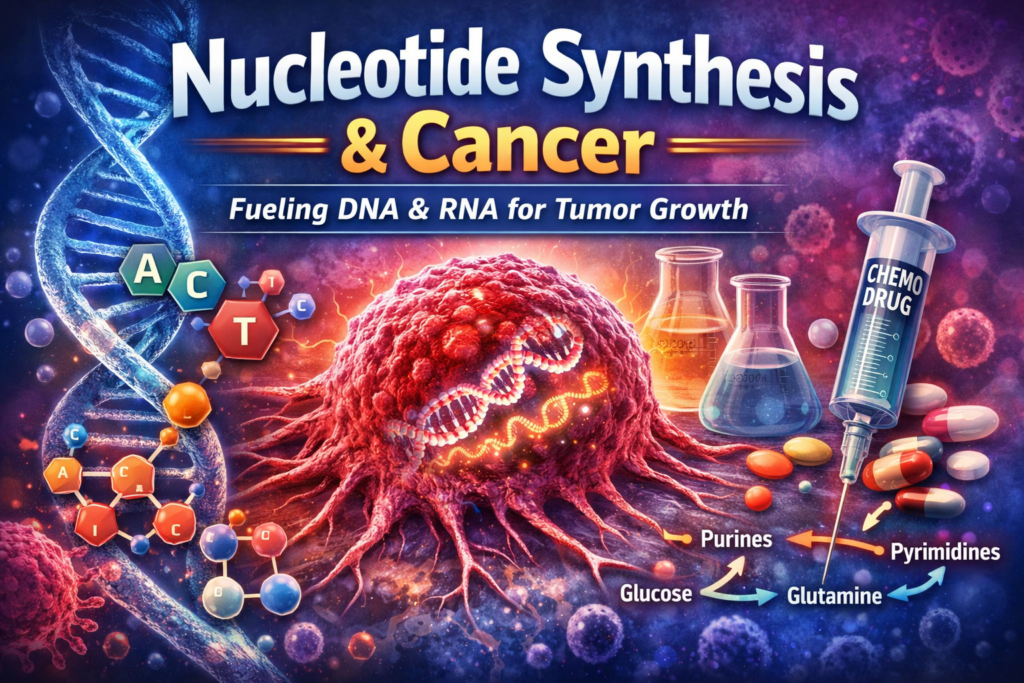
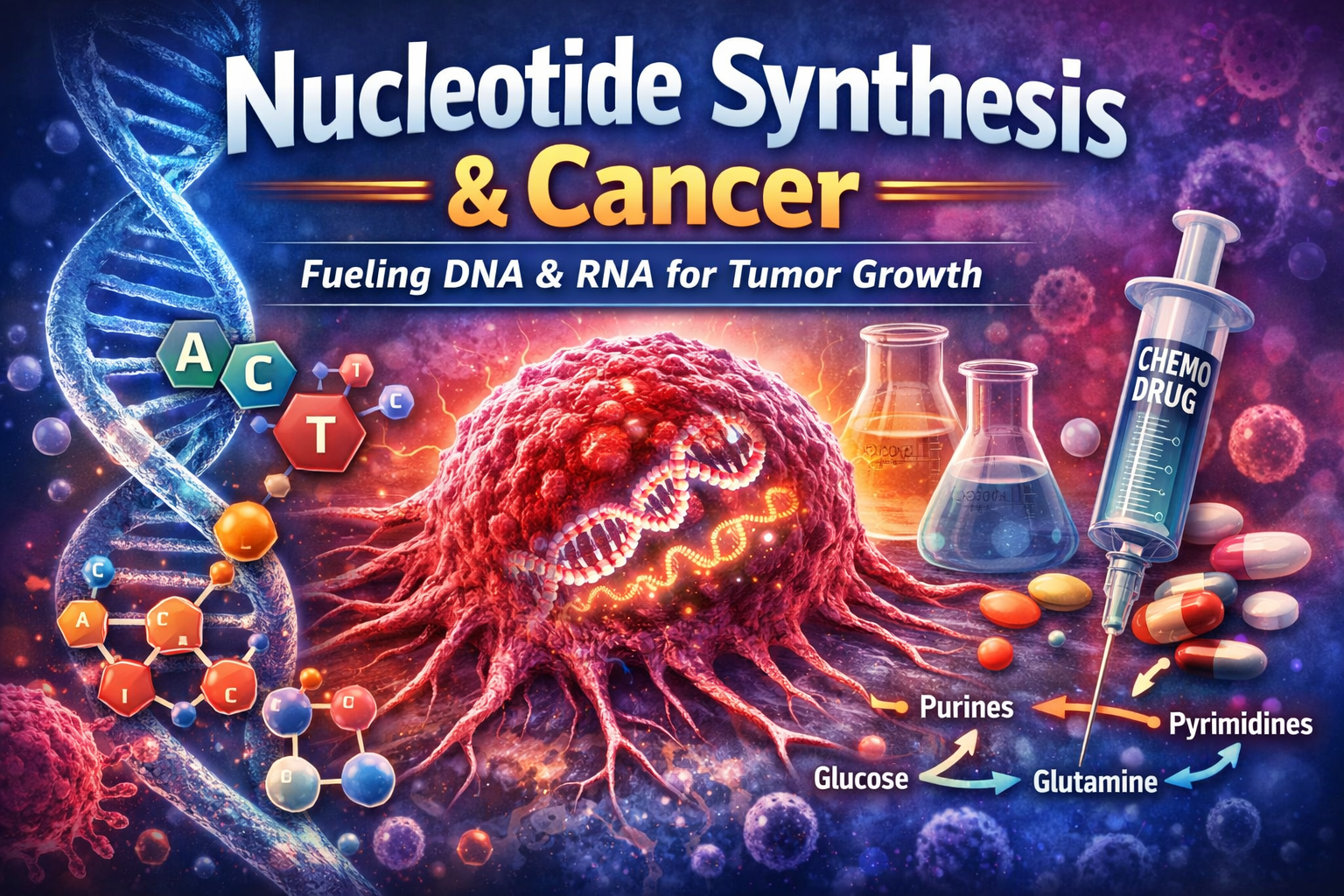
Nucleotide synthesis is the biological process by which cells produce the building blocks of DNA and RNA. These molecules—called nucleotides—are essential for cell division, repair, and survival.
Each nucleotide consists of three components:
- A nitrogenous base (adenine, guanine, cytosine, thymine, or uracil)
- A sugar molecule (ribose or deoxyribose)
- One or more phosphate groups
In normal cells, nucleotide production is tightly regulated. Cells only produce what they need for controlled growth and maintenance. In cancer, this regulation breaks down.
Tumor cells dramatically increase nucleotide synthesis to support rapid and uncontrolled proliferation. Without a constant supply of nucleotides, cancer cells cannot replicate their DNA or divide.
Why Nucleotide Synthesis Is Critical for Cancer Growth
Cancer is fundamentally a disease of uncontrolled cell division. Every time a cancer cell divides, it must duplicate its entire genome.
This creates a massive demand for nucleotides.
Key reasons nucleotide synthesis is essential in cancer include:
- Continuous DNA replication for rapid cell division
- RNA production for protein synthesis
- Repair of DNA damage caused by oxidative stress
- Support of genomic instability and mutation accumulation
Cancer cells often divide much faster than normal cells. This means they require far more nucleotides than healthy tissue.
To meet this demand, tumors reprogram their metabolism to prioritize nucleotide production.
The Two Main Pathways of Nucleotide Synthesis
De Novo Synthesis Pathway
De novo synthesis builds nucleotides from basic raw materials such as:
- Glucose
- Amino acids (glutamine, glycine, aspartate)
- Carbon dioxide
This pathway is energy-intensive but allows cancer cells to generate nucleotides independently of external supply.
Key features:
- Highly active in rapidly dividing tumor cells
- Dependent on metabolic pathways like glycolysis and the pentose phosphate pathway
- Provides a steady, self-sufficient nucleotide supply
Salvage Pathway
The salvage pathway recycles nucleotides from degraded DNA and RNA.
Key features:
- More energy-efficient than de novo synthesis
- Supports cancer survival under nutrient-limited conditions
- Helps tumors adapt to metabolic stress
Most cancers use both pathways simultaneously, creating redundancy that ensures nucleotide availability even under harsh conditions.
Purine vs Pyrimidine Synthesis in Cancer
Nucleotide synthesis involves two distinct categories:
Purines
Purines include:
- Adenine (A)
- Guanine (G)
Purine synthesis requires multiple steps and depends heavily on:
- Glutamine
- Glycine
- One-carbon metabolism
Cancer cells often upregulate purine synthesis enzymes to sustain DNA replication.
Pyrimidines
Pyrimidines include:
- Cytosine (C)
- Thymine (T)
- Uracil (U)
Pyrimidine synthesis is closely linked to mitochondrial function and involves key enzymes like dihydroorotate dehydrogenase (DHODH).
Cancer cells increase pyrimidine production to match the high demand for DNA and RNA synthesis.
The Role of Metabolism in Nucleotide Production
Nucleotide synthesis is not an isolated process. It is deeply connected to central cancer metabolism.
Glycolysis and the Pentose Phosphate Pathway
Cancer cells often rely on aerobic glycolysis (the Warburg effect). This provides intermediates for nucleotide synthesis.
The pentose phosphate pathway (PPP) is especially important because it generates:
- Ribose-5-phosphate (needed for nucleotide backbone)
- NADPH (used for biosynthesis and redox balance)
This pathway links glucose metabolism directly to DNA production.
Glutamine Metabolism
Glutamine is a critical nitrogen donor in nucleotide synthesis.
Cancer cells frequently exhibit glutamine addiction because it supports:
- Purine and pyrimidine formation
- Energy production
- Redox balance
Without glutamine, nucleotide synthesis slows, and cancer growth is impaired.
One-Carbon Metabolism
One-carbon metabolism provides methyl groups required for nucleotide synthesis.
It involves:
- Folate cycle
- Methionine cycle
These pathways are essential for producing thymidine and purines, making them key targets in cancer therapy.
Nucleotide Synthesis and Reactive Oxygen Species (ROS)
Cancer cells exist in a high oxidative environment due to increased metabolic activity.
This creates two competing pressures:
- ROS damages DNA, increasing mutation rates
- Cancer cells must repair this damage to survive
Nucleotide synthesis supports DNA repair mechanisms by supplying the necessary building blocks.
At the same time, excessive ROS can overwhelm repair systems, leading to cell death.
This balance is critical in cancer therapy strategies that aim to:
- Increase oxidative stress
- Simultaneously limit nucleotide availability
This combination can make cancer cells more vulnerable.
Mitochondria and Pyrimidine Synthesis
Mitochondria play a direct role in nucleotide synthesis, particularly in pyrimidine production.
The enzyme DHODH is located in the mitochondrial membrane and is essential for pyrimidine synthesis.
This creates a direct link between:
- Mitochondrial function
- Energy production
- DNA synthesis
Disrupting mitochondrial activity can impair nucleotide production and slow tumor growth.
How Cancer Cells Upregulate Nucleotide Synthesis
Cancer cells activate multiple genetic and signaling pathways to increase nucleotide production.
Key drivers include:
- MYC: Enhances transcription of nucleotide synthesis enzymes
- mTOR: Promotes anabolic metabolism and biosynthesis
- PI3K/Akt pathway: Supports glucose uptake and metabolic flux
- p53 mutations: Remove normal growth restraints
These pathways collectively increase:
- Enzyme expression
- Nutrient uptake
- Metabolic throughput
The result is a highly efficient system designed to fuel rapid proliferation.
Why Nucleotide Synthesis Is a Major Chemotherapy Target
Because cancer cells depend so heavily on nucleotide production, this pathway is one of the most important targets in oncology.
Antimetabolite Chemotherapy Drugs
Many chemotherapy agents work by disrupting nucleotide synthesis.
Examples include:
- Methotrexate (inhibits folate metabolism)
- 5-fluorouracil (blocks thymidine synthesis)
- Gemcitabine (interferes with DNA replication)
- Cytarabine (inhibits DNA polymerase)
These drugs effectively:
- Starve cancer cells of DNA building blocks
- Prevent replication
- Trigger cell death
Selectivity for Cancer Cells
Rapidly dividing cells are more sensitive to these drugs because they have higher nucleotide demands.
However, this also affects normal fast-dividing tissues such as:
- Bone marrow
- Gut lining
- Hair follicles
This explains common chemotherapy side effects.
Resistance Mechanisms in Cancer
Cancer cells can develop resistance to therapies targeting nucleotide synthesis.
Common strategies include:
- Upregulation of salvage pathways
- Increased expression of target enzymes
- Enhanced DNA repair capacity
- Metabolic flexibility
This adaptability makes it difficult to fully suppress nucleotide production.
Combination therapies are often required to overcome resistance.
Targeting Nucleotide Synthesis Through Metabolic Therapy
Beyond traditional chemotherapy, metabolic approaches aim to indirectly disrupt nucleotide synthesis.
Glucose Restriction
Reducing glucose availability can limit:
- Pentose phosphate pathway activity
- Ribose production
This can slow nucleotide synthesis and tumor growth.
Glutamine Inhibition
Targeting glutamine metabolism reduces nitrogen availability for nucleotide production.
This can impair both purine and pyrimidine synthesis.
Folate Pathway Modulation
Folate is essential for one-carbon metabolism.
Disrupting folate metabolism reduces:
- Thymidine production
- DNA synthesis
This is the basis of several chemotherapy drugs.
ROS-Based Strategies
Increasing oxidative stress while limiting nucleotide supply creates a dual vulnerability:
- DNA damage increases
- Repair capacity decreases
This can push cancer cells toward apoptosis.
Clinical Importance of Nucleotide Synthesis
Understanding nucleotide synthesis has major implications for cancer treatment.
It helps explain:
- Why tumors grow rapidly
- How chemotherapy works
- Why resistance develops
- How metabolic therapies may enhance treatment
It also highlights why targeting cancer metabolism is a promising area of research.
External Research and References
National Cancer Institute – https://www.cancer.gov
NIH PubMed – https://pubmed.ncbi.nlm.nih.gov
Nature Reviews Cancer – https://www.nature.com/nrc
ScienceDirect – https://www.sciencedirect.com
Related Internal Resources
Learn more about cancer metabolism:
https://helping4cancer.com/cancer-metabolism/
Explore oxidative stress in cancer:
https://helping4cancer.com/oxidative-stress-cancer/
Understand mitochondrial function in cancer:
https://helping4cancer.com/mitochondria-cancer/
Read about DNA damage and repair:
https://helping4cancer.com/dna-damage-repair-cancer/
Conclusion
Nucleotide synthesis is one of the most fundamental processes driving cancer growth. Without a steady supply of DNA and RNA building blocks, tumor cells cannot divide, repair damage, or survive.
Cancer cells adapt their metabolism to maximize nucleotide production through multiple pathways, including glucose metabolism, glutamine utilization, and one-carbon metabolism.
Because of this dependence, nucleotide synthesis remains one of the most effective and widely targeted pathways in cancer therapy. From traditional chemotherapy to emerging metabolic strategies, disrupting this process continues to be a central focus in the fight against cancer.
Understanding how nucleotide synthesis works provides a powerful framework for interpreting cancer biology, treatment mechanisms, and future therapeutic approaches.
Table of Contents