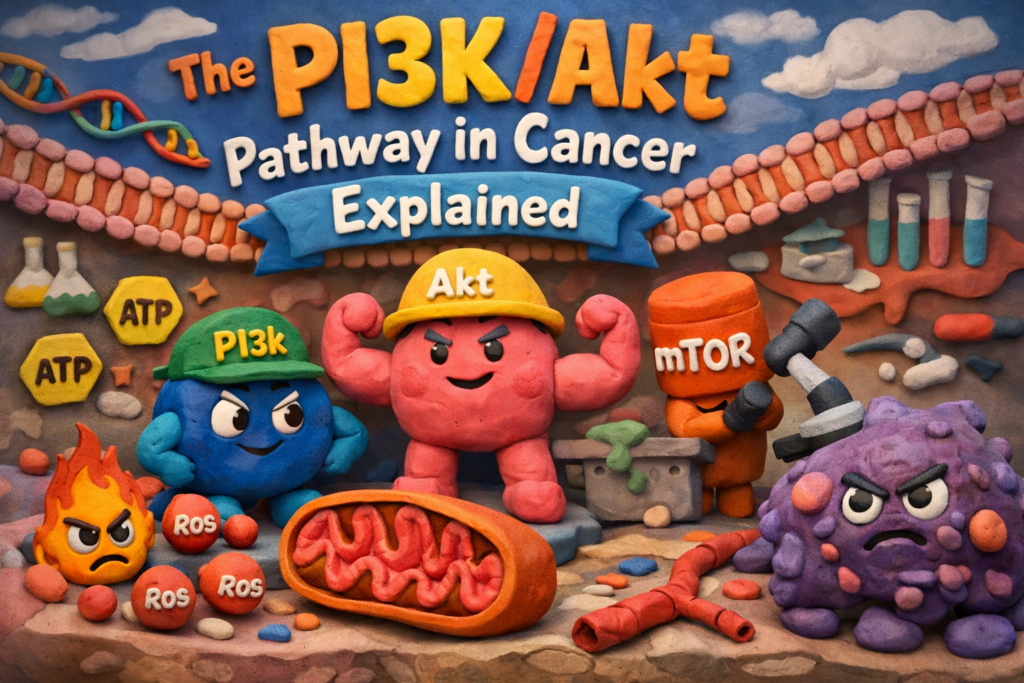
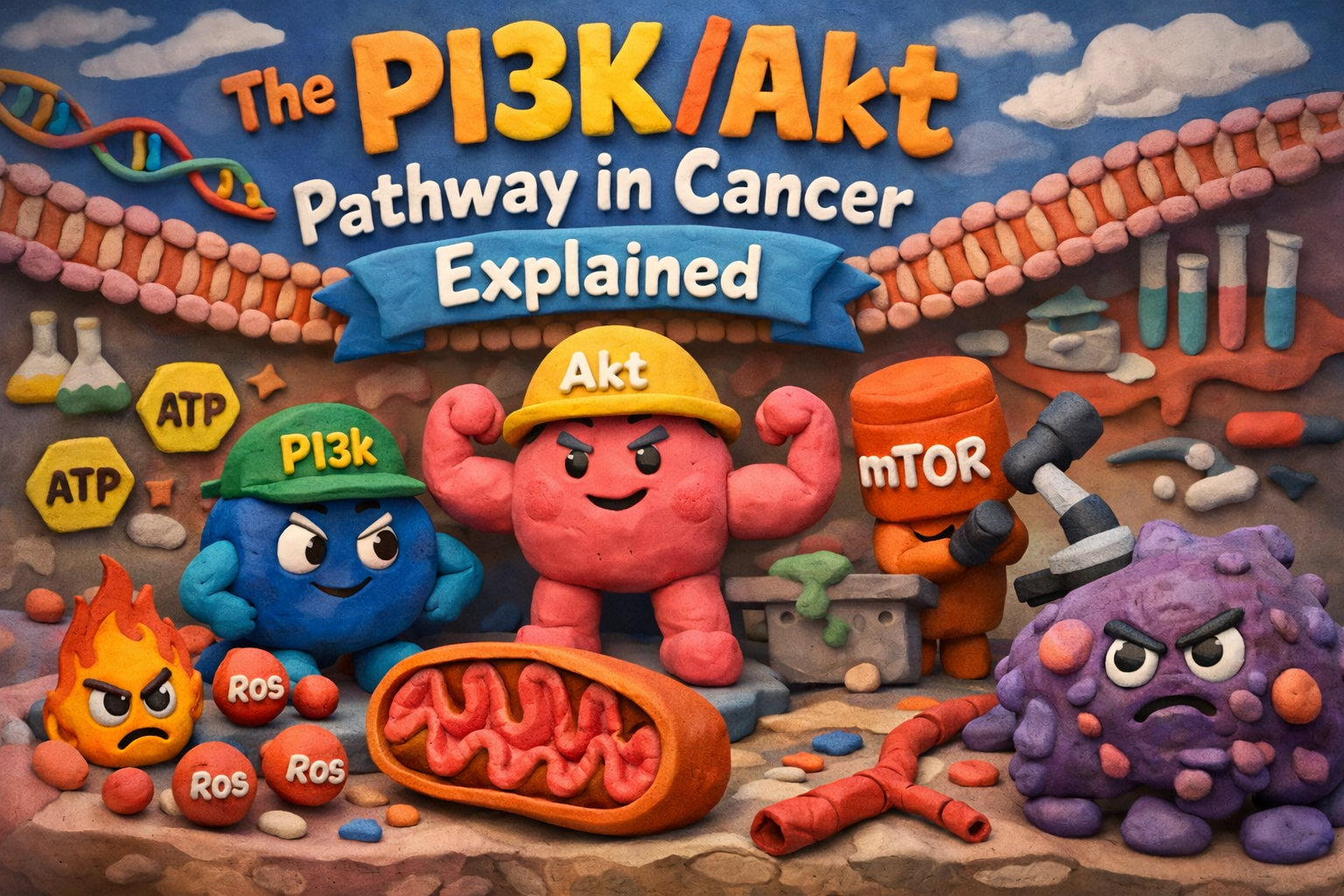
What Is the PI3K/Akt Pathway?
The PI3K/Akt pathway is one of the most important intracellular signaling networks in cancer biology. It regulates how cells grow, survive, use energy, and respond to stress.
Under normal conditions, this pathway helps healthy cells respond to growth signals such as insulin and growth factors. It ensures that cells only divide when needed and maintain proper metabolic balance.
In cancer, however, the PI3K/Akt pathway becomes chronically activated. This allows tumor cells to grow uncontrollably, resist cell death, and adapt to harsh environments such as low oxygen and nutrient deprivation.
Because of its central role, the PI3K/Akt pathway is considered a core survival axis in many cancers, including breast, colon, prostate, and lung cancers.
Key Components of the PI3K/Akt Signaling Pathway
The pathway consists of several tightly connected components that transmit signals from the cell surface to the nucleus and mitochondria.
PI3K (Phosphoinositide 3-Kinase)
PI3K is activated when growth factors bind to receptors on the cell surface. Once activated, it generates lipid signaling molecules that act as docking sites for downstream proteins.
Its primary role is to initiate the signaling cascade that leads to cell survival and metabolic activation.
Akt (Protein Kinase B)
Akt is the central regulator of the pathway. Once recruited and activated, it controls multiple processes:
- Promotes cell survival by blocking apoptosis
- Enhances glucose uptake and glycolysis
- Stimulates protein synthesis
- Supports mitochondrial function under stress
Akt essentially acts as a master switch that tells the cell to grow and survive.
mTOR (Mechanistic Target of Rapamycin)
mTOR operates downstream of Akt and regulates:
- Protein synthesis
- Cell growth and proliferation
- Nutrient sensing
mTOR integrates signals about energy availability, oxygen levels, and nutrients, making it critical for cancer metabolism.
PTEN (Tumor Suppressor)
PTEN is a negative regulator of the pathway. It prevents excessive activation by removing signaling lipids generated by PI3K.
Loss or mutation of PTEN is common in cancer and leads to uncontrolled PI3K/Akt activation.
How the PI3K/Akt Pathway Becomes Dysregulated in Cancer
Cancer cells exploit this pathway through several mechanisms:
Genetic Mutations
Mutations in PI3K genes (such as PIK3CA) can cause constant activation of the pathway.
Loss of Tumor Suppressors
Loss of PTEN removes the natural brake on the pathway, allowing continuous signaling.
Overactive Growth Factor Signaling
Cancer cells often overexpress receptors such as HER2 or EGFR, which feed into PI3K activation.
Crosstalk with Other Pathways
The PI3K/Akt pathway interacts with:
- MAPK signaling
- p53 tumor suppression
- NF-κB inflammatory signaling
This interconnected network amplifies survival signals and makes cancer cells more resilient.
PI3K/Akt and Cancer Metabolism
One of the most important roles of the PI3K/Akt pathway is metabolic reprogramming.
Cancer cells rely heavily on altered metabolism to sustain rapid growth. The PI3K/Akt pathway supports this shift in several ways.
Increased Glucose Uptake
Akt increases the expression and activity of glucose transporters such as GLUT1. This allows cancer cells to absorb more glucose from their environment.
Enhanced Glycolysis
Even in the presence of oxygen, cancer cells often rely on glycolysis, a phenomenon known as the Warburg effect.
PI3K/Akt signaling promotes glycolytic enzymes, enabling rapid ATP production and biosynthesis.
Lipid and Protein Synthesis
Through mTOR activation, the pathway drives:
- Fatty acid synthesis for membrane production
- Protein synthesis for cell growth
These processes are essential for tumor expansion.
Mitochondrial Adaptation
The pathway helps mitochondria remain functional under stress, reducing excessive reactive oxygen species (ROS) and preventing cell death.
PI3K/Akt Pathway and Resistance to Cell Death
A defining feature of cancer is the ability to evade apoptosis. The PI3K/Akt pathway is a major contributor to this resistance.
Inhibition of Pro-Apoptotic Proteins
Akt suppresses proteins such as:
- BAD
- BAX
- Caspase activators
This prevents the initiation of programmed cell death.
Activation of Survival Proteins
The pathway increases anti-apoptotic proteins such as Bcl-2, which stabilize mitochondrial membranes.
Protection Against Oxidative Stress
Cancer cells generate high levels of ROS due to rapid metabolism. While moderate ROS promotes growth signaling, excessive ROS can be lethal.
PI3K/Akt helps maintain a balance by:
- Enhancing antioxidant defenses
- Stabilizing mitochondrial membranes
- Preventing ROS-induced apoptosis
This balance allows cancer cells to survive in metabolically stressful environments.
Role in Tumor Growth and Proliferation
The PI3K/Akt pathway directly drives tumor growth by promoting cell cycle progression.
Cell Cycle Activation
Akt signaling increases cyclins and other proteins that push cells through the cell cycle.
Increased Protein Synthesis
mTOR activation leads to increased ribosome activity and protein production, enabling rapid cell division.
Angiogenesis Support
The pathway also promotes the production of VEGF (vascular endothelial growth factor), which stimulates the formation of new blood vessels.
This ensures that tumors receive sufficient oxygen and nutrients to continue growing.
PI3K/Akt Pathway and Therapy Resistance
One of the most clinically important aspects of this pathway is its role in treatment resistance.
Chemotherapy Resistance
Cancer cells with active PI3K/Akt signaling are better able to:
- Repair damage
- Avoid apoptosis
- Survive oxidative stress
This reduces the effectiveness of chemotherapy.
Radiation Resistance
Radiation therapy relies heavily on generating ROS to damage cancer cells.
PI3K/Akt activation helps neutralize ROS and repair DNA damage, reducing radiation effectiveness.
Targeted Therapy Resistance
Even when targeted therapies inhibit one pathway, cancer cells can activate PI3K/Akt as a backup survival mechanism.
This redundancy makes treatment more challenging.
Interaction with ROS and Mitochondrial Signaling
The PI3K/Akt pathway plays a critical role in managing oxidative stress and mitochondrial function.
ROS Regulation
Cancer cells exist in a delicate balance:
- Too little ROS reduces signaling
- Too much ROS causes cell death
PI3K/Akt helps maintain this balance by regulating antioxidant systems such as glutathione.
Mitochondrial Stability
Akt signaling preserves mitochondrial integrity by:
- Preventing membrane permeability
- Inhibiting cytochrome c release
- Supporting ATP production
This ensures continued energy supply and survival under stress.
Why the PI3K/Akt Pathway Matters in Cancer Treatment
Because of its central role, the PI3K/Akt pathway is a major therapeutic target.
Targeted Inhibitors
Several drugs are designed to inhibit components of the pathway:
- PI3K inhibitors
- Akt inhibitors
- mTOR inhibitors
These therapies aim to disrupt cancer cell survival signals.
Combination Strategies
Targeting this pathway alone is often not enough due to pathway redundancy.
Combining PI3K/Akt inhibitors with:
- Chemotherapy
- Radiation
- Metabolic therapies
may improve outcomes by attacking cancer from multiple angles.
Metabolic Targeting
Because the pathway controls metabolism, interventions that alter glucose availability or mitochondrial function may indirectly affect PI3K/Akt signaling.
This is an area of active research.
Clinical and Research Significance
The PI3K/Akt pathway is altered in a large percentage of human cancers. Its activity often correlates with:
- Tumor aggressiveness
- Poor prognosis
- Increased likelihood of resistance
Understanding this pathway allows researchers and clinicians to better predict how cancers behave and respond to treatment.
External References
National Cancer Institute – https://www.cancer.gov
PubMed – https://pubmed.ncbi.nlm.nih.gov
Nature Reviews Cancer – https://www.nature.com/nrc
NIH Research Database – https://www.nih.gov
Related Reading on Helping4Cancer.com
Cancer Metabolism Explained – https://helping4cancer.com/cancer-metabolism/
Cell Survival Pathways in Cancer – https://helping4cancer.com/cancer-survival-pathways/
Mitochondria and Cancer – https://helping4cancer.com/mitochondria-cancer/
Reactive Oxygen Species (ROS) and Cancer – https://helping4cancer.com/ros-cancer/
Conclusion
The PI3K/Akt pathway is one of the most powerful drivers of cancer survival and growth. By controlling metabolism, blocking cell death, and enhancing resistance to therapy, it enables cancer cells to thrive under conditions that would normally be lethal.
Its influence extends across nearly every aspect of tumor biology, from energy production and mitochondrial stability to proliferation and immune evasion.
Because of this, the PI3K/Akt pathway remains a central focus in cancer research and treatment development. Targeting this pathway, especially in combination with other strategies, represents one of the most promising approaches to disrupting cancer’s ability to survive and adapt.
Table of Contents