How Radiation Therapy Kills Cancer Cells
Radiation therapy is one of the most powerful and widely used treatments in modern cancer care. It is estimated that more than half of all cancer patients receive radiation therapy at some stage of their treatment. Unlike systemic therapies such as chemotherapy, radiation is a localized treatment designed to target tumors with high precision.
The effectiveness of radiation therapy comes down to one core concept: destroying the DNA inside cancer cells. Without intact DNA, cancer cells cannot divide, repair themselves, or survive.
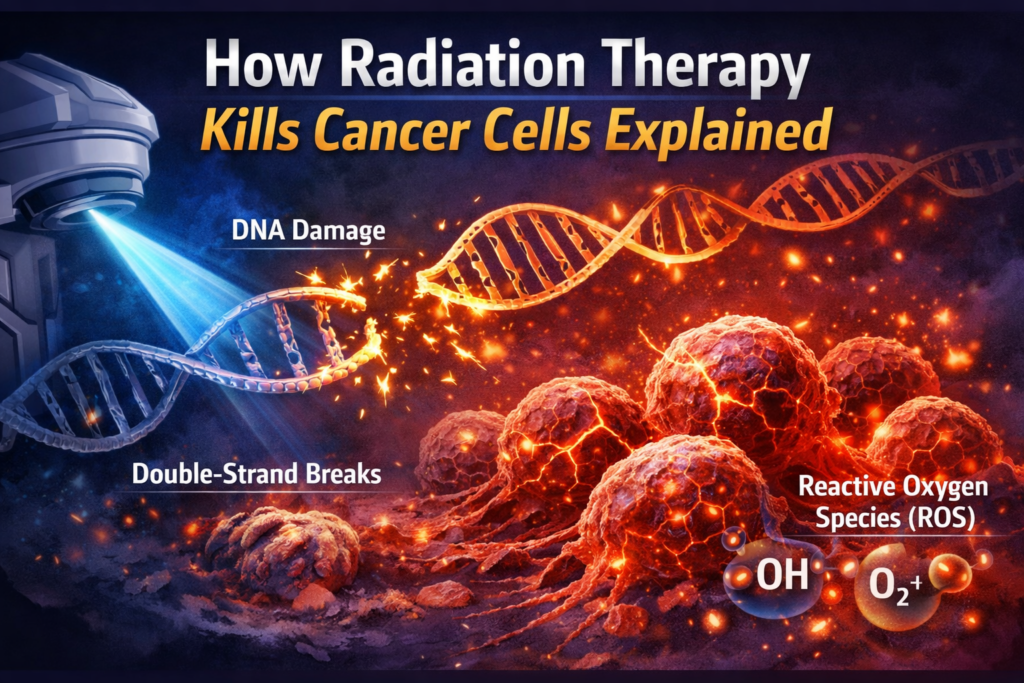
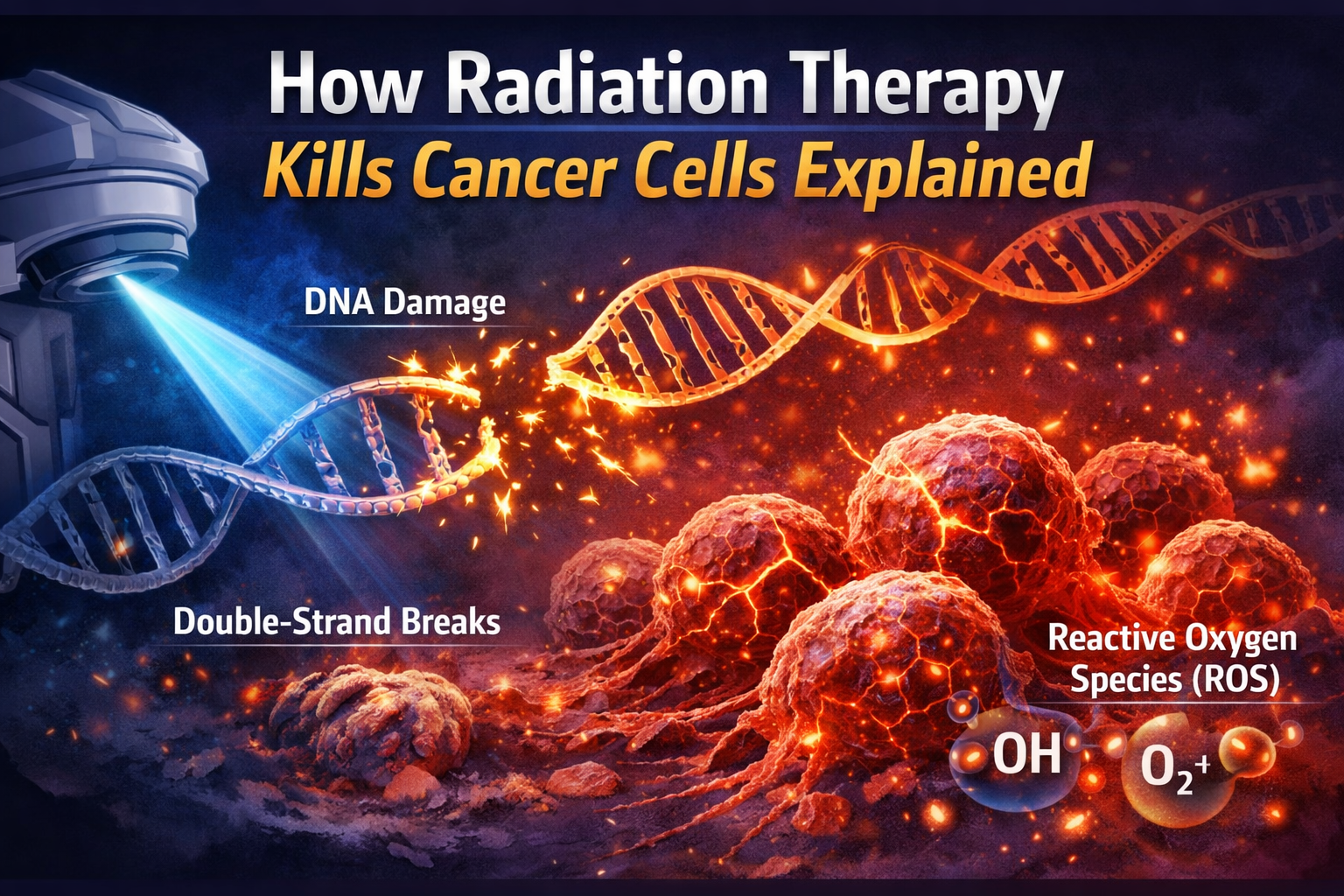
Radiation therapy works through three interconnected mechanisms:
- Direct DNA damage
- Reactive oxygen species (ROS) generation
- Double-strand DNA breaks
Together, these processes overwhelm cancer cells and trigger cell death.
What Is Radiation Therapy?
Radiation therapy uses high-energy ionizing radiation to damage cancer cells. This includes:
- X-rays
- gamma rays
- proton beams
- electron beams
Ionizing radiation carries enough energy to remove electrons from atoms, creating instability within molecules and leading to cellular damage.
Modern radiation techniques allow doctors to deliver radiation with remarkable accuracy. These include:
- Intensity-modulated radiation therapy (IMRT)
- Image-guided radiation therapy (IGRT)
- Stereotactic body radiation therapy (SBRT)
- Proton therapy
These methods ensure that tumors receive a high dose of radiation while surrounding healthy tissues are spared as much as possible.
External Reference:
https://www.cancer.gov/about-cancer/treatment/types/radiation-therapy
DNA Damage: The Primary Target of Radiation
DNA is the instruction manual that controls all cellular activity. Cancer cells depend heavily on DNA replication to sustain rapid growth.
Radiation therapy disrupts this process by causing structural damage to DNA. There are two main types:
Single-Strand Breaks
Single-strand breaks affect only one side of the DNA helix. Cells can often repair this type of damage using built-in repair systems.
Double-Strand Breaks
Double-strand breaks occur when both strands of DNA are severed. This is far more dangerous and often leads to irreversible damage.
When DNA damage accumulates beyond repair, the cell loses its ability to divide and eventually dies.
External Reference:
https://www.nature.com/articles/nrc3895
Direct DNA Damage from Radiation
Radiation can directly interact with DNA molecules, breaking chemical bonds and disrupting genetic structure.
This leads to:
- base damage
- strand breaks
- chromosomal fragmentation
Cancer cells are particularly sensitive during active cell division, especially in the G2 and M phases of the cell cycle.
Normal cells can repair some of this damage through pathways such as:
- non-homologous end joining (NHEJ)
- homologous recombination (HR)
However, many cancer cells have defective repair systems, making them more vulnerable to radiation-induced damage.
Reactive Oxygen Species (ROS) Generation
Most radiation damage occurs indirectly through the production of reactive oxygen species (ROS).
When radiation interacts with water inside cells, it triggers a process called radiolysis, producing highly reactive molecules such as:
- hydroxyl radicals (OH•)
- superoxide (O2−)
- hydrogen peroxide
These molecules are unstable and highly destructive.
ROS damage:
- DNA
- proteins
- lipid membranes
- mitochondria
This oxidative stress significantly amplifies the effect of radiation therapy.
Internal Link:
https://helping4cancer.com/oxidative-cancer-therapy-ros/
Why Cancer Cells Are More Vulnerable to Radiation
Radiation therapy works because cancer cells are biologically weaker than normal cells in several key ways.
Rapid Cell Division
Cancer cells divide more frequently, making them more likely to encounter lethal DNA damage during replication.
Defective DNA Repair
Many tumors have mutations in critical DNA repair genes such as:
- p53
- BRCA1
- BRCA2
These defects prevent cancer cells from properly repairing radiation-induced damage.
High Oxidative Stress
Cancer cells often operate under elevated oxidative stress. Radiation pushes them beyond their survival threshold.
Internal Link:
https://helping4cancer.com/cancer-metabolism-explained/
Double-Strand DNA Breaks: The Critical Killing Mechanism
Double-strand DNA breaks are the most lethal form of radiation-induced damage.
These breaks:
- sever both strands of DNA
- disrupt genetic integrity
- prevent accurate repair
When too many double-strand breaks occur, cells activate protective mechanisms such as:
- apoptosis (programmed cell death)
- senescence (growth arrest)
- mitotic catastrophe
These processes ensure that severely damaged cells cannot continue to divide.
Radiation and the Tumor Microenvironment
Radiation therapy does more than damage cancer cells—it also alters the tumor environment.
It can:
- increase tumor antigen presentation
- activate immune signaling pathways
- enhance T-cell infiltration
In some cases, radiation triggers the abscopal effect, where tumors outside the treatment area shrink due to immune activation.
Internal Link:
https://helping4cancer.com/tumor-microenvironment/
Fractionation: Why Radiation Is Delivered Over Time
Radiation therapy is typically delivered in multiple small doses over several sessions, known as fractionation.
This approach allows:
- healthy cells time to repair
- cancer cells to accumulate damage
- better targeting of cells in vulnerable phases
This strategy follows the 4 R’s of radiobiology:
- repair
- reoxygenation
- redistribution
- repopulation
Fractionation improves treatment effectiveness while reducing side effects.
Side Effects of Radiation Therapy
Although radiation is targeted, it can still affect nearby healthy tissue.
Common side effects include:
- fatigue
- skin irritation
- inflammation
- localized tissue damage
Healthy cells generally recover better due to stronger repair mechanisms.
Radiation Therapy in Combination Treatments
Radiation is often used alongside other therapies to enhance results.
Chemotherapy
Certain drugs make cancer cells more sensitive to radiation.
Immunotherapy
Radiation can improve immune system recognition of tumors.
Metabolic Strategies
Increasing oxidative stress inside tumors may amplify radiation damage.
Internal Link:
https://helping4cancer.com/oxidative-cancer-therapy-ros/
The Future of Radiation Therapy
Radiation oncology continues to evolve with new technologies and strategies.
Emerging approaches include:
- proton beam therapy
- carbon ion therapy
- AI-guided radiation planning
- adaptive radiation therapy
These advancements aim to improve precision, effectiveness, and patient safety.
Conclusion
Radiation therapy kills cancer cells by causing severe DNA damage and oxidative stress. The combination of direct DNA disruption and ROS generation leads to irreversible cellular damage.
The most critical mechanism is the formation of double-strand DNA breaks, which prevent cancer cells from replicating and trigger cell death pathways.
Because cancer cells divide rapidly and often lack effective repair systems, they are far more vulnerable to radiation than normal cells.
This makes radiation therapy one of the most effective and essential tools in modern cancer treatment.
✅ INTERNAL LINKING (Helping4Cancer)
- https://helping4cancer.com/oxidative-cancer-therapy-ros/
- https://helping4cancer.com/cancer-metabolism-explained/
- https://helping4cancer.com/tumor-microenvironment/
- https://helping4cancer.com/immune-surveillance-cancer/
Table of Contents