Introduction
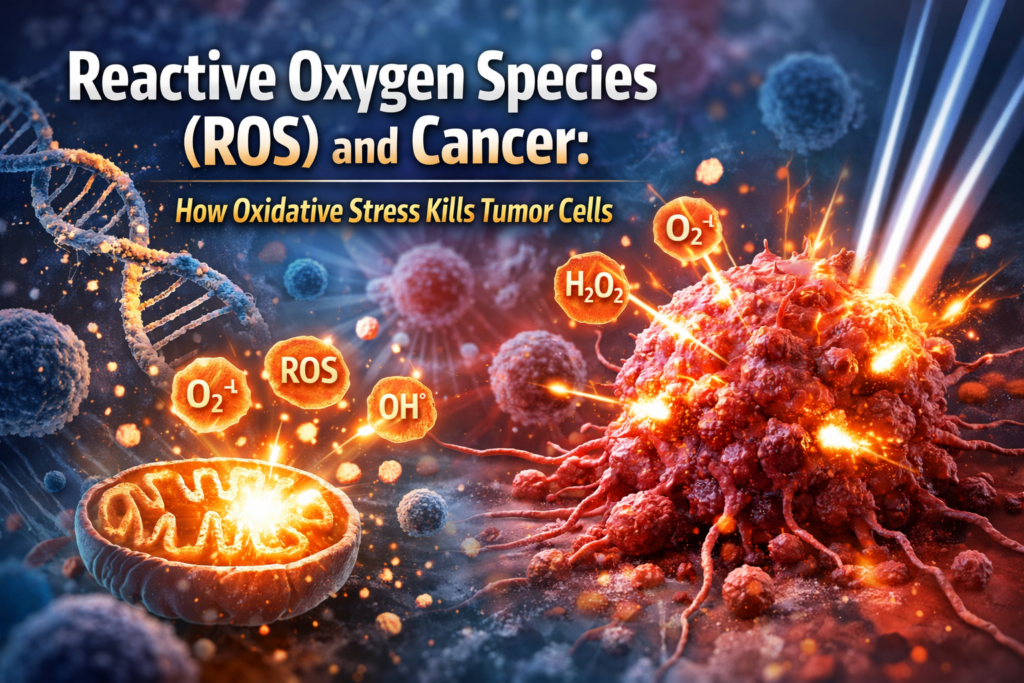
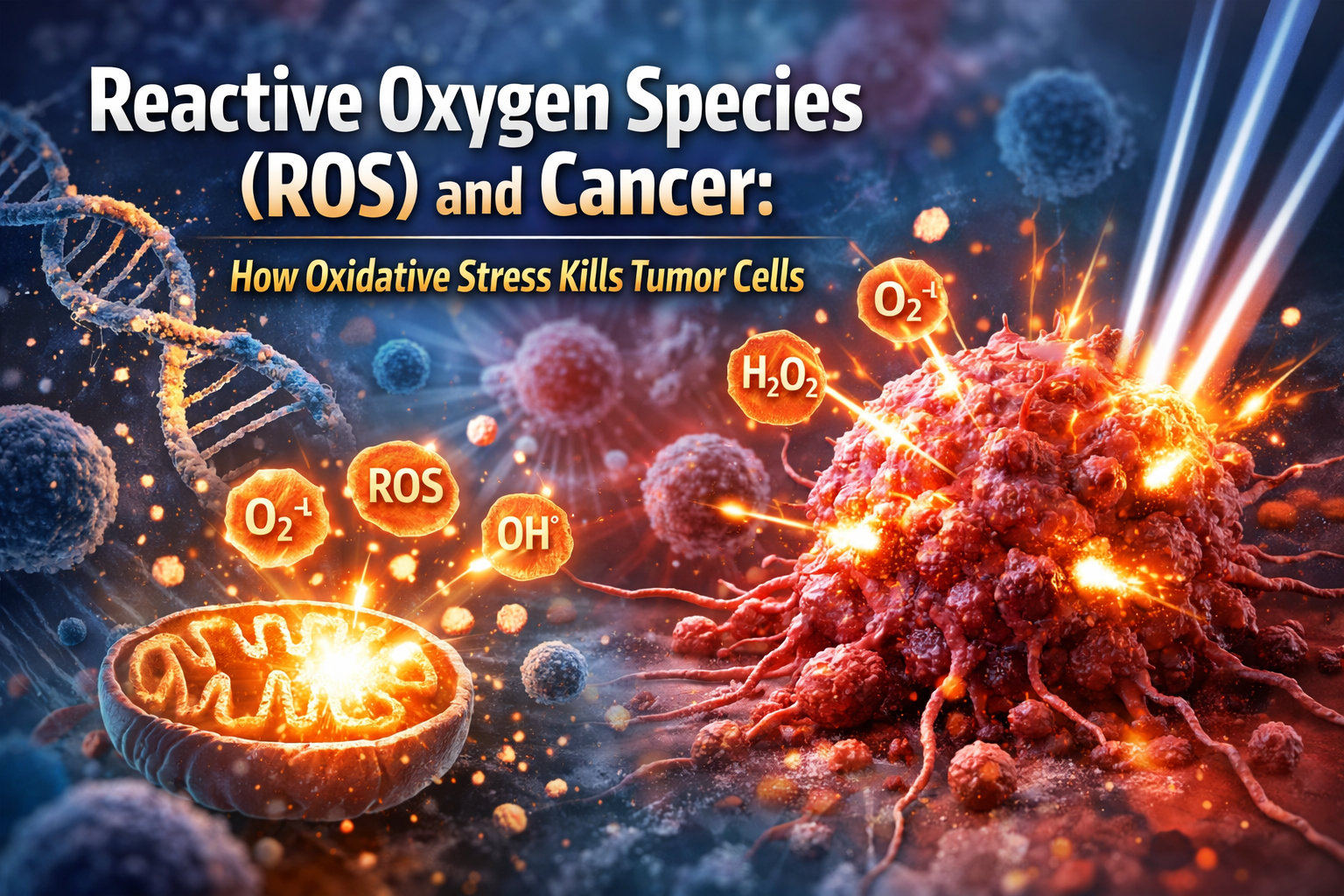
Reactive oxygen species and cancer are closely connected in modern cancer research. Scientists have discovered that reactive oxygen species (ROS) can damage cancer cells and play an important role in many cancer treatments.
ROS are highly reactive molecules that form naturally in cells during metabolism. At normal levels, they help regulate cell signaling and immune defense. But when ROS levels become too high, they create oxidative stress, which damages proteins, DNA, and cell membranes.
Cancer treatments such as radiation therapy and chemotherapy intentionally increase ROS levels inside tumor cells. When oxidative stress becomes overwhelming, cancer cells lose their ability to survive.
Understanding how reactive oxygen species affect cancer cells helps explain why treatments like radiation and chemotherapy work—and why researchers are exploring new therapies that increase oxidative stress in tumors.
This guide explains:
• What reactive oxygen species are
• How ROS damage cancer cells
• The role of ROS in radiation and chemotherapy
• Why cancer cells are vulnerable to oxidative stress
What Are Reactive Oxygen Species (ROS)?
Reactive oxygen species are chemically reactive molecules that contain oxygen. They are produced during normal cellular metabolism, especially in the mitochondria, which generate cellular energy.
Common types of ROS include:
• Superoxide (O₂⁻)
• Hydrogen peroxide (H₂O₂)
• Hydroxyl radicals (OH•)
These molecules are extremely reactive. Because of this, they can quickly interact with biological molecules inside cells.
In healthy cells, ROS levels are tightly controlled by antioxidant systems such as:
• glutathione
• superoxide dismutase
• catalase
• peroxidases
These systems prevent ROS from causing excessive damage.
However, when ROS levels rise beyond the cell’s ability to control them, oxidative stress occurs.
Oxidative stress can damage:
• DNA
• proteins
• lipids
• mitochondria
This damage can eventually lead to cell death.
The Relationship Between ROS and Cancer
Reactive oxygen species and cancer have a complex relationship.
ROS can both:
• contribute to cancer development
• destroy cancer cells
Low or moderate levels of ROS can promote cancer growth by damaging DNA and increasing mutation rates. Over time, these mutations may lead to uncontrolled cell division.
However, high levels of ROS are toxic to cancer cells.
Cancer cells often already have elevated ROS because they grow rapidly and have abnormal metabolism. This means they live close to their oxidative stress limit.
When ROS levels increase further, cancer cells may experience:
• mitochondrial collapse
• DNA damage
• membrane destruction
• activation of apoptosis
This vulnerability is one reason many cancer therapies focus on pushing ROS levels beyond the cancer cell survival threshold.
Mitochondria and ROS Production
Mitochondria are the main producers of reactive oxygen species in cells.
During normal metabolism, mitochondria generate energy through a process called oxidative phosphorylation. As electrons move through the mitochondrial electron transport chain, small amounts of oxygen are converted into ROS.
In healthy cells, this process is controlled.
But in cancer cells, mitochondrial metabolism is often abnormal. These abnormalities can lead to increased ROS production.
When mitochondrial ROS increases dramatically, several destructive events can occur:
• loss of mitochondrial membrane potential
• release of cytochrome c
• activation of apoptosis pathways
• ATP depletion
Because cancer cells depend heavily on metabolic pathways that generate ROS, mitochondrial stress can push tumors toward cell death.
Oxidative Stress and DNA Damage
One of the most important effects of reactive oxygen species is DNA damage.
ROS can attack DNA molecules and cause:
• base modifications
• single-strand breaks
• double-strand breaks
• chromosomal instability
These types of damage interfere with the cell’s ability to replicate DNA correctly.
If the damage is severe, cells activate protective mechanisms such as:
• apoptosis (programmed cell death)
• senescence (permanent growth arrest)
Cancer therapies often rely on this mechanism. By generating ROS inside tumor cells, treatments can trigger DNA damage that the cancer cannot repair.
Radiation Therapy and ROS
Radiation therapy is one of the most powerful medical tools for increasing reactive oxygen species in cancer cells.
When radiation interacts with water molecules inside cells, it creates large amounts of ROS.
These ROS rapidly damage nearby structures, including:
• DNA
• proteins
• cellular membranes
The most important target is DNA. Radiation-induced ROS cause double-strand DNA breaks, which are extremely difficult for cells to repair.
If enough DNA damage accumulates, the cancer cell dies.
Because tumors often have weaker DNA repair systems than healthy cells, radiation can selectively damage cancer while surrounding tissue recovers.
This is why ROS generation is central to the effectiveness of radiation therapy.
Learn more about radiation therapy mechanisms:
https://www.cancer.gov/about-cancer/treatment/types/radiation-therapy
Chemotherapy and ROS
Many chemotherapy drugs work by increasing reactive oxygen species inside tumor cells.
Examples of ROS-generating chemotherapy include:
• doxorubicin
• cisplatin
• bleomycin
• paclitaxel
These drugs disrupt cancer cell metabolism and generate oxidative stress.
Chemotherapy-induced ROS can damage:
• mitochondria
• DNA
• cell membranes
• proteins
When oxidative stress becomes too high, the cancer cell undergoes apoptosis.
Researchers have found that combining multiple ROS-generating therapies can increase tumor cell vulnerability.
Learn more about chemotherapy mechanisms:
https://www.cancer.gov/about-cancer/treatment/types/chemotherapy
Why Cancer Cells Are Vulnerable to ROS
Cancer cells often live under constant metabolic stress.
Compared with normal cells, tumors typically have:
• faster metabolism
• higher mitochondrial activity
• increased glucose consumption
• abnormal redox balance
Because of these factors, cancer cells already produce elevated ROS.
To survive, they rely heavily on antioxidant defenses such as glutathione and catalase.
However, when therapies increase ROS levels further, cancer cells may not be able to maintain redox balance.
This leads to oxidative collapse.
Healthy cells usually tolerate this stress better because they have stronger antioxidant systems and slower metabolism.
ROS and the Warburg Effect
Cancer metabolism is often described by the Warburg Effect, where tumor cells rely heavily on glucose metabolism even when oxygen is available.
Despite this shift toward glycolysis, mitochondria remain active in many tumors.
Metabolic abnormalities associated with the Warburg effect can increase ROS production.
High glucose metabolism may generate:
• mitochondrial electron leakage
• increased superoxide production
• oxidative damage
Because of this, metabolic stress combined with ROS generation may further weaken cancer cells.
Learn more about the Warburg Effect:
https://www.nature.com/articles/nrc.2017.96
ROS and the Immune System
Reactive oxygen species also influence the immune system’s ability to fight cancer.
Certain immune cells use ROS to destroy abnormal cells.
These include:
• macrophages
• neutrophils
• natural killer (NK) cells
When immune cells recognize abnormal tumor cells, they may release ROS as part of the immune response.
This oxidative attack can damage cancer cells and support immune-mediated tumor destruction.
However, tumors sometimes evolve antioxidant defenses that protect them from immune-generated ROS.
Understanding this balance is an active area of cancer research.
The Future of ROS-Based Cancer Therapies
Scientists are increasingly interested in therapies that exploit cancer’s vulnerability to oxidative stress.
New approaches include:
• mitochondrial-targeted drugs
• metabolic therapies that increase ROS
• redox-modulating agents
• ROS-enhancing nanoparticles
These strategies aim to push tumor cells past their oxidative limits without harming healthy tissue.
Because cancer cells often exist near the edge of oxidative stress, even small increases in ROS can have powerful effects.
Key Takeaways
Reactive oxygen species and cancer are deeply connected in modern oncology.
Important points include:
• ROS are reactive molecules produced during metabolism
• High ROS levels create oxidative stress
• Oxidative stress damages DNA, proteins, and mitochondria
• Radiation therapy kills cancer cells largely through ROS generation
• Many chemotherapy drugs also increase ROS
• Cancer cells are particularly vulnerable to oxidative stress
By understanding ROS and oxidative stress, researchers continue to develop new ways to weaken tumors and improve cancer treatment.
References
National Cancer Institute – Radiation Therapy
https://www.cancer.gov/about-cancer/treatment/types/radiation-therapy
National Cancer Institute – Chemotherapy
https://www.cancer.gov/about-cancer/treatment/types/chemotherapy
Nature Reviews Cancer – ROS and Tumor Biology
https://www.nature.com/articles/nrc.2017.96
PubMed – Reactive Oxygen Species in Cancer
https://pubmed.ncbi.nlm.nih.gov/26694987/
Table of Contents