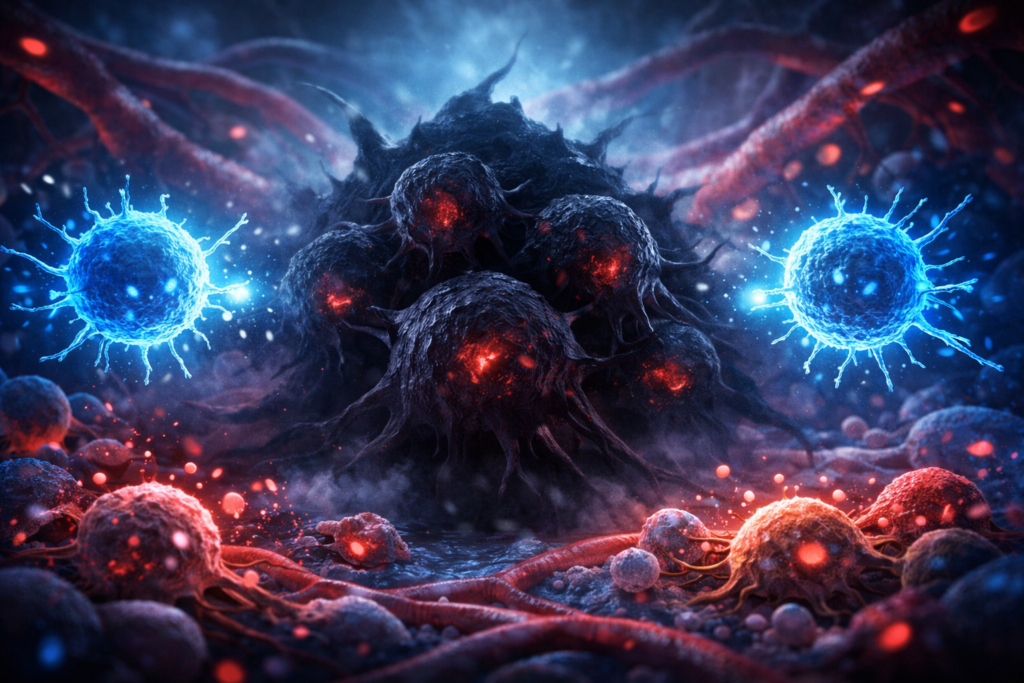
What Is Tumor Immune Cloaking?
Tumor immune cloaking refers to the ability of cancer cells to evade detection and destruction by the immune system. Under normal conditions, the immune system continuously scans the body for abnormal cells through a process known as immune surveillance. Specialized immune cells such as T cells and natural killer (NK) cells identify and eliminate potentially dangerous cells before they can form tumors.
However, cancer cells develop sophisticated mechanisms to avoid this surveillance. Instead of being recognized as a threat, they disguise themselves, suppress immune responses, or actively disable immune cells. This process allows tumors to grow, spread, and resist treatment.
Understanding tumor immune cloaking is essential because modern cancer therapies, including immunotherapy, are designed specifically to reverse these immune evasion strategies.
How the Immune System Normally Detects Cancer
Immune Surveillance
The immune system relies on a complex network of signals to identify abnormal cells. T cells recognize cancer cells through antigens presented on their surface, while NK cells detect cells that lack normal markers of “self.”
When functioning properly, this system:
- Detects mutated or damaged cells
- Activates immune responses
- Eliminates early-stage tumors
Key Immune Players
- T Cells: Attack cells displaying abnormal antigens
- NK Cells: Destroy cells that evade T cell detection
- Dendritic Cells: Present tumor antigens to activate T cells
When tumors bypass these mechanisms, immune cloaking begins.
PD-L1: The Immune “Off Switch”
What Is PD-L1?
PD-L1 (Programmed Death-Ligand 1) is a protein expressed on tumor cells that binds to PD-1 receptors on T cells. This interaction sends a signal telling the immune system to stop attacking.
How It Enables Immune Escape
When PD-L1 binds to PD-1:
- T cells become inactive (exhausted)
- Immune attack is suppressed
- Tumors gain protection from immune destruction
This is one of the most powerful immune cloaking mechanisms used by cancer.
Clinical Significance
Checkpoint inhibitor therapies target this pathway:
- PD-1 inhibitors
- PD-L1 inhibitors
These drugs “release the brakes” on the immune system, allowing T cells to attack tumors again.
External Reference:
https://www.cancer.gov/about-cancer/treatment/types/immunotherapy/checkpoint-inhibitors
Immune Suppression Inside the Tumor Microenvironment
What Is the Tumor Microenvironment (TME)?
The tumor microenvironment is the ecosystem surrounding cancer cells, including immune cells, blood vessels, signaling molecules, and structural components.
Tumors actively manipulate this environment to suppress immune responses.
Key Immunosuppressive Components
Regulatory T Cells (Tregs)
- Suppress immune activation
- Prevent T cells from attacking tumors
- Promote tumor tolerance
Myeloid-Derived Suppressor Cells (MDSCs)
- Inhibit T cell function
- Block immune signaling
- Promote tumor growth
Tumor-Associated Macrophages (TAMs)
- Shift from tumor-fighting to tumor-supporting roles
- Promote inflammation that favors cancer survival
How Tumors Disable T Cells
T Cell Exhaustion
Chronic exposure to tumor antigens leads to T cell exhaustion, where immune cells lose their ability to function effectively.
Key features include:
- Reduced cytokine production
- Decreased killing ability
- Increased expression of inhibitory receptors (PD-1, CTLA-4)
Loss of Antigen Presentation
Some tumors stop displaying recognizable antigens, making them “invisible” to T cells.
Metabolic Competition: Starving the Immune System
Tumors compete with immune cells for nutrients in the microenvironment.
Key Mechanisms
- Glucose depletion: Tumors consume large amounts of glucose, starving T cells
- Lactate accumulation: Acidic environment suppresses immune function
- Hypoxia: Low oxygen reduces immune cell activity
This metabolic suppression weakens immune responses and strengthens tumor survival.
Cytokines and Immune Signaling Manipulation
Tumors release signaling molecules that alter immune behavior.
Immunosuppressive Cytokines
- TGF-β (Transforming Growth Factor Beta)
- IL-10 (Interleukin-10)
These cytokines:
- Suppress T cell activation
- Promote regulatory immune cells
- Reduce anti-tumor immunity
Why Tumor Immune Cloaking Matters
Immune evasion is one of the core hallmarks of cancer. Without it, tumors would be eliminated early by the immune system.
This has several implications:
- Tumors can grow undetected
- Cancer becomes resistant to treatment
- Disease progression accelerates
Understanding these mechanisms is critical for developing effective therapies.
How Modern Therapies Target Immune Cloaking
Checkpoint Inhibitors
- Block PD-1 / PD-L1 signaling
- Restore T cell activity
CAR T-Cell Therapy
- Engineers immune cells to recognize tumors
- Bypasses cloaking mechanisms
Cancer Vaccines
- Train the immune system to recognize tumor antigens
Combination Therapies
- Target multiple cloaking pathways simultaneously
- Improve treatment outcomes
External Reference:
https://www.cancerresearch.org/immunotherapy/what-is-immunotherapy
Strategies to Support Immune Function
While clinical treatments are central, supporting immune health may play a complementary role.
Focus Areas
- Strengthening T cell and NK cell activity
- Reducing chronic inflammation
- Supporting metabolic health
Related Internal Guides
- https://helping4cancer.com/cancer-immune-system/
- https://helping4cancer.com/immune-exhaustion-cancer/
- https://helping4cancer.com/tumor-angiogenesis-explained/
The Future of Cancer Immunotherapy
Research is rapidly advancing in understanding tumor immune cloaking. New therapies aim to:
- Reverse immune suppression
- Improve immune recognition
- Target the tumor microenvironment
Emerging approaches include:
- Multi-checkpoint blockade
- Personalized immunotherapy
- Microbiome-based immune modulation
These innovations are transforming cancer treatment and improving survival outcomes.
Conclusion
Tumor immune cloaking is one of the most critical survival strategies used by cancer. By disabling immune cells, suppressing signals, and reshaping the tumor microenvironment, cancer cells can grow and spread without detection.
However, advances in immunotherapy are changing this landscape. By targeting mechanisms like PD-L1 and restoring immune function, modern treatments are helping the body fight back.
Understanding how tumors hide is the first step toward exposing and eliminating them.
Table of Contents