Introduction: What Diosmetin Is and Why It Matters in Cancer
Diosmetin is a naturally occurring flavonoid found in citrus fruits and in plants such as oregano and artichoke. It is also formed in the body from diosmin, a related citrus flavonoid. Researchers are interested in diosmetin because preclinical studies suggest it can affect cancer growth, inflammation, oxidative stress, angiogenesis, and cell death pathways at the same time.
That matters in cancer because tumors survive by using several systems at once, including inflammatory signaling, growth pathways, immune escape, and spread. Diosmetin is not a proven cancer treatment in humans, but it is being studied as a multi-target support compound that may help make the tumor environment less favorable.
To understand where this fits in the larger system, start here:
https://helping4cancer.com/the-foundation-of-cancer/
What Is Diosmetin and Where Does It Come From?
Diosmetin belongs to the flavonoid family. It is found naturally in citrus plants and some herbs, and it can also be produced when gut bacteria metabolize diosmin. Reviews describe diosmetin as having antioxidant, anti-inflammatory, and anticancer activity across multiple experimental models.
This is one reason diosmetin stands out. It does not appear to work through just one mechanism. Instead, it may affect inflammation, apoptosis, metastasis, angiogenesis, and drug sensitivity all at once.
How Diosmetin Works in Cancer
Pathways: Inflammation, Survival, and Tumor Spread
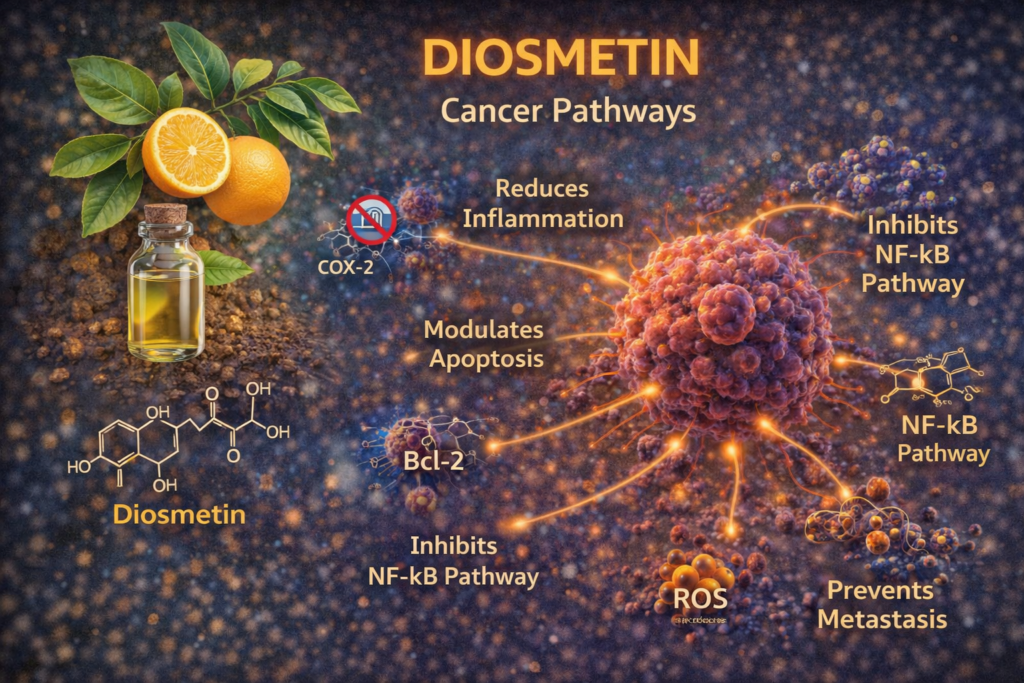
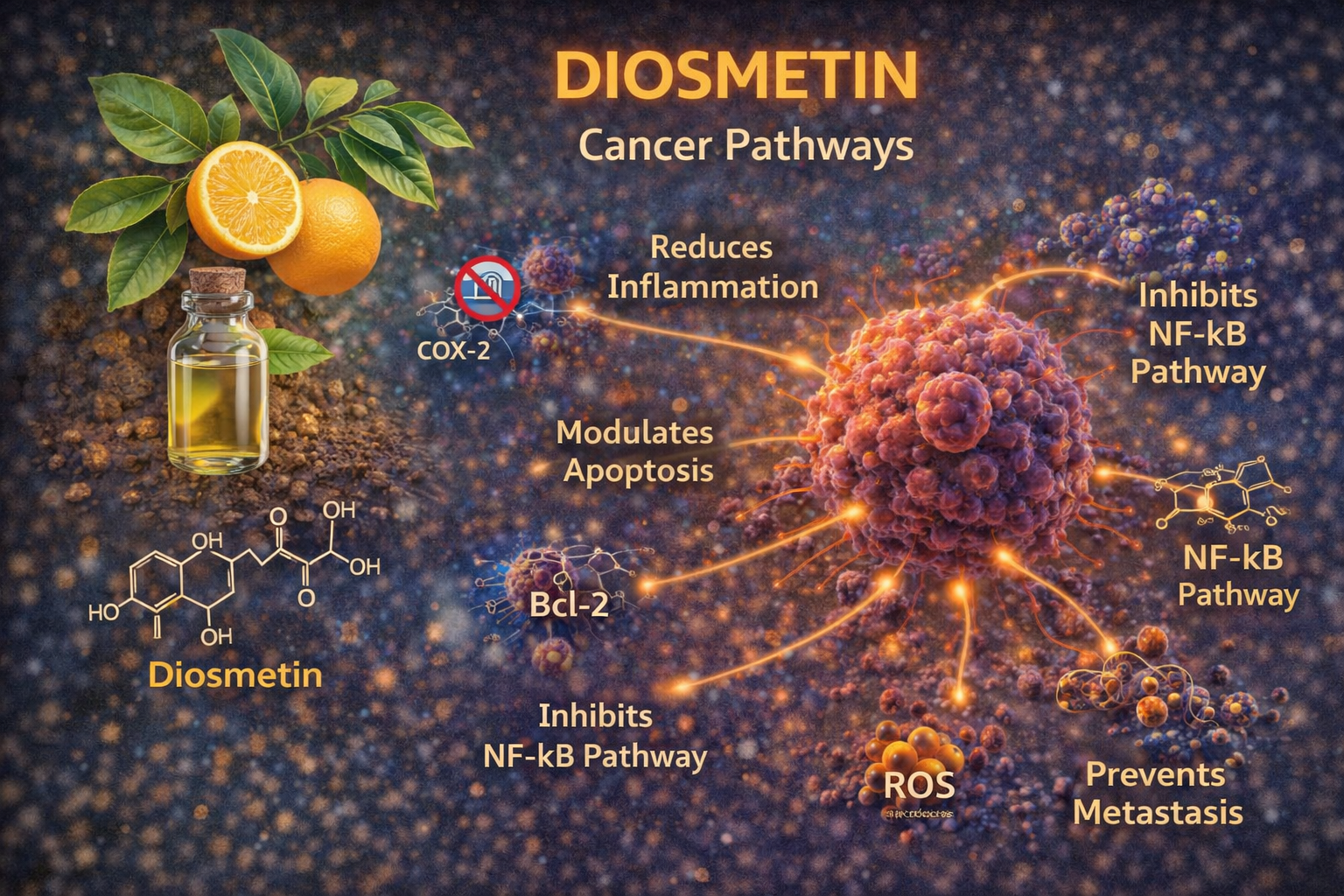
Preclinical reviews describe diosmetin as affecting several important cancer pathways, including NF-κB, PI3K/Akt, and Wnt/β-catenin. These pathways help tumors survive, grow, invade nearby tissue, and resist treatment. By suppressing them, diosmetin may help slow cancer progression and make cancer cells more vulnerable to apoptosis.
Diosmetin has also been linked to reduced VEGF-related angiogenesis and lower MMP activity in some experimental models, which matters because tumors need blood vessels and tissue invasion to keep expanding. A 2019 study cited in later reviews reported inhibition of tumor development and angiogenesis in skin cancer models.
For related pathway background, see:
https://helping4cancer.com/nf-kb-cancer/
https://helping4cancer.com/pi3k-akt-pathway-cancer/
https://helping4cancer.com/angiogenesis-inhibitors-cancer/
Metabolism: Oxidative Stress, Mitochondria, and Cellular Pressure
Diosmetin is often described as both antioxidant and anticancer, and that can sound contradictory until you look at context. In healthy tissue, it may help reduce oxidative damage. In cancer cells, preclinical studies suggest it can increase stress, disrupt mitochondrial function, and support apoptosis.
That makes diosmetin relevant to redox biology and cancer metabolism. It is not primarily known as a classic AMPK-focused metabolic tool, but it does connect to tumor energy stress, mitochondrial signaling, and oxidative balance. This is part of why it fits into a broader metabolic cancer framework rather than a single-target model.
For larger context, see:
https://helping4cancer.com/cancer-metabolism/
https://helping4cancer.com/redox-balance-cancer/
Immune System: Inflammation Control and Tumor Surveillance
The immune case for diosmetin is more indirect than for beta-glucan mushrooms or strong NK-cell stimulators, but it is still relevant. By lowering inflammatory signaling and reducing tumor-supportive cytokines, diosmetin may help create a less hostile environment for immune surveillance. Reviews also discuss its ability to influence the tumor microenvironment and drug sensitivity.
That matters because tumors often grow best in a chronically inflamed environment. A compound that helps calm that environment may support the body’s ability to recognize and pressure abnormal cells over time.
For more, see:
https://helping4cancer.com/immune-system-cancer/
How Diosmetin Cools Down Chronic Inflammation
One of diosmetin’s strongest themes in the literature is inflammation control. Reviews describe inhibition of NF-κB, COX-2, and iNOS, along with reduced inflammatory cytokines such as TNF-α and IL-6. Since chronic inflammation supports tumor growth, angiogenesis, immune escape, and metastasis, this anti-inflammatory effect is one of the main reasons diosmetin is being studied in cancer support.
This gives diosmetin a practical place in recovery and maintenance strategies. It is less about a direct oxidative attack and more about lowering one of the main background conditions cancer depends on.
Antioxidant Protection and Oxidative Stress Balance
Diosmetin also appears to have antioxidant activity. Reviews describe free-radical scavenging and protection against oxidative damage in non-cancer settings, which helps explain why it may support healthy tissues while still showing anti-cancer activity in tumor cells.
This dual role makes diosmetin more of a redox-balancing compound than a simple antioxidant. That is important in cancer support, where timing and tissue context often determine whether a compound protects healthy cells, stresses tumor cells, or both.
For more on this balance, see:
https://helping4cancer.com/oxidative-stress-cancer/
https://helping4cancer.com/redox-balance-cancer/
Flipping Cancer’s Self-Destruct Switch
A major reason diosmetin is being studied is apoptosis. Preclinical work shows it can inhibit proliferation, arrest the cell cycle, and promote apoptosis in multiple cancer models. A 2021 study reported G2/M arrest and apoptosis in osteosarcoma cells, which is consistent with broader review literature describing similar effects in other tumor types.
In plain terms, diosmetin may help push cancer cells toward self-destruction while making it harder for them to keep dividing. That is one of the most valuable traits a natural compound can have in cancer biology.
Stopping Tumor Spread
Preclinical reviews also connect diosmetin to lower migration, invasion, and metastasis-related signaling. This appears to involve reduced MMP activity, suppression of survival pathways, and weaker angiogenic support. That does not make it a proven anti-metastatic therapy in humans, but it does strengthen the case for diosmetin as a multi-target compound rather than just a dietary antioxidant.
This is one reason diosmetin fits naturally into a bigger system of pathway pages rather than standing alone as a one-note supplement. It connects inflammation, apoptosis, angiogenesis, and spread.
What the Research Really Says
The strongest evidence for diosmetin is still preclinical. Reviews published in 2024 summarize anticancer effects across cell studies and some xenograft models, and they also note limits such as bioavailability, formulation issues, and the need for more in vivo and clinical data.
That means the most accurate position is this: diosmetin is promising, biologically active, and worth watching, but it is not yet supported by large human cancer trials. It should be described as a research-backed support compound, not a proven treatment.
Role in Cancer Strategy
Diosmetin fits best as a support and recovery-phase compound rather than a primary attack-phase tool. Its strongest logic is in reducing chronic inflammation, supporting oxidative balance, and helping pressure tumor signaling across several pathways.
Where It Fits Best
Diosmetin may fit best in:
- inflammation-control phases
- recovery and maintenance support
- long-term dietary support
- multi-pathway stacking with other flavonoids and polyphenols
Strategic Value
Its main strategic value is that it connects:
- apoptosis support
- anti-angiogenesis
- inflammatory pathway suppression
- oxidative stress regulation
- broader tumor-environment control
That makes it a good “connector” compound inside a larger system-based protocol.
Key Benefits of Diosmetin in Cancer Support
- Supports apoptosis in preclinical cancer models
- Helps reduce chronic inflammation through NF-κB, COX-2, and iNOS-related effects
- May reduce angiogenesis through VEGF-related activity
- May slow proliferation through PI3K/Akt and cell-cycle effects
- Supports redox balance and healthy-cell protection in non-cancer contexts
- May help make the tumor microenvironment less favorable for growth and spread
Practical Food Sources
Diosmetin is associated with citrus-derived foods and related plant sources. Practical ways to increase dietary exposure include citrus fruit, herbs such as oregano, and plant-rich meals that include related flavonoid sources. Review literature confirms its occurrence in citrus and other plants, though exact food-based dosing for anticancer effect is not established.
That means food intake is reasonable for general support, but therapeutic cancer claims should not be based on diet alone.
Final Takeaway
Diosmetin is one of the more interesting citrus flavonoids in cancer research because it works across several important systems at once. It may help lower inflammation, support apoptosis, weaken angiogenesis, and reduce growth signaling. Those are meaningful traits in cancer biology.
But the honest bottom line is that most of the evidence is still preclinical. So the strongest way to present diosmetin is as a promising, multi-target flavonoid that fits into a bigger cancer-support system, especially one focused on inflammation control, pathway pressure, and long-term resilience.
Related Topics
Redox balance and oxidative stress
https://helping4cancer.com/redox-balance-cancer/
Foundation of cancer biology
https://helping4cancer.com/the-foundation-of-cancer/
NF-κB and inflammatory cancer signaling
https://helping4cancer.com/nf-kb-cancer/
PI3K/Akt pathway and tumor survival
https://helping4cancer.com/pi3k-akt-pathway-cancer/
Angiogenesis and VEGF in cancer
https://helping4cancer.com/angiogenesis-inhibitors-cancer/
Cancer metabolism and tumor adaptation
https://helping4cancer.com/cancer-metabolism/

Table of Contents