Introduction
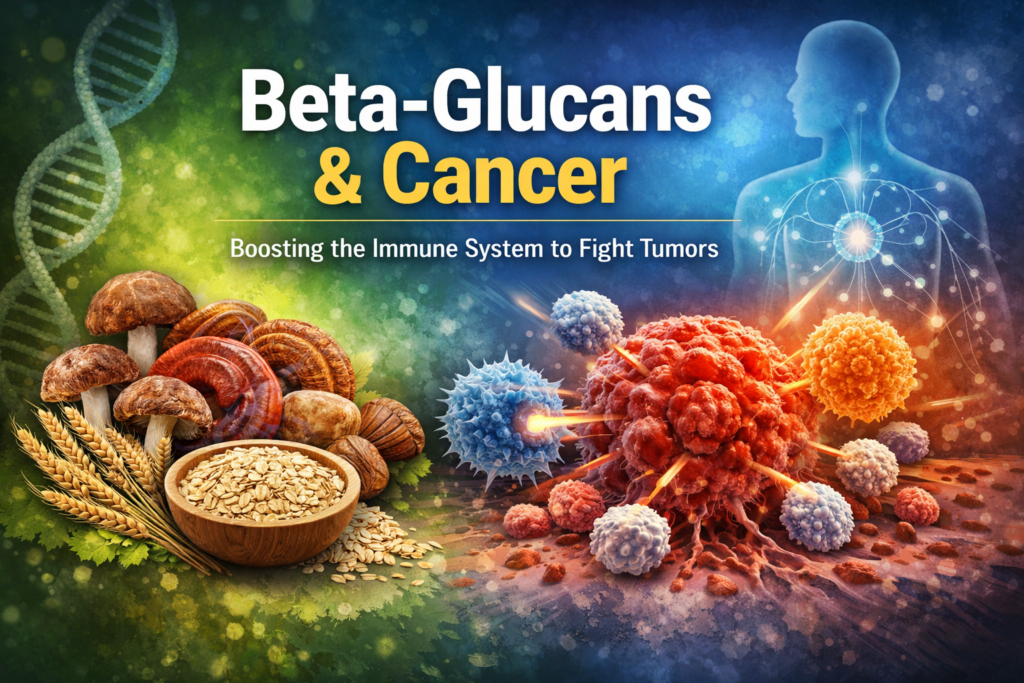
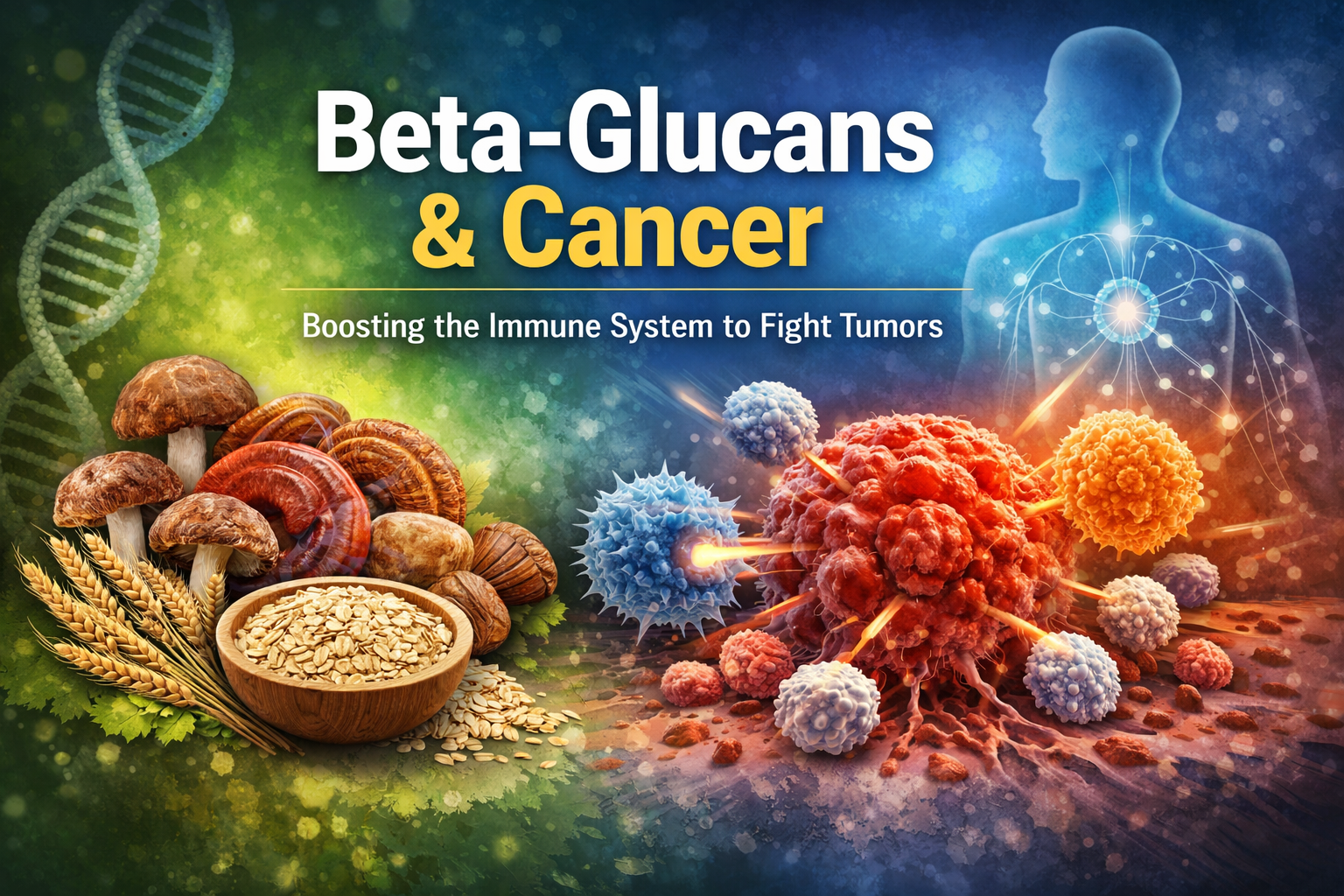
Beta-glucans are naturally occurring compounds found in medicinal mushrooms, yeast, oats, and barley. These unique polysaccharides are widely studied for their ability to influence immune function, particularly in the context of cancer.
In cancer biology, one of the biggest challenges is immune evasion—where abnormal cells avoid detection. Beta-glucans are important because they may help restore immune recognition by activating key immune defenses such as macrophages, natural killer (NK) cells, and dendritic cells.
This makes beta-glucans highly relevant in discussions around the immune system and cancer, where strengthening immune surveillance plays a critical role in controlling tumor growth and spread.
What Are Beta-Glucans?
Beta-glucans are complex chains of glucose molecules linked by specific beta-glycosidic bonds. Their structure determines how strongly they interact with the immune system.
Key structural types include:
- β-1,3
- β-1,4
- β-1,6
The most biologically active forms in cancer research are β-1,3 / β-1,6 glucans, commonly found in medicinal mushrooms and yeast.
These structures are recognized by immune cell receptors, allowing beta-glucans to act as signaling molecules that “train” the immune system to respond more effectively to abnormal cells.
Natural Sources of Beta-Glucans
Beta-glucans are found in both food and supplemental forms, though their biological effects vary depending on the source.
Major sources include:
- Oats and barley (metabolic and gut health support)
- Baker’s yeast (strong immune activation)
- Medicinal mushrooms such as:
- Turkey Tail
- Reishi
- Shiitake
Mushroom-derived beta-glucans are the most studied in cancer-related immune support, particularly in connection with Turkey Tail mushroom and cancer research.
How Beta-Glucans Work in Cancer
Immune System Activation
Beta-glucans primarily act on the innate immune system—the body’s first line of defense.
They bind to immune receptors such as:
- Dectin-1
- Complement receptor 3 (CR3)
- Toll-like receptors
This interaction activates key immune cells, including:
- macrophages
- neutrophils
- dendritic cells
- NK cells
Once activated, these cells release cytokines that coordinate immune responses and improve tumor recognition.
This is closely tied to the broader concept of immune surveillance, where the body continuously monitors and eliminates abnormal cells.
Natural Killer (NK) Cells and Tumor Defense
Natural killer cells are one of the most important defenses against cancer.
Beta-glucans may help:
- increase NK cell activity
- improve tumor cell recognition
- enhance antibody-dependent cellular cytotoxicity (ADCC)
These effects are especially relevant in the context of NK cells and cancer, where stronger immune detection can help limit tumor growth.
Macrophage Activation and Inflammation Control
Macrophages can exist in different states:
- M1 (tumor-fighting)
- M2 (tumor-supporting)
Beta-glucans may help shift macrophages toward the M1 phenotype, which supports tumor destruction.
This process is linked to key inflammatory pathways such as NF-κB signaling, which plays a central role in cancer-related inflammation.
Tumor Microenvironment Support
Cancer cells exist within a complex system known as the tumor microenvironment (TME).
This environment often suppresses immune responses, allowing tumors to survive and grow.
Beta-glucans may help counter this by:
- increasing immune cell infiltration into tumors
- improving antigen presentation
- activating dendritic cells
This connects directly to the tumor microenvironment and cancer, where restoring immune activity is critical for disrupting tumor survival.
Role in Cancer Metabolism and Recovery
While beta-glucans are not direct metabolic inhibitors, they influence cancer indirectly by improving immune efficiency and reducing inflammatory signaling.
They may also support:
- gut microbiome balance
- nutrient signaling
- systemic inflammation
These effects tie into broader topics like cancer metabolism and the body’s ability to respond to metabolic stress during treatment.
Beta-Glucans in Cancer Strategy
Beta-glucans are most often used as part of a recovery and immune-support phase, rather than direct tumor-targeting strategies.
They may complement approaches that involve:
- oxidative stress and reactive oxygen species (ROS)
- metabolic therapies such as fasting
- immune-based strategies
Their primary role is to strengthen the body’s natural defenses rather than directly attack tumor cells.
Key Benefits of Beta-Glucans
- Support immune system activation
- Enhance NK cell tumor recognition
- Promote macrophage tumor-fighting activity
- Improve immune surveillance
- Support recovery during chemotherapy
- Help regulate inflammatory signaling
- Contribute to gut and microbiome health
Beta-Glucans and Cancer Research
Beta-glucans have been studied in multiple cancer types, including:
- colorectal cancer
- lung cancer
- breast cancer
- gastric cancer
- leukemia
One of the most well-known compounds is PSK (Polysaccharide-K) derived from Turkey Tail mushroom.
Research suggests PSK may:
- support immune recovery
- improve treatment outcomes in certain cancers
- reduce recurrence risk in some cases
In countries like Japan, beta-glucan extracts have been used alongside conventional therapies as part of integrative oncology approaches.
Gut Health and Immune Connection
Beta-glucans also act as prebiotics, feeding beneficial gut bacteria.
A healthy microbiome can influence:
- immune signaling
- inflammation
- response to cancer therapies
Emerging research shows that gut health may directly impact how well immunotherapy works, making this an important secondary benefit.
Safety and Considerations
Beta-glucans are generally well tolerated.
Possible mild side effects include:
- digestive discomfort
- bloating
- mild immune stimulation
Individuals with autoimmune conditions or those on immune-suppressing therapies should consult a healthcare professional before use.
Beta-glucans are not a replacement for standard cancer treatment.
Frequently Asked Questions
Do beta-glucans cure cancer?
No. Beta-glucans do not cure cancer, but they may support immune responses involved in tumor recognition and control.
Are beta-glucans used clinically?
In some countries, mushroom-derived beta-glucans are used alongside conventional treatments as supportive therapies.
Which sources are most active?
Medicinal mushrooms such as Turkey Tail, Reishi, and Shiitake contain the most biologically active forms.
Are oat beta-glucans the same?
No. Oat beta-glucans mainly support metabolic and gut health, while mushroom-derived beta-glucans are more strongly associated with immune modulation.
Related Topics
- https://helping4cancer.com/immune-system-cancer/
- https://helping4cancer.com/nk-cells-cancer/
- https://helping4cancer.com/turkey-tail-mushroom-cancer/
- https://helping4cancer.com/tumor-microenvironment-and-cancer/
- https://helping4cancer.com/cancer-metabolism/
Key Takeaways
Beta-glucans are powerful immune-modulating compounds found in mushrooms, yeast, and certain grains.
Research suggests they may:
- activate immune cells that target tumors
- enhance NK cell and macrophage activity
- support immune recovery during treatment
- improve tumor recognition by the immune system
Rather than acting directly on tumors, beta-glucans strengthen the body’s ability to detect and respond to abnormal cells—making them an important part of immune-focused cancer strategies.
References
https://www.cancer.gov/about-cancer/treatment/cam/hp/mushrooms-pdq
https://www.ncbi.nlm.nih.gov/pmc/articles/PMC4684116/
https://pubmed.ncbi.nlm.nih.gov/12843715/
https://pubmed.ncbi.nlm.nih.gov/22158564/
https://www.ncbi.nlm.nih.gov/pmc/articles/PMC6267518/