What Is p53 and Why It Matters
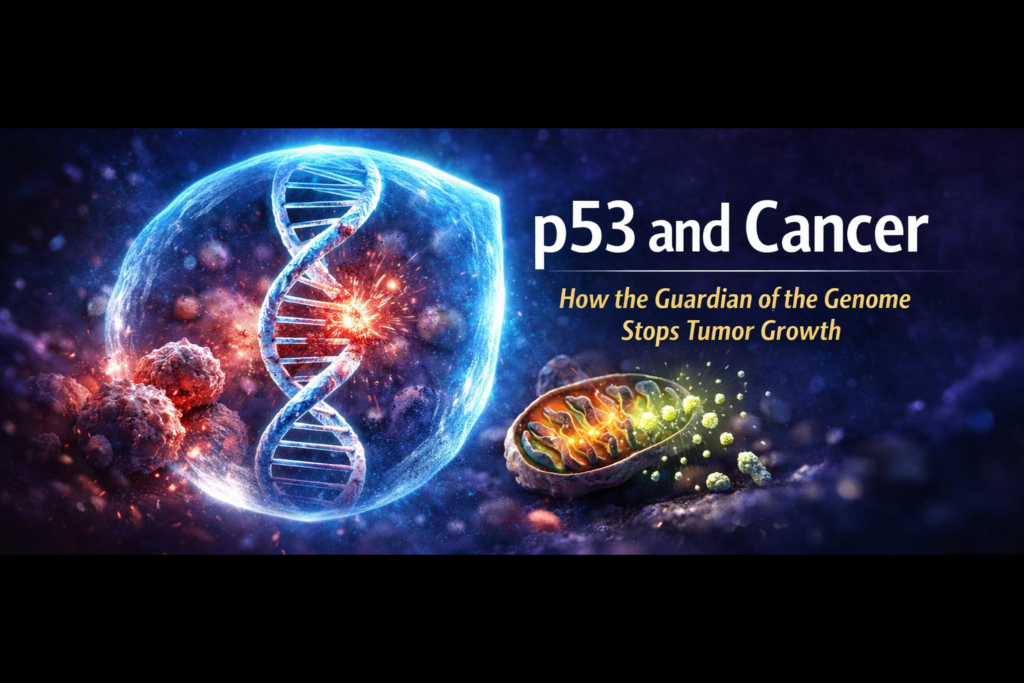
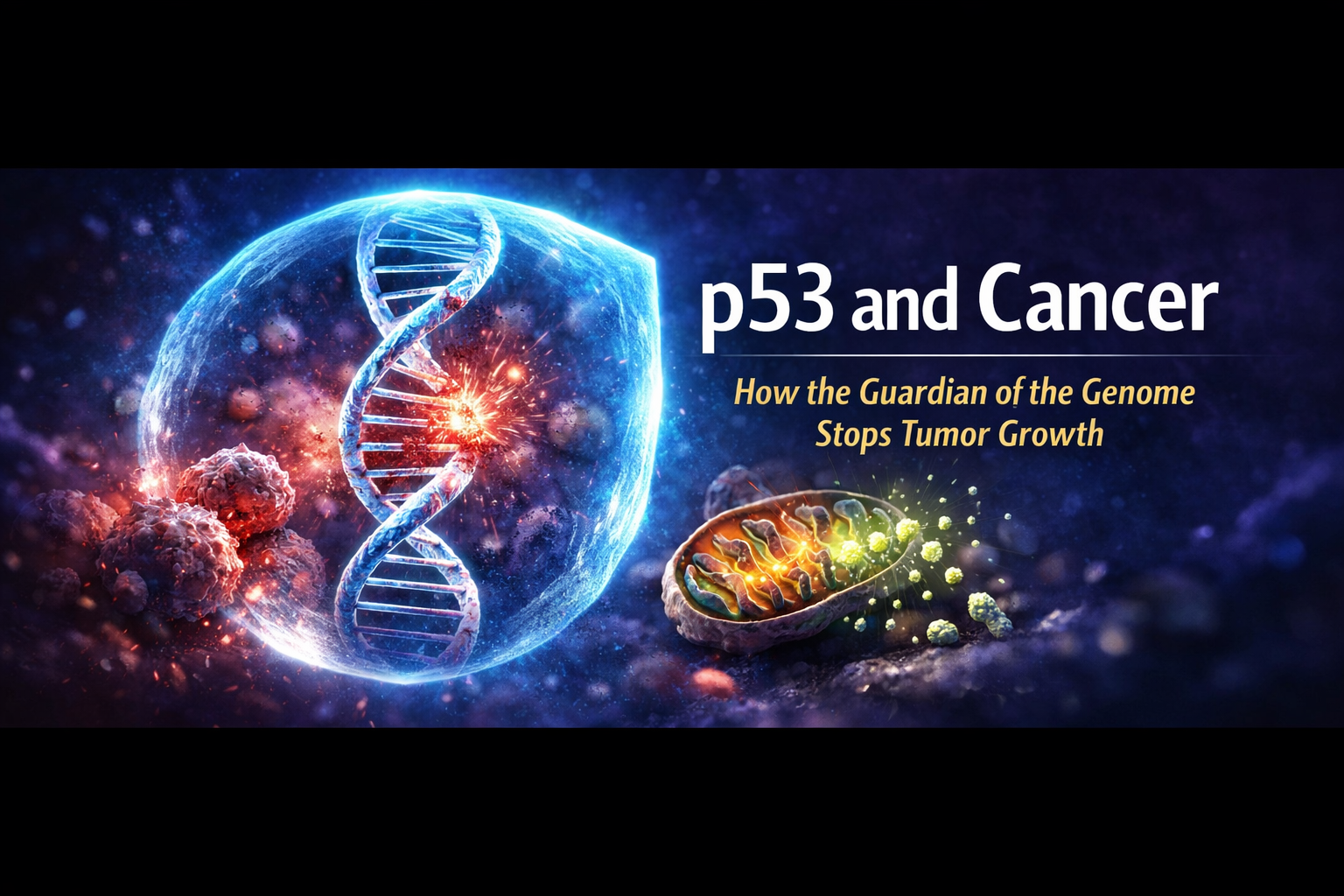
p53 is one of the most critical tumor suppressor proteins in human biology. Often called the “guardian of the genome,” p53 protects cells from becoming cancerous by monitoring DNA integrity, regulating metabolism, and controlling cell survival.
Under normal conditions, p53 remains inactive at low levels. But when a cell experiences stress—such as DNA damage, oxidative stress, or oncogenic signaling—p53 is rapidly activated.
Once activated, p53 can:
- Stop cell division (cell cycle arrest)
- Initiate DNA repair mechanisms
- Trigger programmed cell death (apoptosis)
- Alter metabolism to limit cancer growth
This makes p53 one of the most powerful natural defenses against cancer. However, when p53 is lost or mutated, cells gain a major survival advantage.
How p53 Functions as a Tumor Suppressor
p53 acts as a central decision-maker that determines whether a damaged cell should repair itself or be eliminated.
DNA Damage Detection and Response
p53 is activated in response to:
- DNA strand breaks
- Replication errors
- Radiation or chemotherapy damage
- Reactive oxygen species (ROS)
Once activated, p53 increases expression of genes involved in DNA repair, including p21 and GADD45.
This process ensures that damaged DNA is corrected before the cell divides. Without p53, mutations accumulate rapidly.
External reference: https://www.ncbi.nlm.nih.gov/books/NBK22268/
Cell Cycle Arrest
p53 halts the cell cycle primarily at the G1/S checkpoint.
This prevents damaged cells from entering DNA replication. The key mechanism involves upregulation of p21, which inhibits cyclin-dependent kinases.
Key effects:
- Stops uncontrolled proliferation
- Allows time for DNA repair
- Prevents mutation propagation
Without p53, cells divide despite severe DNA errors.
p53 and Apoptosis: Eliminating Dangerous Cells
If damage is too severe to repair, p53 triggers apoptosis.
This is a controlled form of cell death that prevents damaged cells from becoming cancerous.
Mitochondrial Apoptosis Pathway
p53 activates pro-apoptotic proteins such as:
- BAX
- PUMA
- NOXA
These proteins disrupt the mitochondrial membrane, releasing cytochrome c and activating caspases.
This leads to:
- DNA fragmentation
- Cellular breakdown
- Safe removal of the damaged cell
External reference: https://www.nature.com/articles/nrc1731
Why Apoptosis Matters in Cancer
Cancer cells survive by avoiding apoptosis. Loss of p53 removes one of the primary triggers for cell death.
As a result:
- Damaged cells continue dividing
- Tumors accumulate mutations
- Resistance to therapy increases
p53 and Cancer Metabolism
Beyond DNA repair and apoptosis, p53 plays a major role in regulating cellular metabolism.
Cancer cells rely on metabolic reprogramming to grow rapidly. p53 normally acts as a brake on these processes.
Suppression of Glycolysis
p53 inhibits glycolysis, the primary energy pathway used by cancer cells (Warburg effect).
It does this by:
- Downregulating glucose transporters (GLUT1, GLUT4)
- Activating TIGAR, which reduces glycolytic flux
- Promoting oxidative phosphorylation instead
This forces cells to rely on mitochondria, which are less efficient for rapid tumor growth.
Mitochondrial Regulation
p53 supports mitochondrial function by:
- Enhancing oxidative phosphorylation
- Promoting mitochondrial DNA stability
- Regulating electron transport chain activity
Healthy mitochondrial function increases reactive oxygen species (ROS) in a controlled way, which can trigger cancer cell death.
Internal link: https://helping4cancer.com/mitochondria-cancer/
ROS Balance and Oxidative Stress
p53 maintains a balance in ROS levels.
- Moderate ROS: used for signaling and apoptosis
- Excess ROS: triggers cell death
- Low ROS: supports cancer survival
p53 helps push ROS toward levels that damage cancer cells.
When p53 is lost, cancer cells often maintain lower ROS levels, improving survival.
Internal link: https://helping4cancer.com/reactive-oxygen-species-cancer/
What Happens When p53 Is Mutated
p53 is one of the most commonly mutated genes in cancer.
It is altered in over 50% of all human tumors.
Loss of Function
Most mutations disable p53’s ability to:
- Bind DNA
- Activate repair genes
- Trigger apoptosis
This leads to:
- Uncontrolled cell division
- Accumulation of mutations
- Increased tumor aggressiveness
Gain of Function Mutations
Some mutant p53 proteins gain new functions that actively promote cancer.
These can:
- Enhance tumor growth
- Increase metastasis
- Alter metabolism to favor survival
- Interfere with normal p53 pathways
This makes mutant p53 not just inactive—but harmful.
External reference: https://pubmed.ncbi.nlm.nih.gov/24691441/
p53 and Genomic Instability
p53 is essential for maintaining genomic stability.
Without it:
- DNA errors accumulate rapidly
- Chromosomal abnormalities increase
- Copy number variations expand
This creates a highly unstable tumor environment.
Internal link: https://helping4cancer.com/genomic-instability-cancer/
Genomic instability allows cancer to evolve quickly, leading to:
- Drug resistance
- Immune evasion
- Increased metastatic potential
p53 and Treatment Resistance
Loss of p53 is strongly linked to resistance against standard cancer therapies.
Chemotherapy Resistance
Many chemotherapy drugs work by damaging DNA.
These therapies rely on p53 to:
- Detect the damage
- Trigger apoptosis
Without functional p53:
- Cancer cells survive DNA damage
- Tumors become resistant
- Higher doses are required
Radiation Resistance
Radiation therapy generates DNA damage and ROS.
p53 normally enhances radiation effectiveness by pushing cells into apoptosis.
When p53 is mutated:
- Cells tolerate higher damage
- Survival pathways dominate
- Treatment outcomes worsen
Metabolic Adaptation
p53-deficient tumors often shift metabolism to survive stress.
They may:
- Increase glycolysis
- Enhance antioxidant defenses
- Reduce mitochondrial activity
These changes protect cancer cells during therapy.
p53 and Cancer Survival Pathways
Loss of p53 allows several major survival pathways to become overactive.
These include:
- PI3K/AKT pathway (cell survival and metabolism)
- mTOR pathway (growth and protein synthesis)
- MYC activation (rapid proliferation)
- NF-κB signaling (inflammation and survival)
These pathways create a network that supports tumor growth, even under stress.
Internal link: https://helping4cancer.com/cancer-survival-pathways/
Why p53 Is Central to Cancer Progression
p53 sits at the intersection of multiple systems:
- DNA repair
- Cell cycle control
- Apoptosis
- Metabolism
- Oxidative stress
When p53 is functional, cancer development is strongly suppressed.
When p53 is lost:
- Cells divide uncontrollably
- Mutations accumulate
- Apoptosis is avoided
- Metabolism shifts toward growth
- Treatment resistance increases
This makes p53 one of the most important factors in determining cancer behavior.
Therapeutic Strategies Targeting p53
Because of its importance, researchers are exploring ways to restore or bypass p53 function.
Reactivating Mutant p53
Some compounds aim to restore normal structure and function to mutant p53 proteins.
These approaches are still under investigation but show promise.
Targeting p53 Pathways
Instead of restoring p53 directly, therapies may target downstream effects:
- Increasing ROS to induce cancer cell death
- Inhibiting glycolysis to stress tumor metabolism
- Blocking survival pathways like PI3K/AKT
Exploiting p53 Weakness
p53-deficient cancer cells often rely on alternative pathways to survive.
These dependencies can be targeted to selectively kill cancer cells.
External reference: https://www.ncbi.nlm.nih.gov/pmc/articles/PMC6019009/
Key Takeaways
- p53 is a critical tumor suppressor that protects against cancer
- It controls DNA repair, cell cycle arrest, apoptosis, and metabolism
- Loss or mutation of p53 allows cancer cells to survive and evolve
- p53 dysfunction is linked to treatment resistance and aggressive tumors
- Targeting p53 pathways is a major focus of modern cancer research
Understanding p53 provides a foundational insight into how cancer grows, adapts, and resists treatment. It is one of the most important biological checkpoints in determining whether a cell lives, dies, or becomes cancerous.
Table of Contents