What Is Redox Balance in Cancer?
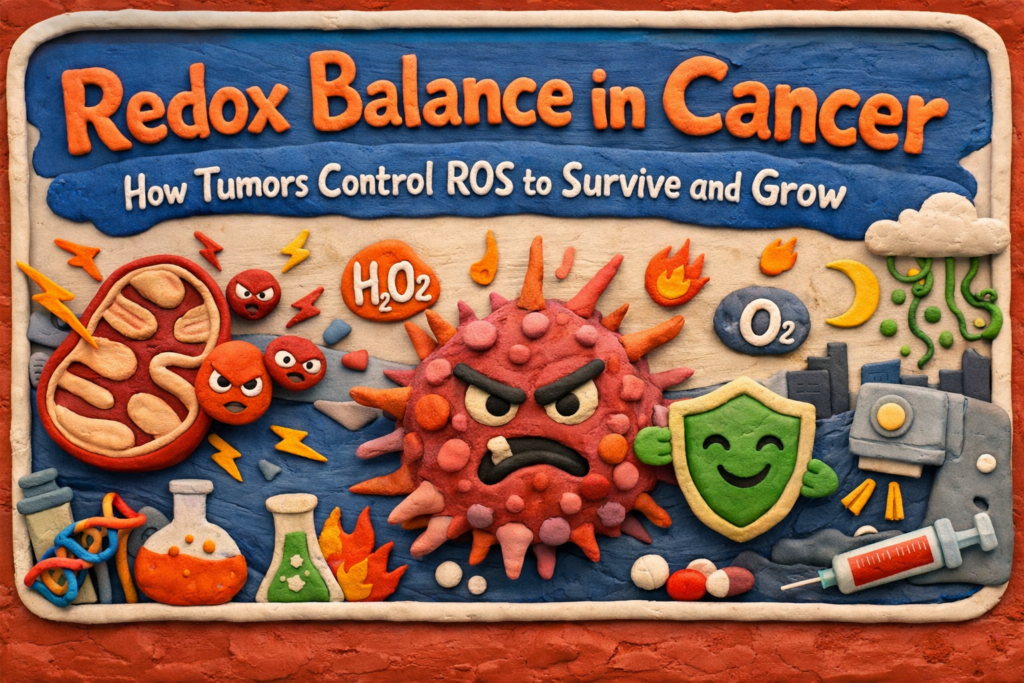
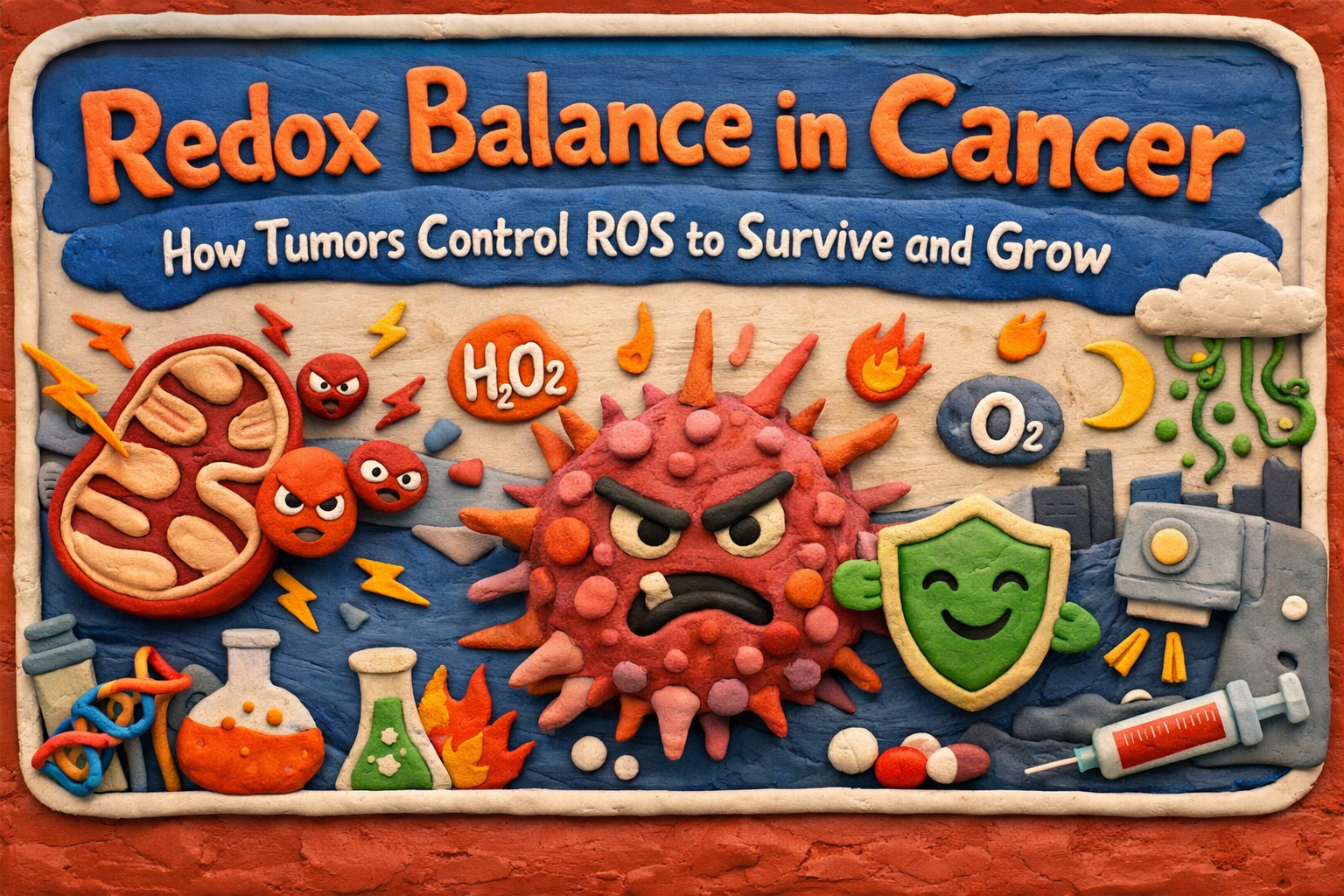
Redox balance refers to the dynamic equilibrium between reactive oxygen species (ROS) production and antioxidant defenses within a cell. In cancer, this balance is not normal. Tumor cells operate under chronically elevated oxidative stress but must tightly regulate ROS levels to survive.
ROS include molecules such as superoxide, hydrogen peroxide, and hydroxyl radicals. These are natural byproducts of cellular metabolism, especially from mitochondrial activity. While low to moderate ROS levels support signaling and growth, excessive ROS can damage DNA, proteins, and lipids, leading to cell death.
Cancer cells exploit this system. They maintain ROS at a level high enough to drive proliferation and signaling, but low enough to avoid apoptosis or necrosis. This controlled imbalance is a hallmark of cancer metabolism.
Why Redox Balance Matters in Cancer
Redox regulation is central to cancer survival because it directly influences:
- Cell proliferation and growth signaling
- DNA mutation and genomic instability
- Resistance to chemotherapy and radiation
- Metabolic reprogramming
- Immune evasion
Cancer cells exist in a narrow redox window. If ROS levels drop too low, growth signaling weakens. If ROS levels rise too high, the cell undergoes oxidative damage and death.
This creates a therapeutic opportunity. Many cancer treatments aim to push ROS beyond the tolerable threshold.
Sources of ROS in Cancer Cells
Cancer cells generate ROS from multiple internal sources, primarily linked to metabolic activity.
Mitochondrial ROS Production
Mitochondria are the primary source of ROS in most cells. During oxidative phosphorylation, electrons can leak from the electron transport chain and react with oxygen to form superoxide.
In cancer:
- Mitochondrial dysfunction increases electron leakage
- Rapid metabolic flux elevates ROS generation
- Altered mitochondrial dynamics amplify oxidative stress
Even in cancers that rely on glycolysis, mitochondria remain active and contribute to ROS signaling.
NADPH Oxidases (NOX Enzymes)
Cancer cells often upregulate NADPH oxidases, which deliberately produce ROS as signaling molecules.
These enzymes:
- Generate superoxide and hydrogen peroxide
- Activate growth pathways such as PI3K/Akt and MAPK
- Promote angiogenesis and metastasis
NOX-derived ROS are controlled and localized, allowing tumors to use oxidative signaling without triggering widespread damage.
Oncogene-Driven ROS Production
Oncogenes increase ROS levels as part of their signaling effects.
Key drivers include:
- MYC increases mitochondrial activity and metabolic flux
- RAS enhances NADPH oxidase activity
- Loss of tumor suppressors such as p53 reduces antioxidant control
These changes push cancer cells into a pro-oxidant state that supports rapid growth.
Antioxidant Systems in Cancer Cells
To survive elevated ROS, cancer cells upregulate powerful antioxidant systems. These systems neutralize excess ROS and maintain redox balance.
Glutathione System
Glutathione (GSH) is the most important intracellular antioxidant.
Functions include:
- Direct neutralization of ROS
- Detoxification of peroxides via glutathione peroxidase
- Maintenance of redox-sensitive proteins
Cancer cells increase glutathione levels by:
- Enhancing cysteine uptake
- Upregulating glutathione synthesis enzymes
- Activating redox transcription factors
High glutathione levels are strongly linked to chemotherapy resistance.
Thioredoxin System
The thioredoxin system works alongside glutathione to maintain redox homeostasis.
It:
- Reduces oxidized proteins
- Supports DNA synthesis
- Protects against oxidative stress
Many tumors overexpress thioredoxin and thioredoxin reductase, contributing to survival under stress.
NADPH Production
NADPH is essential for antioxidant defense because it provides reducing power.
Cancer cells generate NADPH through:
- The pentose phosphate pathway
- Malic enzyme activity
- Isocitrate dehydrogenase (IDH) pathways
This allows continuous regeneration of antioxidants like glutathione and thioredoxin.
Redox Signaling and Cancer Growth
ROS are not just damaging molecules. At controlled levels, they act as signaling messengers that promote tumor progression.
Activation of Growth Pathways
Moderate ROS levels activate key pathways, including:
- PI3K/Akt signaling, promoting survival and metabolism
- MAPK/ERK signaling, driving proliferation
- NF-κB signaling, enhancing inflammation and survival
These pathways depend on redox-sensitive proteins that respond to oxidative changes.
Stabilization of HIF-1α
ROS stabilize hypoxia-inducible factor 1-alpha (HIF-1α), even in non-hypoxic conditions.
This leads to:
- Increased glycolysis
- Enhanced angiogenesis via VEGF
- Adaptation to low-oxygen environments
This is critical for tumor growth and survival in poorly vascularized regions.
DNA Mutation and Evolution
Elevated ROS contribute to DNA damage and mutation.
While excessive damage is lethal, controlled oxidative stress:
- Increases mutation rates
- Drives tumor evolution
- Promotes drug resistance
This creates more aggressive and adaptable cancer cells.
The Redox Threshold Concept
Cancer cells operate within a narrow redox threshold.
- Below the threshold: insufficient ROS for growth signaling
- Within the threshold: optimal proliferation and survival
- Above the threshold: oxidative damage and cell death
This concept explains why both antioxidants and pro-oxidants can influence cancer, depending on timing and context.
Therapeutic strategies often aim to disrupt this balance by pushing ROS above the lethal threshold.
Redox Balance and Cancer Metabolism
Redox control is deeply connected to cancer metabolism.
Glycolysis and ROS Control
Many cancer cells rely on aerobic glycolysis, also known as the Warburg effect.
This shift:
- Reduces mitochondrial ROS production
- Generates intermediates for antioxidant synthesis
- Supports rapid ATP production
However, mitochondria remain active enough to produce signaling ROS.
Pentose Phosphate Pathway (PPP)
The PPP is critical for redox balance because it produces NADPH.
In cancer:
- PPP activity is often upregulated
- NADPH supports antioxidant defenses
- Ribose-5-phosphate supports nucleotide synthesis
This dual role makes the PPP essential for both survival and growth.
Lipid Metabolism and Redox Control
Fatty acid oxidation and synthesis influence redox balance.
These processes:
- Generate NADPH
- Support membrane repair under oxidative stress
- Help maintain mitochondrial function
Altered lipid metabolism allows cancer cells to adapt to oxidative challenges.
Redox Balance and Therapy Resistance
One of the most important roles of redox regulation is in resistance to treatment.
Chemotherapy Resistance
Many chemotherapy drugs work by increasing ROS to toxic levels.
Cancer cells resist this by:
- Increasing glutathione levels
- Upregulating antioxidant enzymes
- Enhancing NADPH production
This neutralizes treatment-induced oxidative stress.
Radiation Resistance
Radiation therapy kills cells primarily through ROS generation.
Tumors with strong antioxidant systems can:
- Repair oxidative DNA damage
- Prevent apoptosis
- Survive higher radiation doses
This is a major barrier to effective treatment.
Targeting Redox Systems
Because of this, targeting antioxidant systems is an emerging strategy.
Approaches include:
- Inhibiting glutathione synthesis
- Blocking thioredoxin activity
- Disrupting NADPH production
These strategies aim to weaken the tumor’s defenses and increase sensitivity to therapy.
Redox Balance and the Tumor Microenvironment
The tumor microenvironment plays a major role in redox regulation.
Hypoxia and ROS
Low oxygen levels increase mitochondrial ROS production.
This leads to:
- Activation of HIF-1α
- Increased angiogenesis
- Metabolic adaptation
Hypoxia also promotes a more aggressive tumor phenotype.
Immune System Interactions
ROS affect immune cell function.
In tumors:
- High ROS can suppress T cell activity
- Oxidative stress can impair NK cell function
- Tumors may create a pro-oxidant environment that weakens immune response
At the same time, immune cells use ROS to kill cancer cells, creating a complex balance.
Therapeutic Implications of Redox Balance
Understanding redox balance opens new strategies for cancer treatment.
Pro-Oxidant Therapy
Some treatments aim to increase ROS beyond the lethal threshold.
Examples include:
- Certain chemotherapy agents
- Radiation therapy
- Metabolic stress strategies
These approaches exploit the vulnerability of cancer cells to oxidative overload.
Antioxidant Timing and Context
Antioxidants can have complex effects.
- In some contexts, they may protect normal cells
- In others, they may protect cancer cells from therapy
This makes timing and context critical when considering antioxidant use.
Combination Strategies
The most effective approaches may combine:
- ROS-inducing therapies
- Inhibitors of antioxidant systems
- Metabolic interventions
This creates a multi-layered attack on tumor redox balance.
Key Takeaways
- Cancer cells exist in a state of elevated but controlled oxidative stress
- ROS drive growth, signaling, and mutation when kept within a specific range
- Antioxidant systems are upregulated to prevent lethal damage
- Disrupting redox balance is a powerful therapeutic strategy
- The goal is often to push ROS beyond the cancer cell’s survival threshold
External References
National Cancer Institute – https://www.cancer.gov
PubMed – https://pubmed.ncbi.nlm.nih.gov
Nature Reviews Cancer – https://www.nature.com/nrc
NIH – https://www.nih.gov
Internal Resources
https://helping4cancer.com/oxidative-stress-cancer/
https://helping4cancer.com/mitochondria-cancer/
https://helping4cancer.com/metabolic-therapy-cancer/
https://helping4cancer.com/reactive-oxygen-species-cancer/
Why Redox Balance Is a Core Survival Strategy
Redox balance is not just a side effect of cancer biology. It is a central survival mechanism. Tumors must constantly walk a fine line between using ROS to grow and avoiding the damage those same molecules can cause.
This balancing act makes cancer cells both resilient and vulnerable. By understanding how tumors control oxidative stress, it becomes possible to design strategies that disrupt this equilibrium and push cancer cells beyond their limits.
Table of Contents