Introduction: What Black Garlic Is and Why It Matters in Cancer
Black garlic is a fermented form of regular garlic made by slowly aging whole garlic bulbs under controlled heat and humidity. This process changes both its flavor and its chemistry. The sharp, unstable compounds in raw garlic are transformed into more stable and bioavailable compounds, especially S-allyl-cysteine (SAC), along with other sulfur compounds, polyphenols, and melanoidins.
In cancer research, black garlic is being studied because it may influence several systems that matter during both cancer progression and recovery. These include apoptosis, inflammation, angiogenesis, immune signaling, oxidative stress, and tissue repair. That is why the topic of black garlic and cancer often comes up in discussions about immune support and post-treatment recovery.
Black garlic is not a cancer cure, but it may support the body in ways that fit into a broader cancer system focused on inflammation control, immune resilience, gut recovery, and strategic timing.
For broader context, see:
https://helping4cancer.com/the-foundation-of-cancer/
What Makes Black Garlic Different from Regular Garlic
Black garlic comes from the same plant as regular garlic, Allium sativum, but fermentation changes its chemical profile in important ways.
During this aging process:
- Allicin is converted into more stable compounds
- Antioxidant capacity increases
- Flavor becomes sweeter and milder
- Sulfur compounds become easier to tolerate for many people
Key compounds commonly discussed in black garlic include:
- S-allyl-cysteine (SAC)
- Diallyl disulfide (DADS)
- Diallyl trisulfide (DATS)
- Polyphenols
- Melanoidins
These compounds are relevant because they have been studied for their effects on oxidative stress, inflammation, immune signaling, and cancer cell behavior.
How Black Garlic Works in Cancer
Pathways: Survival Signaling, Inflammation, and Angiogenesis
Cancer cells depend on signaling pathways that help them survive, divide, adapt, and spread. Black garlic compounds appear to influence several of these pathways.
Research discussions around black garlic often point to effects on:
- PI3K/Akt signaling, which supports cancer growth and survival
- MAPK signaling, which affects proliferation and stress responses
- STAT3, which can help tumors evade immune control
- VEGF-related signaling, which drives angiogenesis
- Inflammatory pathways connected to cytokine signaling and tumor support
This matters because these pathways are not separate from one another. Growth, inflammation, immune escape, and angiogenesis are all connected parts of the cancer system. When black garlic compounds reduce survival signaling and inflammatory pressure, they may help make tumors less adaptable and less protected.
For more on these systems, see:
https://helping4cancer.com/pi3k-akt-pathway-cancer/
https://helping4cancer.com/stat3-cancer/
https://helping4cancer.com/angiogenesis-inhibitors-cancer/
Metabolism: Oxidative Stress, Recovery, and Cellular Protection
Cancer biology is deeply tied to metabolism. Tumors often live under high oxidative stress while also depending on strong internal defense systems to survive. Black garlic is most often discussed on the recovery side of this equation, not as a major attack-phase compound.
Its compounds may help by:
- Reducing oxidative damage in healthy tissues
- Supporting cellular antioxidant defenses
- Influencing mitochondrial stress responses
- Helping tissues recover after chemotherapy or radiation
- Supporting a healthier inflammatory and metabolic environment
This makes black garlic more relevant to recovery and support than to a strict ROS-driven attack phase. It connects more naturally to redox balance and tissue repair than to intense metabolic disruption aimed directly at starving tumors.
For related background, see:
https://helping4cancer.com/cancer-metabolism/
https://helping4cancer.com/redox-balance-cancer/
Immune System: NK Cells, T Cells, and Immune Surveillance
One of the most promising areas of black garlic research is immune support.
Studies suggest black garlic compounds may help influence:
- Natural killer (NK) cell activity
- T-cell signaling through IL-2 and IFN-γ
- Macrophage activation
- Inflammatory cytokine balance
- General immune surveillance against abnormal cells
This is especially important after chemotherapy or radiation, when immune function is often weakened. A stronger immune response may help the body recognize abnormal cells more effectively and support long-term recovery.
Black garlic therefore fits naturally into the immune side of cancer support, particularly when the goal is to rebuild strength after treatment rather than intensify oxidative pressure during treatment.
For deeper context, see:
https://helping4cancer.com/immune-system-cancer/
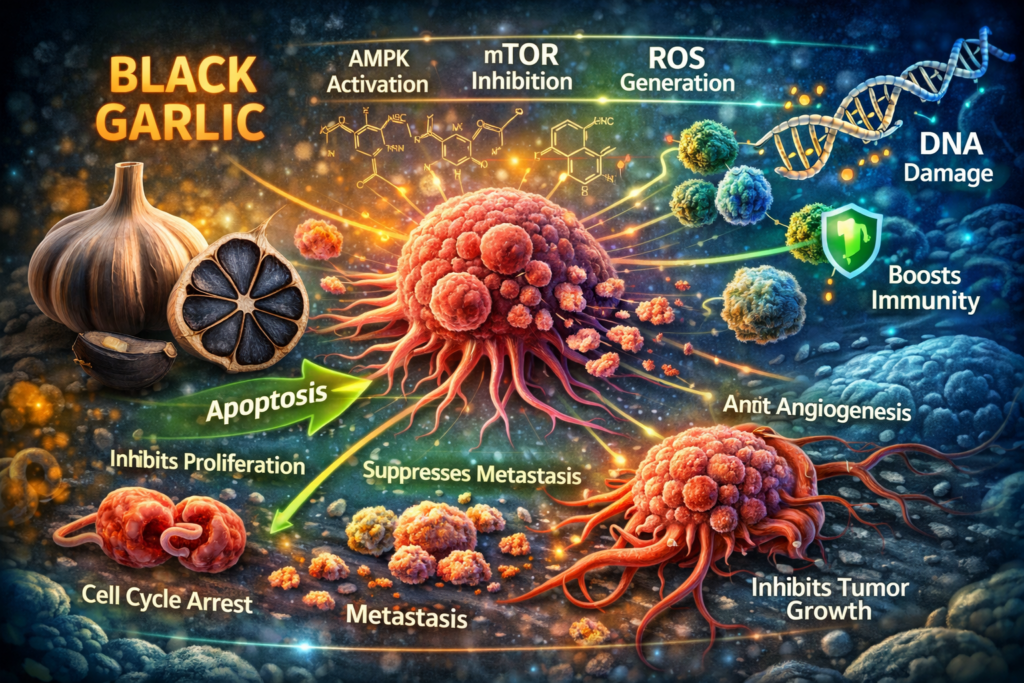
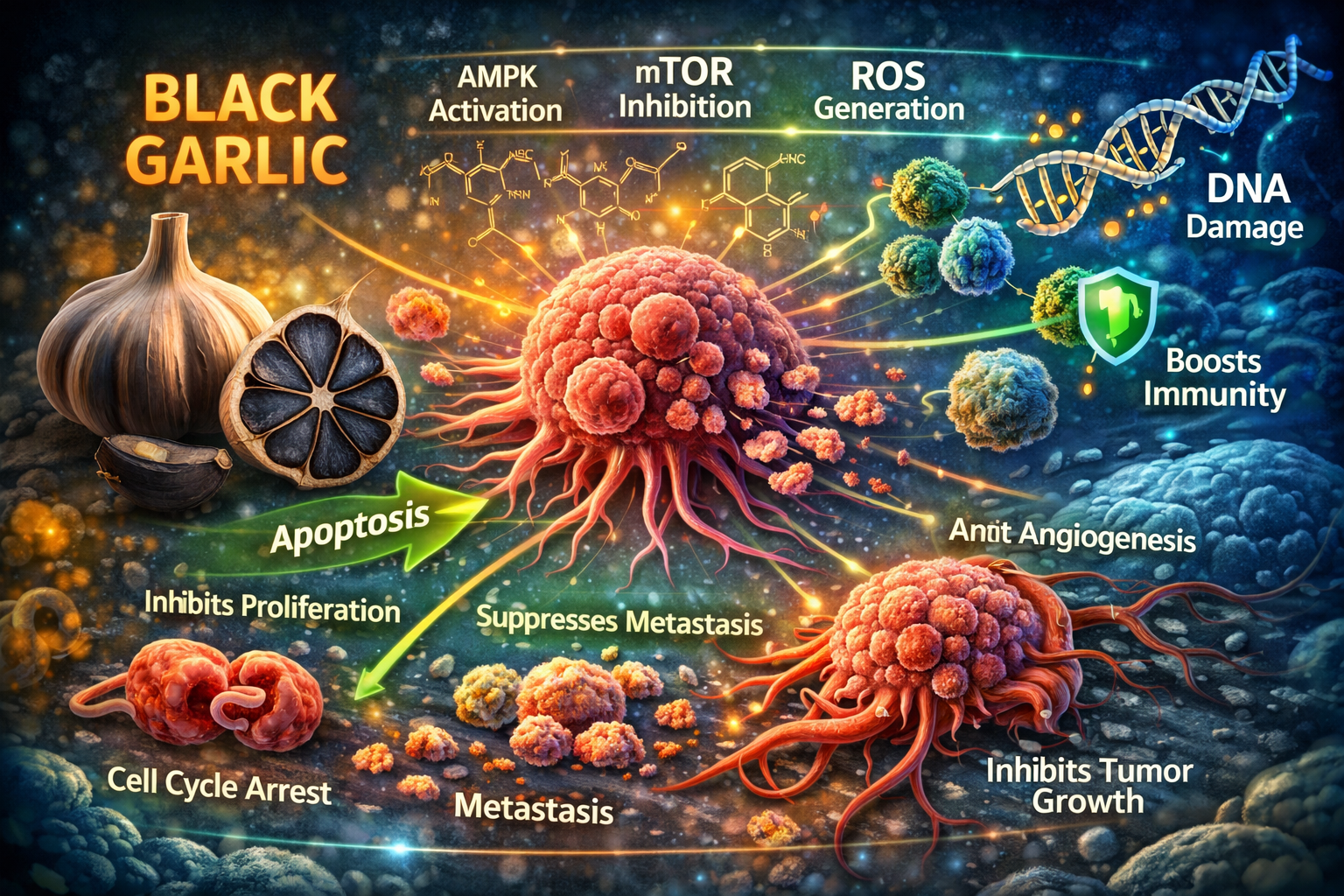
Anticancer Mechanisms of Black Garlic
Triggering Apoptosis
Apoptosis is the body’s built-in system for removing damaged or abnormal cells. Cancer cells often evade this system.
Compounds in black garlic, including SAC, DADS, and DATS, have been shown in laboratory studies to influence apoptosis-related genes and proteins such as:
- Bax
- Bcl-2
- Caspases
These effects have been reported in several cancer cell lines, including colon, breast, liver, and prostate cancer. By helping reactivate programmed cell death, black garlic may reduce one of cancer’s main survival advantages.
Blocking Cancer Survival Pathways
Black garlic compounds may interfere with pathways tumors use to keep growing and resisting stress.
This includes influence on:
- PI3K/Akt survival signaling
- MAPK activity
- STAT3-related immune escape and growth support
Because these pathways connect cancer survival to metabolism and immune evasion, black garlic may help make cancer cells less resilient over time.
Reducing Angiogenesis
Tumors need blood vessels to keep growing. VEGF is one of the main signals they use to create this blood supply.
Some garlic-derived compounds have been shown to reduce VEGF-related signaling. That may help slow angiogenesis and limit tumor expansion by reducing access to oxygen and nutrients.
Limiting Migration and Invasion
Cancer becomes far more dangerous once it spreads beyond the original site.
Black garlic compounds have shown the ability in laboratory settings to reduce migration and invasion by influencing enzymes involved in tissue breakdown and metastasis. This may help limit the movement of cancer cells into surrounding structures.
Black Garlic and the Immune System
Natural Killer Cells
NK cells are one of the body’s fastest defenses against abnormal cells. They help identify and destroy cells that no longer look normal.
Research suggests compounds in garlic may enhance NK cell activity, which could improve immune recognition of tumor cells.
T-Cell Activation
T-cells are central to long-term anti-cancer immunity.
Black garlic may influence immune messengers such as:
- IL-2
- IFN-γ
These help activate and coordinate T-cell responses, which may support immune surveillance and cancer defense during recovery.
Macrophage Support
Macrophages help clear damaged cells and coordinate immune signaling.
Garlic compounds may help regulate macrophage activity and inflammatory cytokines, contributing to a better-balanced immune environment.
Together, these effects make black garlic especially relevant to the recovery phase, when immune rebuilding is often just as important as direct tumor pressure.
Antioxidant Protection and Tissue Recovery
Chemotherapy and radiation often generate large amounts of reactive oxygen species. While ROS can help damage cancer cells, they can also injure healthy tissue.
Black garlic contains high levels of antioxidant compounds that may help support recovery by reducing collateral oxidative damage in healthy cells.
One of the key areas of interest is its influence on the Nrf2 antioxidant pathway, which helps regulate protective enzymes involved in:
- Liver support
- Kidney protection
- Gut lining repair
- Reduced inflammation
- Tissue resilience after treatment
This is one of the clearest reasons black garlic is often discussed as a recovery-support food rather than an attack-phase compound.
Gut Health and the Microbiome
The gut microbiome plays an increasingly important role in cancer recovery, immune signaling, and treatment response.
Black garlic contains melanoidins that may act as prebiotic compounds. These may help nourish beneficial gut bacteria and support:
- Immune communication
- Lower inflammation
- Better gut barrier integrity
- Improved nutrient absorption
For people recovering from chemotherapy or radiation, gut repair can be a major part of rebuilding strength. Black garlic may support that process by improving the internal environment rather than directly attacking tumor metabolism.
Role in Cancer Strategy
Where Black Garlic Fits Best
Black garlic fits best in:
- Recovery phase
- Immune support
- Tissue repair
- Gut and microbiome rebuilding
- Long-term resilience strategies
It is less suited to:
- ROS-heavy attack phases
- Radiation windows
- Oxidative treatment periods where antioxidants may interfere
This makes timing essential. Black garlic may be very useful several hours after oxidative therapies, but poorly timed if taken too close to treatments that depend on ROS generation.
Timing Considerations
Because black garlic is antioxidant-rich, many integrative strategies avoid it around therapies that depend on oxidative stress, such as:
- Radiation therapy
- Some chemotherapy agents
- Oxidative metabolic therapies
- Treatment windows involving methylene blue or light-based ROS approaches
A practical strategy is to reserve black garlic for the recovery side of a protocol rather than the oxidative kill window.
For related strategy concepts, see:
https://helping4cancer.com/oxidative-stress-cancer/
https://helping4cancer.com/metabolic-therapy-cancer/
Why Black Garlic May Not Fit Every Protocol
Even though black garlic has real research interest, it may not fit every cancer plan equally well.
Reasons it may be excluded from some protocols include:
- Strong antioxidant effects that may blunt ROS-driven therapies
- Small amounts of fermentation-derived sugars
- Timing limitations around radiation or oxidative treatments
- Overlap with other immune and anti-inflammatory compounds already in use
This does not make black garlic unhelpful. It simply means its value depends on the larger strategy and the timing of the protocol.
Key Benefits of Black Garlic in Cancer Support
- Supports apoptosis in abnormal cells
- May reduce angiogenesis through VEGF-related effects
- Supports NK cells, T-cell signaling, and macrophage activity
- Helps regulate inflammation and immune communication
- Provides antioxidant support during recovery
- May support liver, kidney, and gut tissue repair
- Helps strengthen gut microbiome balance
- May reduce migration and invasive behavior in cancer cells
- Supports long-term recovery and immune resilience
Final Thoughts on Black Garlic and Cancer
Black garlic is a functional food with promising research in immune support, inflammation control, antioxidant defense, and tissue recovery.
Its value in cancer support appears strongest in areas such as:
- Recovery after treatment
- Immune rebuilding
- Gut and microbiome support
- Reduction of inflammatory stress
- Protection of healthy tissues
It may also influence apoptosis, angiogenesis, and cancer cell signaling, but its strongest practical role appears to be in the recovery and support side of a broader cancer strategy.
Because black garlic is rich in antioxidant compounds, timing matters. It is most appropriate when used away from oxidative treatment windows and within a system that understands the difference between attack phase and recovery phase.
Related Topics
- Foundation of cancer biology
https://helping4cancer.com/the-foundation-of-cancer/ - PI3K/Akt pathway and cancer survival
https://helping4cancer.com/pi3k-akt-pathway-cancer/ - STAT3 and immune escape
https://helping4cancer.com/stat3-cancer/ - Angiogenesis and VEGF signaling
https://helping4cancer.com/angiogenesis-inhibitors-cancer/ - Immune system and cancer defense
https://helping4cancer.com/immune-system-cancer/ - Oxidative stress and treatment timing
https://helping4cancer.com/oxidative-stress-cancer/
References
Black Garlic and Cancer research sources:
National Library of Medicine – Garlic and Cancer Research
https://www.ncbi.nlm.nih.gov/pmc/articles/PMC4103721/
Black Garlic Anticancer Properties Review
https://www.ncbi.nlm.nih.gov/pmc/articles/PMC7278309/
Health Benefits of Black Garlic
https://www.verywellhealth.com/black-garlic-benefits-5083426
WebMD: Black Garlic Overview
https://www.webmd.com/diet/what-is-black-garlic
Garlic and Cancer Prevention Research
https://www.cancer.gov/about-cancer/causes-prevention/risk/diet/garlic-fact-sheet
Black garlic extract induces apoptosis and inhibits cell proliferation in cancer cell lines
https://www.ncbi.nlm.nih.gov/pmc/articles/PMC10289325
Black Garlic as a Functional Food for Cancer Prevention
https://www.mdpi.com/2072-6643/16/17/3025
Black garlic enhances immune cell activity and reduces cytokine inflammation in mice
https://www.ncbi.nlm.nih.gov/pmc/articles/PMC10855366
Black Garlic Health Benefits – WebMD Summary
https://www.webmd.com/diet/health-benefits-black-garlic
Gastrointestinal digestion model shows high bioavailability of black garlic SAC and DATS
https://www.mdpi.com/2304-8158/9/11/1582

💬 Share This Page
Want to help others learn about this? Click to share: This will also help the site grow
👉 Share on Facebook
👉 Share on Twitter
👉 Share on Reddit
👉 Share via Email
🔬 Black Garlic and Cancer – Research Links
- Apoptosis and Anticancer Mechanisms
📄 Black garlic extract induces apoptosis and inhibits cell proliferation in cancer cell lines
➡️ https://www.ncbi.nlm.nih.gov/pmc/articles/PMC10289325 - Comprehensive Overview: Antioxidant and Immune Benefits
📄 Black Garlic as a Functional Food for Cancer Prevention (Nutrients, 2024)
➡️ https://www.mdpi.com/2072-6643/16/17/3025 - Immune Cell Activation: NK and T cells
📄 Black garlic enhances immune cell activity and reduces cytokine inflammation in mice
➡️ https://www.ncbi.nlm.nih.gov/pmc/articles/PMC10855366 - Microbiome and Gut Support
📄 Prebiotic effects of melanoidins in black garlic on the gut microbiota
➡️ https://www.verywellhealth.com/black-garlic-8612816 - Black Garlic vs. Tumor Progression and Inflammation
📄 Effects of aged black garlic on inflammation and prostate cancer development
➡️ https://www.news-medical.net/news/20240913/The-potential-benefits-of-aged-black-garlic-on-inflammation-and-prostate-cancer.aspx - Black Garlic Enhancing Chemo Drugs Like 5-FU
📄 Synergistic effects of black garlic with chemotherapy agents in reducing colon cancer proliferation
➡️ https://www.spandidos-publications.com/10.3892/br.2025.1932 - WebMD Health Overview
📄 Black Garlic Health Benefits – WebMD Summary
➡️ https://www.webmd.com/diet/health-benefits-black-garlic - Comparative Study on Black Garlic and Radiation Therapy
📄 Black garlic vs white garlic on cancer cell death post-irradiation
➡️ https://www.researchgate.net/publication/390224823_Effects_of_white_and_black_garlic_extracts_on_multiple_cancer_cells_and_fibroblast_cells_after_irradiation - Bioavailability and Digestion of Black Garlic
📄 Gastrointestinal digestion model shows high bioavailability of black garlic SAC and DATS
➡️ https://www.mdpi.com/2304-8158/9/11/1582