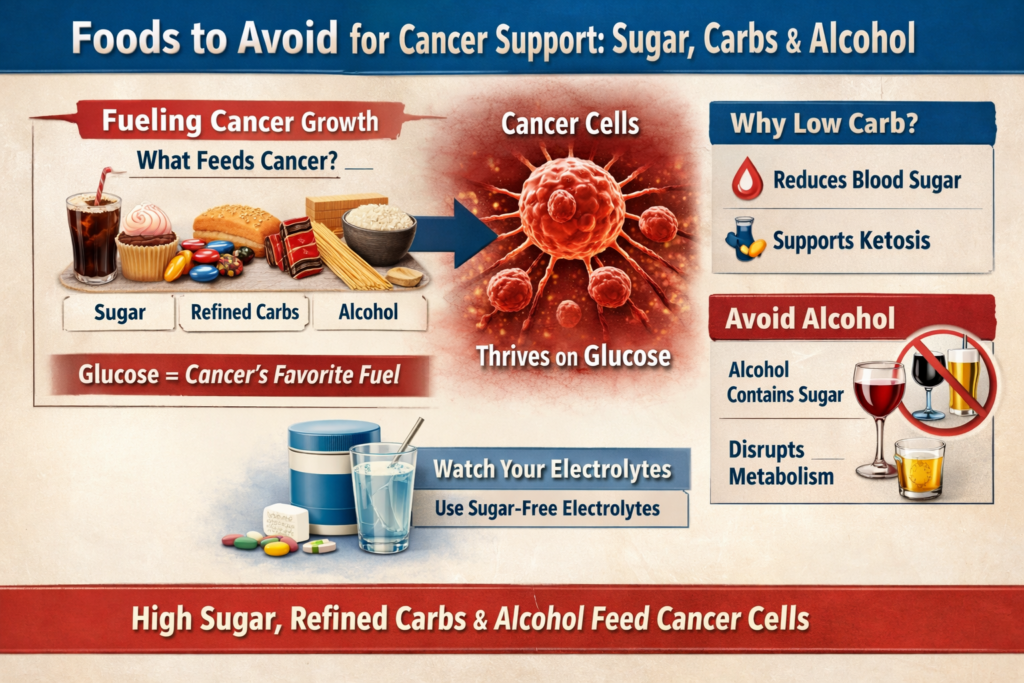
What This Page Explains
This page explains:
- Why certain foods can fuel cancer
- Why sugar and high carbs matter
- Why this approach is low carb / keto-based
- What foods to limit or avoid
- Why this step is critical
The Most Important Rule
This step cannot be skipped.
If this part is ignored, the entire strategy becomes much less effective.
Why Food Matters in Cancer
Every time you eat, your body creates fuel.
The main fuels are:
- Sugar (glucose)
- Amino acids (protein)
- Fat
Cancer cells prefer one fuel above all: glucose.
Simple Explanation
Cancer cells rely heavily on sugar to grow, multiply, and survive.
More sugar means more fuel for cancer.
Less sugar means less fuel for cancer.
Why High-Carb Diets Are a Problem
High-carb foods turn into glucose in the body.
This causes:
- Blood sugar spikes
- Insulin spikes
- Increased growth signaling
This creates an environment where cancer can grow more easily.
The Goal: Control Fuel, Not Starve Yourself
This is not about starvation or extreme restriction.
It is about controlling the fuel source.
Why Low Carb / Keto Helps
A lower-carb approach:
- Reduces glucose availability
- Lowers insulin levels
- Shifts the body toward fat and ketones
Healthy cells can adapt to this. Cancer cells often struggle.
Simple Way to Think About It
Sugar is easy fuel for cancer.
Fat is harder for cancer to use.
The goal is to reduce sugar, not calories.
Foods to Avoid or Limit
Sugar
- Soda
- Candy
- Desserts
- Syrups
- Sweet drinks
These cause rapid spikes in blood sugar.
Refined Carbohydrates
- White bread
- Pasta
- White rice
- Crackers
- Processed snacks
These quickly convert into glucose.
Ultra-Processed Foods
- Packaged snacks
- Fast food
- Sugary cereals
- Frozen processed meals
These often contain hidden sugars and additives.
High-Sugar Fruits (Limit, Not Eliminate)
- Fruit juice
- Dried fruit
- Large portions of fruit
Natural sugar still raises blood glucose.
Sugary Drinks
- Juice
- Energy drinks
- Sweetened coffee drinks
Liquid sugar is absorbed very quickly.
Alcohol
Alcohol is often overlooked but important to address.
Alcohol can:
- Contain sugar
- Raise blood sugar
- Disrupt liver metabolism
- Increase inflammation
The best approach is to avoid alcohol during this strategy.
Low Carb Side Effect: Electrolytes Matter
When carbohydrates are reduced, the body releases stored water.
This also leads to loss of:
- Sodium
- Potassium
- Magnesium
What This Can Cause
- Fatigue
- Headaches
- Weakness
- Dizziness
Simple Solution
Use a sugar-free electrolyte powder.
This helps maintain hydration, support energy, and prevent fatigue.
Important: it must be sugar-free.
Avoid sports drinks or electrolyte products that contain sugar or glucose.
Where People Get This Wrong
Common mistakes include:
- Drinking juice thinking it is healthy
- Eating high-carb “healthy” foods
- Ignoring hidden sugars
- Not replacing electrolytes
These mistakes reduce effectiveness.
How This Connects to Your Strategy
This approach works together with:
- Protein control
- Iron balance
- Autophagy
Critical Reminder
Lowering sugar alone is not enough.
Pathways must also be controlled.
See full protocol:
https://helping4cancer.com/autophagy-stack-protocol-dosing-timing/
Simple Daily Mindset
Before eating or drinking, ask:
Will this raise my blood sugar?
If yes, reduce or replace it.
Better Direction
Focus on:
- Healthy fats
- Controlled protein
- Low-carb vegetables
- Proper hydration and electrolytes
Balance Still Matters
Do not:
- Over-restrict
- Ignore energy needs
- Push into weakness
Learn more:
https://helping4cancer.com/cancer-cachexia-muscle-loss-recovery-meals/
Simple Takeaway
Cancer prefers sugar.
High carbs increase glucose.
Alcohol can disrupt control.
Electrolytes are needed on low carb.
This step is critical.
One-Line Summary
Controlling sugar, carbs, and alcohol is essential because these directly influence the fuel cancer uses to grow.
External References
https://www.cancer.gov/about-cancer/understanding/what-is-cancer
https://pmc.ncbi.nlm.nih.gov/articles/PMC4783224/