What This Page Explains
Iron is essential for life.
Your body needs iron to:
- Carry oxygen in your blood
- Produce energy in your cells
- Support your immune system
But there is an important reality:
👉 Cancer cells also depend on iron
This creates a problem:
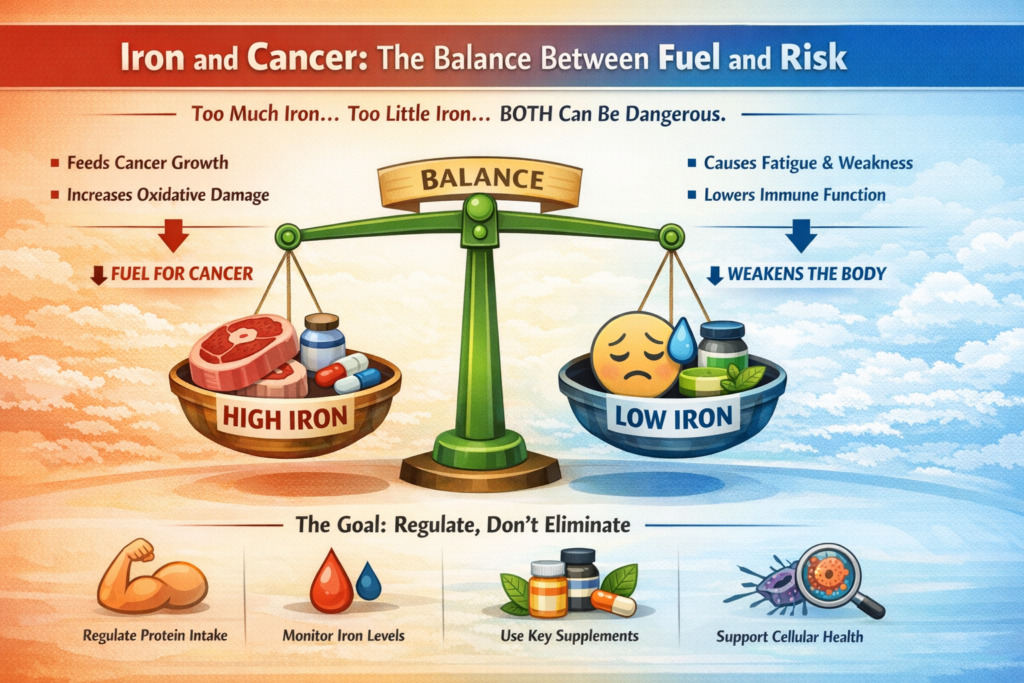
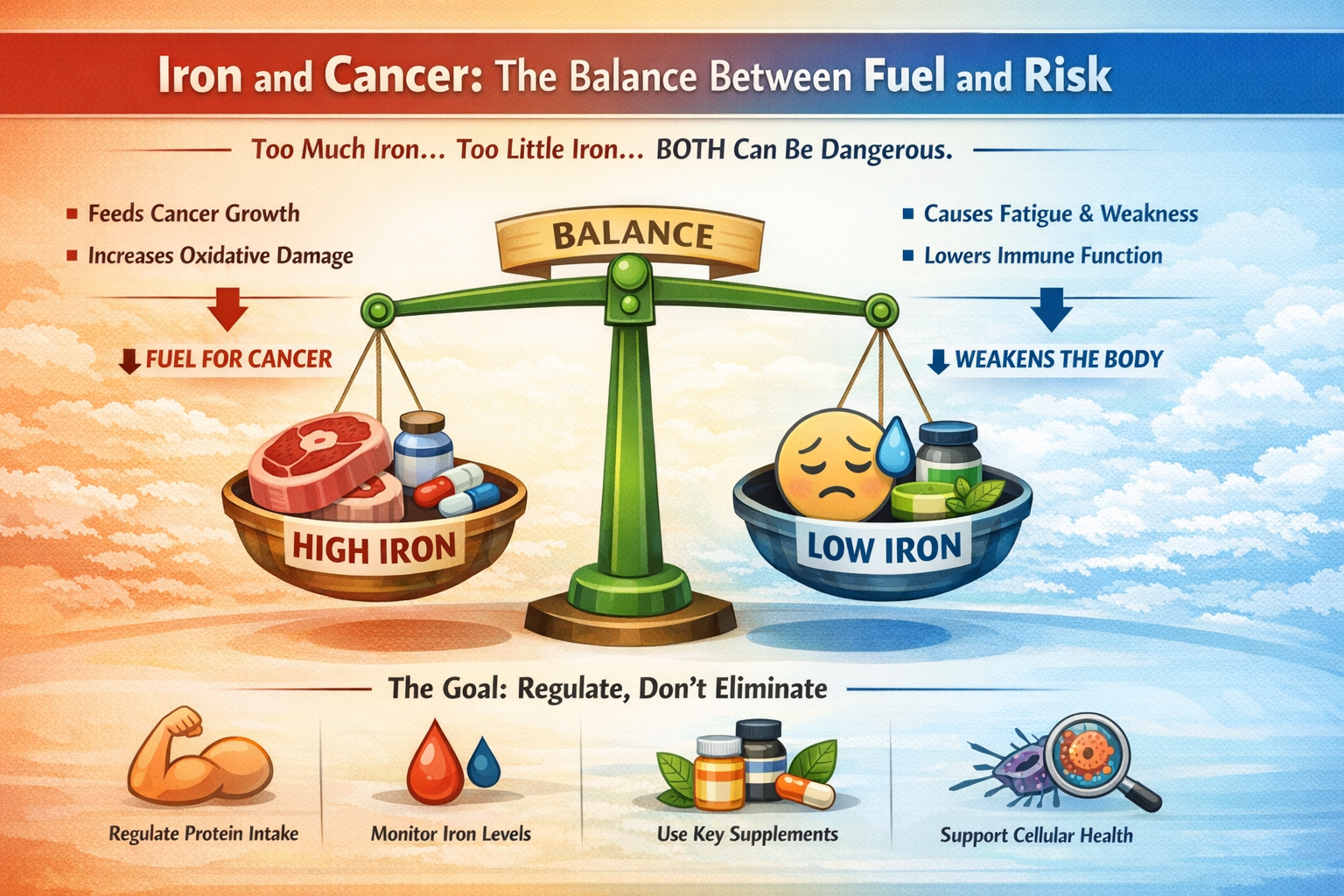
- Too much iron can fuel cancer growth
- Too little iron can weaken your body
👉 The goal is balance — not extremes
How Iron Fuels Cancer
Iron plays a key role in:
- DNA replication
- Cell growth
- Mitochondrial energy production
Cancer cells often:
- Absorb more iron than normal cells
- Store iron for rapid growth
- Use iron to survive stress
👉 This makes iron a powerful driver of tumor growth
Learn more about how cancer uses fuel:
https://helping4cancer.com/iron-and-cancer-fuel/
⚠️ The Danger of High Iron
What Happens When Iron Is Too High
Excess iron can:
- Increase oxidative stress
- Damage DNA
- Promote tumor growth
- Support blood vessel formation (angiogenesis)
👉 Cancer thrives in high-iron environments
Simple Explanation
Iron acts like fuel.
Too much iron =
- Faster cancer growth
- More damage to healthy cells
Common Causes of High Iron
- High red meat intake
- Iron supplements (when not needed)
- Iron-fortified foods
- Genetic iron overload
⚠️ The Danger of Low Iron
What Happens When Iron Is Too Low
Low iron can lead to:
- Fatigue
- Weakness
- Poor oxygen delivery
- Reduced immune function
👉 Your body becomes weaker and less able to recover
Simple Explanation
Too little iron =
- Low energy
- Weak immune system
- Slower healing
⚖️ Why Iron Must Be Controlled
Iron should be:
👉 Adequate — not excessive
In a cancer-focused strategy:
- Enough to support your body
- Not enough to fuel aggressive growth
Simple Rule
Do not eliminate iron — regulate it
Iron and Protein: A Critical Connection
Many high-iron foods are also high in protein:
- Red meat
- Organ meats
This creates a powerful combination:
👉 Iron + protein = strong growth signaling
What This Means
- Portion size matters
- Frequency matters
- Balance matters
How Your Stack Helps Control Iron Risk
Your autophagy stack helps reduce cancer’s ability to use iron effectively.
See full protocol:
https://helping4cancer.com/autophagy-stack-protocol-dosing-timing/
Curcumin
- Helps regulate inflammation
- May bind excess iron
👉 Reduces iron-driven damage
Quercetin
- Acts as a mild iron modulator
- Reduces oxidative stress
👉 Helps stabilize iron levels
EGCG (Green Tea Extract)
- May reduce iron absorption
- Helps limit cancer growth signaling
👉 Helps prevent excess iron buildup
Resveratrol
- Influences iron metabolism
- Supports cellular stress response
👉 Weakens cancer’s advantage
Omega-3 Fish Oil
- Reduces inflammation linked to iron overload
👉 Protects healthy tissue
Apigenin
- Supports cellular signaling balance
- Helps regulate stress response
👉 Improves metabolic control
⚠️ Important Insight
👉 Iron itself is not dangerous
👉 Uncontrolled iron is the problem
Simple Visual Concept
Think of iron like this:
- Too high → fuels cancer
- Too low → weakens your body
- Balanced → supports recovery
Practical Strategy
1. Control High-Iron Foods
- Limit excessive red meat
- Avoid unnecessary iron supplements
2. Balance Protein Intake
- Follow body-weight-based needs
- Avoid overconsumption
3. Use Your Stack
- Helps reduce cancer’s ability to use iron
- Supports pathway control
4. Monitor Your Body
- Watch energy levels
- Watch weight and strength
⚠️ Cancer Cachexia Warning
If you experience:
- Rapid weight loss
- Muscle loss
- Weakness
👉 Do NOT push restriction aggressively
Learn more:
https://helping4cancer.com/cancer-cachexia-muscle-loss-recovery-meals/
Simple Takeaway
- Iron is essential
- Cancer depends on iron
- Too much fuels cancer
- Too little weakens you
- Balance is the strategy
One-Line Summary
Iron must be carefully controlled — because both excess and deficiency can work against you in cancer recovery.
🌐 External References (Authority Links)
https://ods.od.nih.gov/factsheets/Iron-HealthProfessional/
https://pmc.ncbi.nlm.nih.gov/articles/PMC11368033/
https://pmc.ncbi.nlm.nih.gov/articles/PMC12673735/