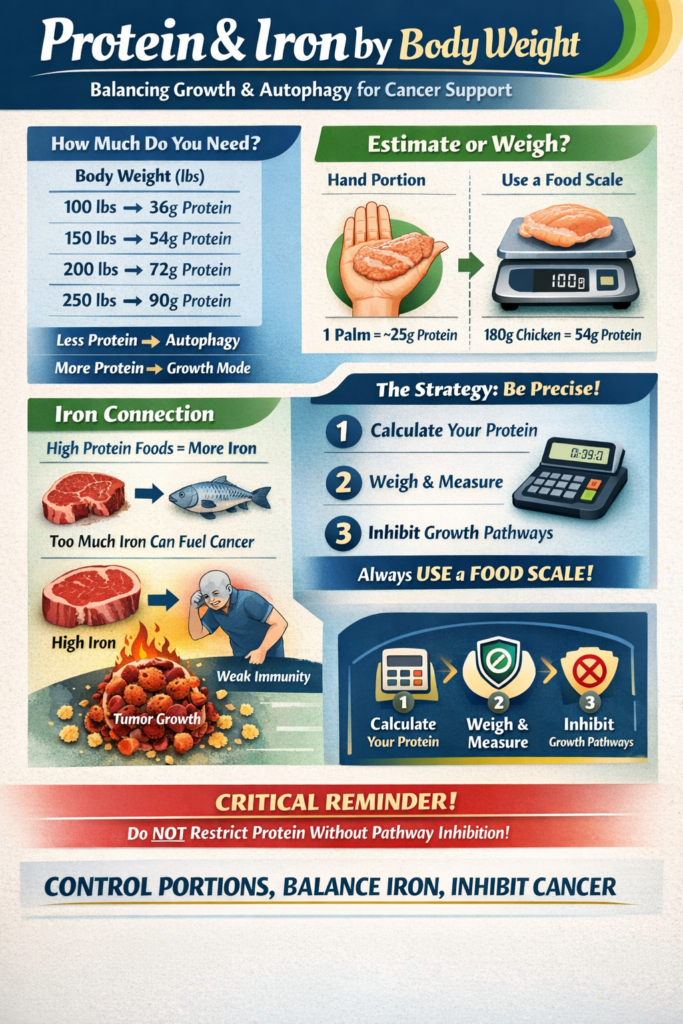
What This Page Explains
This page shows you:
- How much protein your body actually needs
- How iron intake connects to protein
- How to measure portions using your hand
- How to measure precisely using a food scale
- Why control — not extremes — is the goal
⚠️ Critical Foundation Rule
A slight reduction in protein can trigger autophagy (cellular cleanup).
But:
👉 Do NOT attempt protein restriction without pathway inhibition
Without control:
- Cancer can adapt
- Cancer can use recycled amino acids
- Cancer may survive and continue growing
👉 This is why your stack matters:
https://helping4cancer.com/autophagy-stack-protocol-dosing-timing/
Why Body Weight Matters
Protein needs are based on body weight.
General baseline:
- 0.36 grams per pound (minimum survival level)
- 0.8 grams per kg
This is where:
👉 Autophagy begins to increase
Simple Insight
- Higher protein → growth mode
- Lower protein → cleanup mode
👉 Balance determines outcome
⚖️ Protein + Iron Connection
Most protein foods also contain iron.
This means:
👉 Increasing protein often increases iron
Examples:
- Beef → high protein + high iron
- Chicken → high protein + lower iron
- Fish → moderate protein + moderate iron
Key Takeaway
You are not just controlling protein…
👉 You are controlling iron exposure + growth signals
📊 Protein Targets by Body Weight
Body Weight → Minimum Protein (Autophagy Range)
| Weight (lbs) | Weight (kg) | Protein (g/day) |
|---|---|---|
| 100 lbs | 45 kg | 36 g |
| 125 lbs | 57 kg | 45 g |
| 150 lbs | 68 kg | 54 g |
| 175 lbs | 79 kg | 63 g |
| 200 lbs | 91 kg | 72 g |
| 225 lbs | 102 kg | 81 g |
| 250 lbs | 113 kg | 90 g |
| 275 lbs | 125 kg | 99 g |
| 300 lbs | 136 kg | 108 g |
| 325 lbs | 147 kg | 117 g |
| 350 lbs | 159 kg | 126 g |
How to Measure Protein WITHOUT a Scale (Visual Guide)
Palm Method (Simple and Effective)
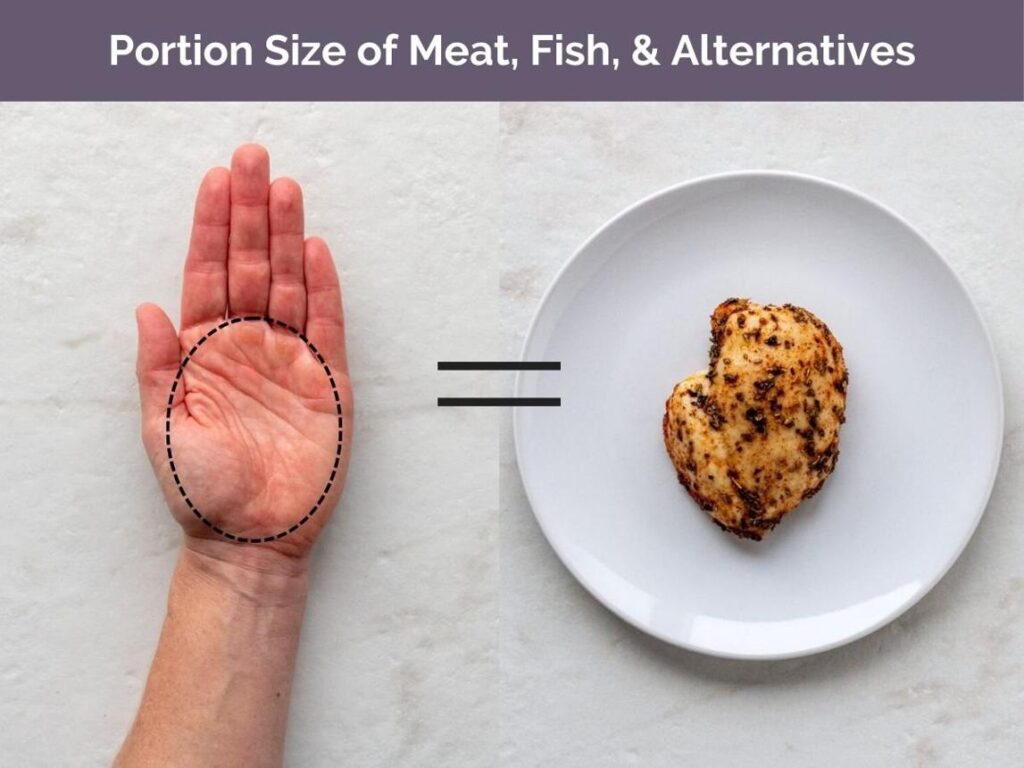
1 Palm = ~20–30g Protein
Use your palm (not fingers):
- Thickness matters
- Meat should match palm size
Examples
- 1 palm chicken = ~25g protein
- 1 palm beef = ~25g protein (higher iron)
- 1 palm fish = ~20–25g protein
Daily Example (150 lb person)
Needs ~54g protein:
👉 2 palms + small extra portion
⚖️ How to Measure Protein WITH a Scale (Recommended)
Food Scale = Accuracy
👉 A food scale is strongly recommended for this protocol
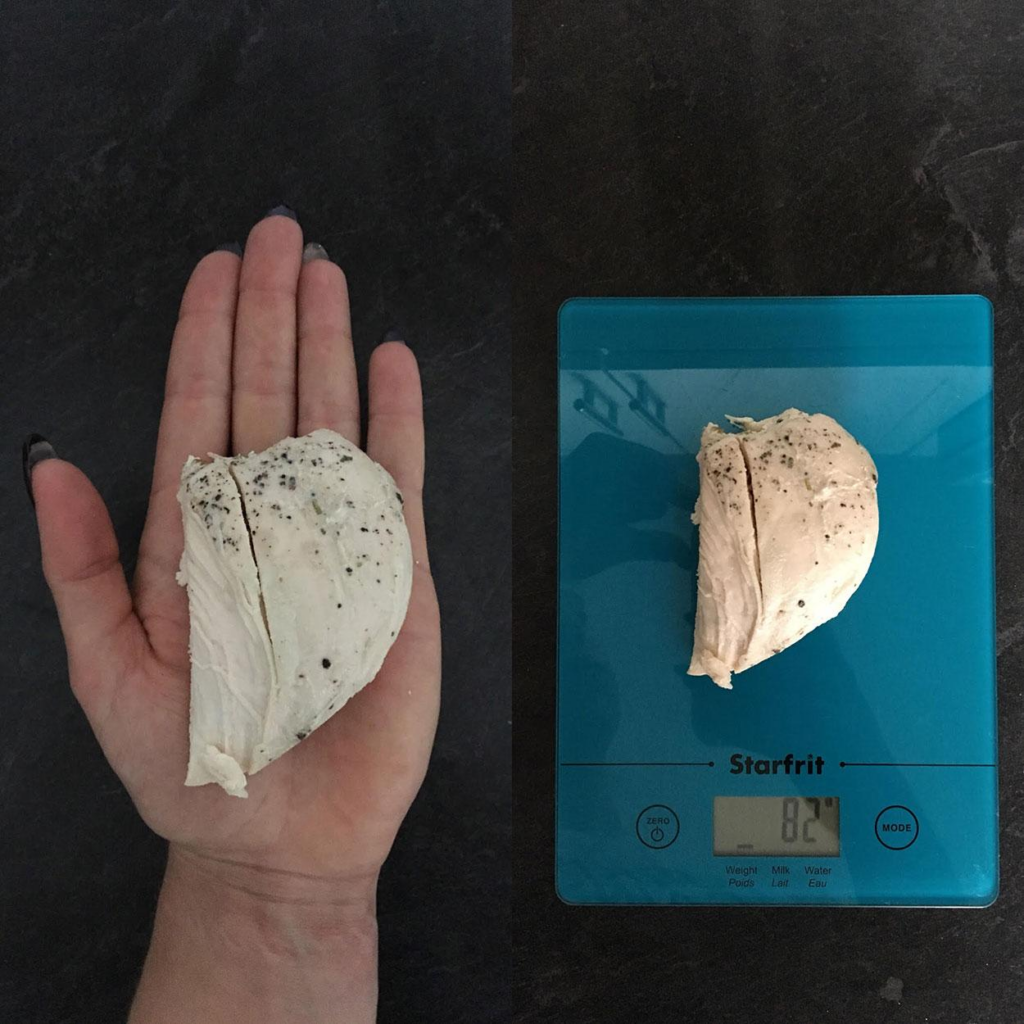
Protein by Weight (Cooked Approximation)
- 100g chicken = ~30g protein
- 100g beef = ~26g protein
- 100g fish = ~22g protein
Example (150 lb person)
Target: ~54g protein
- 180g chicken (~6 oz) = ~54g protein
👉 Very precise, very consistent
⚠️ Why a Food Scale Is Critical
Without a scale:
- Portions are often too large
- Protein intake is underestimated
- Iron intake increases unintentionally
👉 This can shift the body back into growth mode
🔥 Autophagy Strategy (Simple Explanation)
When protein is slightly reduced:
- The body starts breaking down damaged cells
- Old proteins are recycled
- Defective cells are targeted
👉 This is autophagy
BUT — Important Reality
Without pathway control:
- Cancer can survive
- Cancer can use recycled nutrients
👉 Learn why here:
https://helping4cancer.com/how-food-feeds-cancer-autophagy-pathways/
Putting It All Together
To do this correctly:
1. Calculate Your Protein
Use body weight
2. Measure Accurately
- Palm method (quick)
- Scale (best)
3. Control Iron Intake
- Rotate protein sources
- Avoid excess red meat
4. Use Pathway Inhibition
Your stack helps prevent cancer adaptation
⚠️ Important Safety Note
Do NOT:
- Drop protein too low
- Ignore body signals
- Continue during cachexia
👉 Learn more:
https://helping4cancer.com/cancer-cachexia-muscle-loss-recovery-meals/
Simple Takeaway
- Protein drives growth
- Iron supports that growth
- Portion size controls both
- A small deficit can trigger cleanup
- But only if pathways are controlled
One-Line Summary
Measure your protein carefully — because portion size determines whether your body builds, maintains, or breaks down.