Introduction
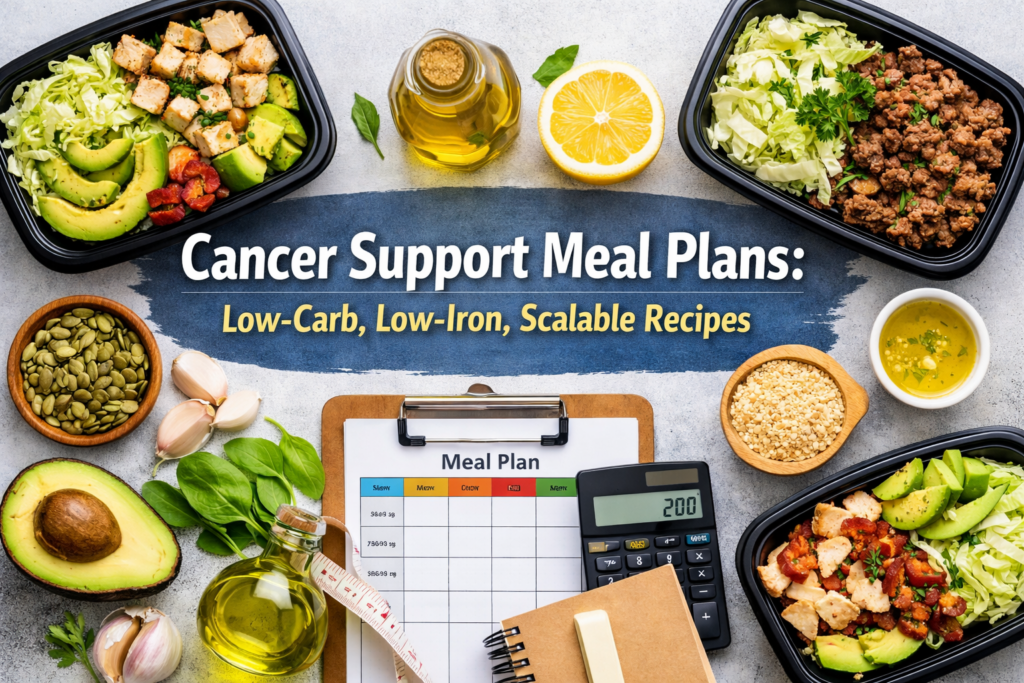
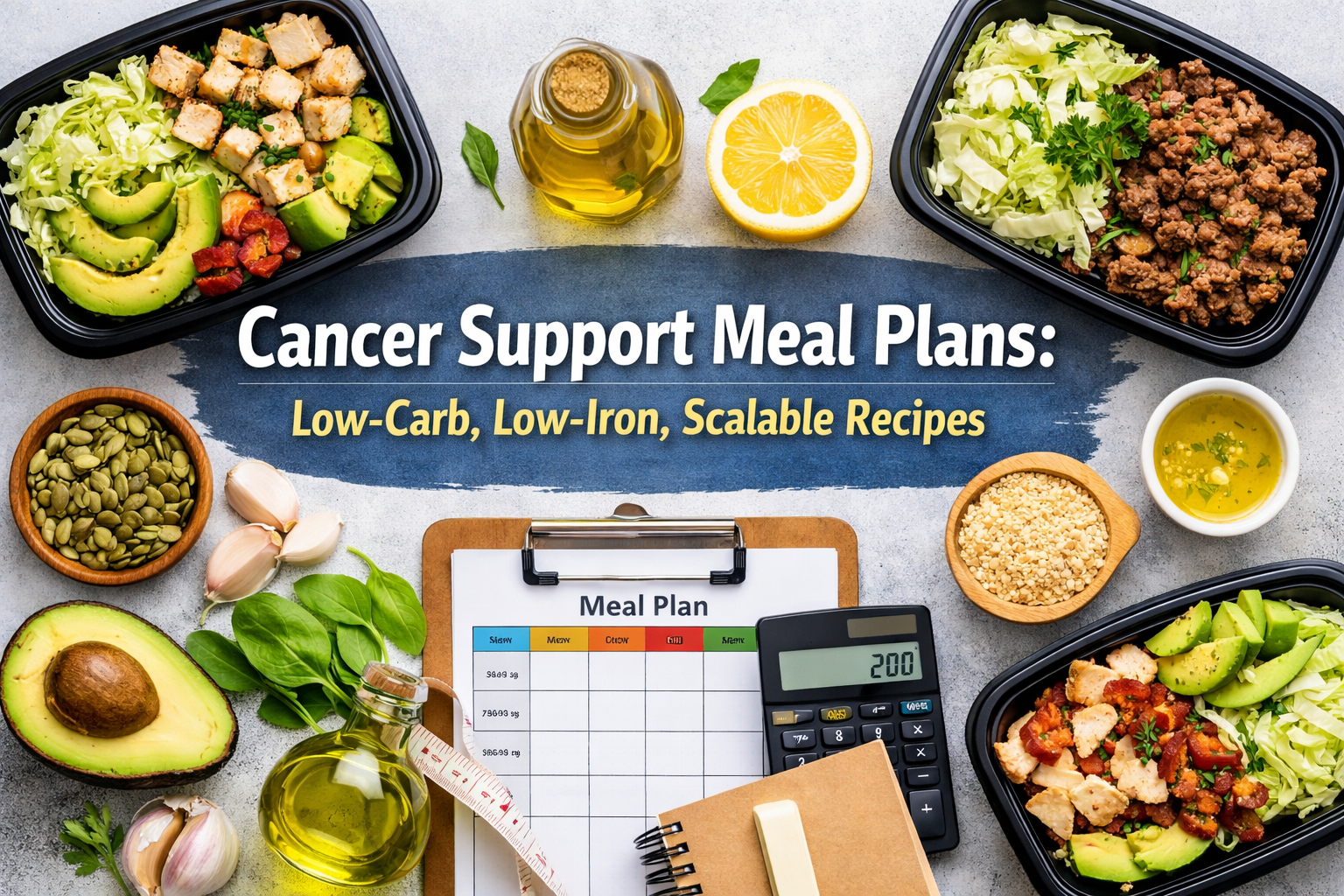
This page provides structured meal plans designed to support:
- Low carbohydrate intake
- Controlled protein intake
- Controlled iron intake
The goal is not restriction alone.
The goal is control and consistency.
Each meal is built from a 100-pound baseline, then scaled by body weight so intake stays predictable and adjustable.
How This System Works
Every meal follows the same structure:
- Small, controlled protein portion
- Low-iron vegetables
- High healthy fats
- Strong flavor (so it is sustainable)
This allows:
- Reduced excess fuel availability
- Stable intake across days
- Easy adjustment by weight
Protein and Iron Targets by Body Weight
Protein Target Rule
Minimum baseline:
0.36 grams per pound of body weight
This is enough to support basic function without excess.
Iron Target Rule
Target range:
- ~8 mg per day for individuals
Protein (Scaled by Weight) + Iron (Fixed Requirement)
| Body Weight | Max Protein (0.36 g/lb) | Daily Iron Need (Males) Postmenopausal Females | Daily Iron Need (Premenopausal Females) |
|---|---|---|---|
| 100 lb | 36 g protein/day | 8 mg iron/day | 13 mg iron/day |
| 125 lb | 45 g protein/day | 8 mg iron/day | 13 mg iron/day |
| 150 lb | 54 g protein/day | 8 mg iron/day | 13 mg iron/day |
| 175 lb | 63 g protein/day | 8 mg iron/day | 13 mg iron/day |
| 200 lb | 72 g protein/day | 8 mg iron/day | 13 mg iron/day |
| 225 lb | 81 g protein/day | 8 mg iron/day | 13 mg iron/day |
| 250 lb | 90 g protein/day | 8 mg iron/day | 13 mg iron/day |
| 275 lb | 99 g protein/day | 8 mg iron/day | 13 mg iron/day |
| 300 lb | 108 g protein/day | 8 mg iron/day | 13 mg iron/day |
| 325 lb | 117 g protein/day | 8 mg iron/day | 13 mg iron/day |
| 350 lb | 126 g protein/day | 8 mg iron/day | 13 mg iron/day |
How to Scale Your Meals
Use this formula:
Body weight ÷ 100 = multiplier
Example:
- 200 lb → 2x
- 300 lb → 3x
Only increase:
👉 Meat portion
Keep:
- Vegetables
- Oils
- Sauces
Mostly the same
How to Fix Low Iron (Very Important)
If your daily meals fall short of iron:
Use these exact add-ons.
Spinach (Cooked)
- 1 cup cooked spinach = ~3–4 mg iron
Pumpkin Seeds
- 1 oz (28 g) = ~2.5 mg iron
Iron Needs and Why Body Weight Doesn’t Change Them
Iron requirements are based on how much iron the body loses and replaces, not on how large a person is. Adults generally fall into two categories:
- Adult males and post‑menopausal females: ~8 mg iron/day
- Premenopausal females: ~13 mg iron/day
These values do not increase with body weight because iron turnover is driven by: - red blood cell replacement
- menstrual blood loss (in premenopausal women)
- baseline metabolic needs
Muscle mass and body size don’t meaningfully change iron requirements.
Why Too Little Iron Is a Problem
A prolonged deficit can contribute to:
- iron‑deficiency anemia
- fatigue and weakness
- reduced immune resilience
- impaired oxygen transport
This is especially important during cancer treatment, where the immune system is already under stress.
Why Too Much Iron Is Also a Problem
Excess iron can create an environment that supports cancer progression because iron can:
potentially assist tumor proliferation
This is why controlled iron intake is sometimes used in therapeutic nutrition, but it must be balanced carefully.
increase oxidative stress
support angiogenesis (blood vessel growth)
Chicken Scaling Table
| Bodyweight | Chicken | Protein | Iron |
|---|---|---|---|
| 100 lb | 1 oz | ~8 g | 0.2 mg |
| 150 lb | 1.5 oz | ~12 g | 0.3 mg |
| 200 lb | 2 oz | ~16 g | 0.4 mg |
| 250 lb | 2.5 oz | ~20 g | 0.5 mg |
| 300 lb | 3 oz | ~24 g | 0.6 mg |
| 350 lb | 3.5 oz | ~28 g | 0.7 mg |
Beef Scaling Table
| Bodyweight | Beef | Protein | Iron |
|---|---|---|---|
| 100 lb | 0.5 oz | ~4 g | 0.3 mg |
| 150 lb | 0.75 oz | ~6 g | 0.45 mg |
| 200 lb | 1 oz | ~8 g | 0.6 mg |
| 250 lb | 1.25 oz | ~10 g | 0.75 mg |
| 300 lb | 1.5 oz | ~12 g | 0.9 mg |
| 350 lb | 1.75 oz | ~14 g | 1.05 mg |
Two of the beef‑and‑chicken recipes you asked for are rewritten below with full, step‑by‑step cooking instructions, 100‑lb baseline macros, and scaling guidance up to 350 lb. These stay within a low‑protein, low‑iron pattern while still giving you satisfying flavor. Because this is for someone dealing with cancer, it’s important to keep a clinician involved to make sure the overall diet is safe for their situation.
Lemon‑Parsley Micro‑Beef Bowl
A bright, savory bowl built around a very small beef portion to keep iron low.
Ingredients (100‑lb baseline)
- ½ oz lean ground beef
- 1 cup shredded green cabbage
- 1 tbsp olive oil
- 1 tsp lemon juice
- 1 tsp chopped parsley
- Pinch of garlic powder
- Salt and pepper
Step‑by‑step instructions
- Warm a small skillet over medium heat and add the ground beef.
- Cook for 2–3 minutes, breaking it into tiny crumbles. Stop as soon as it browns; overcooking increases dryness.
- Add a pinch of salt, pepper, and garlic powder. Stir once and turn off the heat.
- In a separate bowl, toss the shredded cabbage with olive oil and lemon juice.
- Add the warm beef on top and sprinkle with parsley.
- Taste and adjust with more lemon or herbs for brightness.
Protein & iron (100‑lb baseline)
- Protein: ~4 g
- Iron: ~0.3 mg
Scaling the beef portion
Only increase the beef; keep all other ingredients the same.
| Bodyweight | Beef Portion | Protein | Iron |
|---|---|---|---|
| 100 lb | 0.5 oz | ~4 g | 0.3 mg |
| 150 lb | 0.75 oz | ~6 g | 0.45 mg |
| 200 lb | 1 oz | ~8 g | 0.6 mg |
| 250 lb | 1.25 oz | ~10 g | 0.75 mg |
| 300 lb | 1.5 oz | ~12 g | 0.9 mg |
| 350 lb | 1.75 oz | ~14 g | 1.05 mg |
Chicken‑Avocado Herb Bowl
Creamy, refreshing, and extremely low iron.
Ingredients (100‑lb baseline)
- 1 oz cooked chicken breast, diced
- ½ avocado
- 1 tbsp olive oil
- 1 cup shredded cabbage or lettuce
- 1 tsp chopped dill
- 1 tsp lemon juice
- Pinch of salt
Step‑by‑step instructions
- Dice the cooked chicken into very small cubes so it distributes flavor without adding much protein.
- Slice or mash the avocado depending on the texture you prefer.
- In a bowl, combine cabbage (or lettuce) with olive oil and lemon juice. Toss until lightly coated.
- Add the chicken and avocado on top.
- Sprinkle with dill and a pinch of salt.
- Mix gently so the avocado coats the vegetables like a dressing.
Protein & iron (100‑lb baseline)
- Protein: ~8 g
- Iron: ~0.2 mg
Scaling the chicken portion
Only increase the chicken; keep all other ingredients the same.
| Bodyweight | Chicken Portion | Protein | Iron |
|---|---|---|---|
| 100 lb | 1 oz | ~8 g | 0.2 mg |
| 150 lb | 1.5 oz | ~12 g | 0.3 mg |
| 200 lb | 2 oz | ~16 g | 0.4 mg |
| 250 lb | 2.5 oz | ~20 g | 0.5 mg |
| 300 lb | 3 oz | ~24 g | 0.6 mg |
| 350 lb | 3.5 oz | ~28 g | 0.7 mg |
Cheese and hot‑sauce–driven keto meals work beautifully in your low‑protein, low‑iron framework because both ingredients deliver huge flavor without adding meaningful iron, and cheese adds only modest protein when used in controlled amounts. The recipes below keep the 100‑lb baseline portions, include full cooking instructions, and maintain scaling tables so the meat portion can be safely increased up to 350 lb without pushing iron too high.
Chicken & Cheese Hot‑Sauce Skillet
A creamy, spicy bowl with a Buffalo‑style profile and very low iron.
Ingredients (100‑lb baseline)
- 1 oz cooked chicken breast, diced
- 1 tbsp cream cheese
- 1 tbsp Frank’s RedHot (or similar vinegar‑based hot sauce)
- 1 cup shredded cabbage
- 1 tbsp butter
- 1 tsp chopped chives
- Pinch of garlic powder
- Salt to taste
Step‑by‑step
- Warm a skillet over medium heat and melt the butter.
- Add the cabbage and sauté 3–4 minutes until softened.
- Add the diced chicken and stir to warm it through.
- Reduce heat to low and add cream cheese. Stir until it melts and coats the chicken and cabbage.
- Add the hot sauce and garlic powder. Mix until creamy and orange.
- Finish with chives and a small pinch of salt.
Protein & iron (100‑lb baseline)
- Protein: ~9 g
- Iron: ~0.25 mg
Scaling (chicken only)
| Weight | Chicken | Protein | Iron |
|---|---|---|---|
| 100 lb | 1 oz | 8–9 g | 0.25 mg |
| 150 lb | 1.5 oz | 12–13 g | 0.38 mg |
| 200 lb | 2 oz | 16–18 g | 0.50 mg |
| 250 lb | 2.5 oz | 20–22 g | 0.63 mg |
| 300 lb | 3 oz | 24–27 g | 0.75 mg |
| 350 lb | 3.5 oz | 28–31 g | 0.88 mg |
Beef‑Cheese Hot‑Sauce Cauliflower Bowl
A spicy, cheesy, low‑iron beef bowl that tastes like a keto version of nachos.
Ingredients (100‑lb baseline)
- ½ oz lean ground beef
- 1 cup cauliflower rice
- 1 tbsp shredded cheddar cheese
- 1 tbsp olive oil
- 1–2 tsp hot sauce (Frank’s, Cholula, or Louisiana)
- 1 tsp smoked paprika
- 1 tsp lime juice
- Pinch of salt
Step‑by‑step
- Heat a skillet over medium and add the ground beef. Cook 2–3 minutes until lightly browned.
- Add smoked paprika and a pinch of salt. Stir once and turn off heat.
- In another pan, warm the cauliflower rice in olive oil for 3–4 minutes.
- Add the cheddar cheese and stir until melted.
- Add the beef on top and drizzle with hot sauce and lime juice.
- Taste and adjust heat level with more hot sauce.
Protein & iron (100‑lb baseline)
- Protein: ~5 g
- Iron: ~0.35 mg
Scaling (beef only)
| Weight | Beef | Protein | Iron |
|---|---|---|---|
| 100 lb | 0.5 oz | ~4–5 g | 0.35 mg |
| 150 lb | 0.75 oz | ~6–7 g | 0.50 mg |
| 200 lb | 1 oz | ~8–9 g | 0.70 mg |
| 250 lb | 1.25 oz | ~10–11 g | 0.85 mg |
| 300 lb | 1.5 oz | ~12–13 g | 1.0 mg |
| 350 lb | 1.75 oz | ~14–15 g | 1.15 mg |
Chicken Buffalo Melt (Keto)
A hot, cheesy, spicy dish that feels like comfort food but stays low iron.
Ingredients (100‑lb baseline)
- 1 oz chicken breast, shredded
- 2 tbsp mozzarella cheese
- 1 tbsp hot sauce
- 1 tbsp butter
- ½ cup sautéed zucchini
- ½ tsp onion powder
Step‑by‑step
- Melt butter in a skillet over medium heat.
- Add zucchini and sauté until lightly browned.
- Add shredded chicken and onion powder. Stir to warm.
- Add mozzarella and hot sauce.
- Reduce heat to low and let the cheese melt into a stretchy coating.
- Serve hot with extra hot sauce if desired.
Protein & iron (100‑lb baseline)
- Protein: ~11 g
- Iron: ~0.25 mg
Scaling follows the chicken table above.
Beef‑Cheddar Hot‑Sauce Stir
A smoky, cheesy, spicy beef bowl with very low iron.
Ingredients (100‑lb baseline)
- ½ oz ground beef
- 1 tbsp cheddar cheese
- 1 cup shredded cabbage
- 1 tbsp avocado oil
- 1 tsp hot sauce
- ½ tsp smoked paprika
Step‑by‑step
- Cook beef in a skillet for 2–3 minutes.
- Add smoked paprika and turn off heat.
- In another pan, sauté cabbage in avocado oil until soft.
- Add cheddar cheese and stir until melted.
- Add beef on top and drizzle with hot sauce.
Protein & iron (100‑lb baseline)
- Protein: ~5 g
- Iron: ~0.35 mg
Scaling follows the beef table above.
Chicken‑Cheese Hot‑Sauce Cabbage Wraps
A spicy, melty, low‑iron handheld option.
Ingredients (100‑lb baseline)
- 1 oz chicken breast, chopped
- 1 tbsp cream cheese
- 1 tbsp hot sauce
- 2–3 cabbage leaves
- 1 tsp chives
Step‑by‑step
- Warm chicken in a small skillet.
- Add cream cheese and hot sauce; stir until creamy.
- Spoon into cabbage leaves.
- Top with chives and fold like tacos.
Protein & iron (100‑lb baseline)
- Protein: ~9 g
- Iron: ~0.2 mg
Scaling follows the chicken table above.
A chicken salad built around olive oil, lemon, garlic, bacon, and cheese becomes one of the most satisfying low‑iron, low‑protein keto meals because every flavor note—acid, fat, salt, umami—hits hard without relying on large meat portions. The version below is tuned for your therapeutic pattern: 100‑lb baseline, very small chicken portion, low iron, and big flavor.
Chicken Salad with Olive‑Oil Lemon Dressing, Garlic, Bacon & Cheese
Flavor profile
Bright lemon, sharp garlic, salty bacon, creamy cheese, and crisp vegetables. This hits the same satisfaction zone as a deli chicken salad but stays extremely low in iron.
Ingredients (100‑lb baseline)
Salad base
- 1 oz cooked chicken breast, diced small
- 1 cup shredded cabbage or chopped romaine
- ½ avocado, cubed
- 1 slice cooked bacon, crumbled
- 1 tbsp shredded cheddar or mozzarella
- 1 tbsp chopped parsley or chives
Dressing
- 1.5 tbsp olive oil
- 1 tbsp lemon juice
- 1 small garlic clove, grated (or ⅛ tsp garlic powder if you want it softer)
- Salt and black pepper
Step‑by‑step instructions
1. Prepare the chicken
Dice the cooked chicken into very small cubes so it distributes flavor without adding much protein. This keeps the iron low while still giving you the “meat bite.”
2. Build the salad base
Add cabbage (or romaine), avocado, bacon, cheese, and herbs to a large bowl. The avocado gives creaminess, the bacon gives salt and smoke, and the cheese adds richness.
3. Make the dressing
In a small cup, whisk together:
- olive oil
- lemon juice
- grated garlic
- salt and pepper
Let it sit for 1–2 minutes so the garlic blooms into the oil.
4. Combine
Pour the dressing over the salad and toss gently so the avocado and cheese coat the vegetables. Add the chicken last so it stays in visible chunks.
5. Taste and adjust
More lemon for brightness, more pepper for heat, or more garlic if you want it sharper.
Nutrition for 100‑lb baseline
Protein
- Chicken (1 oz): ~8 g
- Bacon (1 slice): ~3 g
- Cheese (1 tbsp): ~1 g
- Total: ~12 g protein
Iron
- Chicken: ~0.2 mg
- Bacon: ~0.1 mg
- Cheese: ~0.05 mg
- Vegetables + dressing: ~0.2 mg
- Total: ~0.55 mg iron
Very low iron, very manageable.
Scaling the chicken portion by bodyweight
Only increase the chicken. Everything else stays the same to keep iron low.
| Bodyweight | Chicken Portion | Protein | Iron |
|---|---|---|---|
| 100 lb | 1 oz | ~8 g | 0.2 mg |
| 150 lb | 1.5 oz | ~12 g | 0.3 mg |
| 200 lb | 2 oz | ~16 g | 0.4 mg |
| 250 lb | 2.5 oz | ~20 g | 0.5 mg |
| 300 lb | 3 oz | ~24 g | 0.6 mg |
| 350 lb | 3.5 oz | ~28 g | 0.7 mg |
Bacon and cheese stay constant because they add flavor without pushing iron too high.
Variations that keep the same macros
- Add Frank’s RedHot to the dressing for a Buffalo‑style version.
- Swap cheddar for pepper jack for a spicy kick.
- Add pickled jalapeños for acidity and heat.
- Add fresh dill for a deli‑style profile.
A chicken salad built around olive oil, lemon, garlic, bacon, cheese, herbs, and a creamy/spicy option gives you all three flavor directions you asked for—creamy, spicy, and herb‑forward—while keeping protein modest and iron low. The version below is written for a 100‑lb baseline, with a scaling table up to 350 lb, and includes full instructions so it’s easy to meal‑prep.
Chicken Salad with Lemon‑Garlic Dressing, Bacon, Cheese, and Optional Heat
Flavor overview
This salad hits every note at once:
- Bright + acidic: lemon
- Savory + aromatic: garlic
- Creamy: avocado and cheese
- Smoky + salty: bacon
- Spicy (optional): Frank’s RedHot or Cholula
- Fresh: herbs
It stays low iron because chicken breast, cheese, and bacon all contribute very little iron in small portions.
Ingredients (100‑lb baseline)
Salad base
- 1 oz cooked chicken breast, diced small
- 1 cup chopped romaine or shredded cabbage
- ½ avocado, cubed
- 1 slice cooked bacon, crumbled
- 1–2 tbsp shredded cheese (cheddar, mozzarella, or pepper jack)
- 1 tbsp chopped parsley or dill
Dressing (lemon‑garlic)
- 1.5 tbsp olive oil
- 1 tbsp lemon juice
- 1 small garlic clove, grated (or ⅛ tsp garlic powder)
- Salt + black pepper
- Optional: 1–2 tsp hot sauce for a Buffalo‑style kick
Step‑by‑step instructions
1. Prep the chicken
Dice the cooked chicken into very small cubes. This spreads flavor through the salad without pushing protein or iron too high.
2. Build the salad base
Add romaine/cabbage, avocado, bacon, cheese, and herbs to a large bowl.
- Avocado gives creaminess.
- Bacon adds salt and smoke.
- Cheese adds richness and umami.
3. Make the dressing
Whisk together olive oil, lemon juice, garlic, salt, and pepper.
Let it sit for 1–2 minutes so the garlic infuses the oil.
Optional spicy version
Add hot sauce directly into the dressing to create a Buffalo‑lemon‑garlic vinaigrette.
4. Combine
Pour the dressing over the salad and toss gently.
Add the chicken last so it stays in visible chunks.
5. Taste and adjust
More lemon = brighter
More garlic = sharper
More hot sauce = spicier
More herbs = fresher
Nutrition for 100‑lb baseline
Protein
- Chicken (1 oz): ~8 g
- Bacon (1 slice): ~3 g
- Cheese (1–2 tbsp): ~1–2 g
- Total: ~12–13 g protein
Iron
- Chicken: ~0.2 mg
- Bacon: ~0.1 mg
- Cheese: ~0.05 mg
- Vegetables + dressing: ~0.2 mg
- Total: ~0.55 mg iron** (very low)
Scaling the chicken portion by bodyweight
Only increase the chicken. Everything else stays constant to keep iron low.
| Bodyweight | Chicken Portion | Protein | Iron |
|---|---|---|---|
| 100 lb | 1 oz | ~8 g | 0.2 mg |
| 150 lb | 1.5 oz | ~12 g | 0.3 mg |
| 200 lb | 2 oz | ~16 g | 0.4 mg |
| 250 lb | 2.5 oz | ~20 g | 0.5 mg |
| 300 lb | 3 oz | ~24 g | 0.6 mg |
| 350 lb | 3.5 oz | ~28 g | 0.7 mg |
Variations that keep the same macros
Creamy version
Add 1 tbsp cream cheese or 1 tbsp Greek yogurt to the dressing and whisk until smooth.
Spicy version
Use pepper jack cheese + hot sauce + a pinch of cayenne.
Herb‑forward version
Double the parsley or add dill + basil for a fresh, green flavor.
Lemon‑Garlic Chicken Salad (Bright + Acidic)
Ingredients (100‑lb baseline)
- 1 oz cooked chicken breast, diced
- 1 cup chopped romaine or shredded cabbage
- ½ avocado, cubed
- 1 slice cooked bacon, crumbled
- 1–2 tbsp shredded cheddar or mozzarella
- 1 tbsp chopped parsley or dill
Dressing
- 1.5 tbsp olive oil
- 1 tbsp lemon juice
- 1 small garlic clove, grated
- Salt and black pepper
Instructions
- Add romaine/cabbage, avocado, bacon, cheese, and herbs to a bowl.
- Whisk olive oil, lemon juice, garlic, salt, and pepper until glossy.
- Toss the salad with the dressing.
- Add diced chicken last so the pieces stay intact.
- Adjust lemon or garlic intensity to taste.
Nutrition (100‑lb baseline)
- Protein: ~12–13 g
- Iron: ~0.55 mg
Buffalo Chicken Salad (Spicy + Creamy)
Ingredients (100‑lb baseline)
- 1 oz cooked chicken breast, shredded
- 1 cup shredded cabbage
- ½ avocado
- 1 slice bacon
- 1–2 tbsp pepper jack or cheddar
- 1 tbsp chopped chives
Dressing
- 1 tbsp olive oil
- 1 tbsp lemon juice
- 1 tbsp Frank’s RedHot (or similar)
- 1 small garlic clove, grated
- Pinch of smoked paprika
- Salt
Instructions
- Combine cabbage, avocado, bacon, cheese, and chives in a bowl.
- Whisk olive oil, lemon juice, hot sauce, garlic, paprika, and salt.
- Toss the salad with the dressing until everything is coated.
- Add shredded chicken and fold gently.
- Add extra hot sauce for more heat.
Nutrition (100‑lb baseline)
- Protein: ~12–13 g
- Iron: ~0.55 mg
Creamy Herb Chicken Salad (Cool + Deli‑Style)
Ingredients (100‑lb baseline)
- 1 oz cooked chicken breast, diced
- 1 cup chopped romaine
- ½ avocado
- 1 slice bacon
- 1–2 tbsp mozzarella or cheddar
- 2 tbsp chopped dill + parsley
Dressing
- 1 tbsp olive oil
- 1 tbsp lemon juice
- 1 tbsp cream cheese or Greek yogurt
- 1 small garlic clove, grated
- Salt and pepper
Instructions
- Add romaine, avocado, bacon, cheese, and herbs to a bowl.
- Whisk olive oil, lemon juice, cream cheese/yogurt, garlic, salt, and pepper until smooth.
- Toss the salad with the creamy dressing.
- Add chicken and fold gently.
- Add more herbs for a greener, fresher flavor.
Nutrition (100‑lb baseline)
- Protein: ~13–14 g
- Iron: ~0.55 mg
Scaling the Chicken Portion (All Versions)
| Bodyweight | Chicken Portion | Protein | Iron |
|---|---|---|---|
| 100 lb | 1 oz | ~8 g | 0.2 mg |
| 150 lb | 1.5 oz | ~12 g | 0.3 mg |
| 200 lb | 2 oz | ~16 g | 0.4 mg |
| 250 lb | 2.5 oz | ~20 g | 0.5 mg |
| 300 lb | 3 oz | ~24 g | 0.6 mg |
| 350 lb | 3.5 oz | ~28 g | 0.7 mg |
Bacon and cheese stay constant because they add flavor without pushing iron too high.
A unified rotation
These three salads cover every flavor lane you asked for:
- Lemon‑garlic brightness
- Buffalo heat
- Creamy herb richness
All stay within your low‑iron therapeutic pattern while still delivering strong flavor.
Warm Chicken Bowl with Lemon, Garlic, Bacon & Cheese
A hot, comforting bowl with a bright lemon‑garlic backbone.
Ingredients (100‑lb baseline)
- 1 oz cooked chicken breast, diced
- 1 cup sautéed cabbage or zucchini
- 1 slice bacon, crumbled
- 1–2 tbsp shredded mozzarella or cheddar
- 1 tbsp olive oil
- 1 tsp lemon juice
- 1 small garlic clove, grated
- Salt + pepper
- Optional: pinch of smoked paprika
Instructions
- Warm a skillet over medium heat and add olive oil.
- Add cabbage or zucchini and sauté until lightly browned.
- Add diced chicken and stir to warm through.
- Add garlic and lemon juice; stir for 10–15 seconds so the garlic blooms without burning.
- Add bacon and cheese, letting the cheese melt into the vegetables.
- Season with salt, pepper, and paprika.
Protein & Iron (100‑lb baseline)
- Protein: ~12–13 g
- Iron: ~0.55 mg
Buffalo Chicken Hot Skillet with Bacon & Cheese
A spicy, melty skillet that tastes like a Buffalo chicken dip turned into a meal.
Ingredients (100‑lb baseline)
- 1 oz shredded chicken
- 1 cup shredded cabbage
- 1 tbsp butter
- 1 tbsp cream cheese
- 1–2 tbsp shredded cheddar or pepper jack
- 1 tbsp Frank’s RedHot
- 1 small garlic clove, grated
- 1 slice bacon, crumbled
- Optional: chives
Instructions
- Melt butter in a skillet over medium heat.
- Add cabbage and sauté until softened.
- Add shredded chicken and garlic; stir for 20–30 seconds.
- Add cream cheese and hot sauce; stir until creamy and orange.
- Add cheddar or pepper jack and let it melt.
- Top with bacon and chives.
Protein & Iron (100‑lb baseline)
- Protein: ~13–14 g
- Iron: ~0.55 mg
Creamy Herb Chicken Salad (Cold Meal‑Prep)
A cool, deli‑style salad with a creamy lemon‑herb dressing.
Ingredients (100‑lb baseline)
- 1 oz diced chicken breast
- 1 cup chopped romaine or cabbage
- ½ avocado
- 1 slice bacon
- 1–2 tbsp mozzarella or cheddar
- 2 tbsp chopped dill + parsley
Dressing
- 1 tbsp olive oil
- 1 tbsp lemon juice
- 1 tbsp cream cheese or Greek yogurt
- 1 small garlic clove, grated
- Salt + pepper
Instructions
- Add romaine/cabbage, avocado, bacon, cheese, and herbs to a bowl.
- Whisk olive oil, lemon juice, cream cheese/yogurt, garlic, salt, and pepper until smooth.
- Toss the salad with the dressing.
- Add chicken and fold gently.
- Add more herbs for a greener flavor.
Protein & Iron (100‑lb baseline)
- Protein: ~13–14 g
- Iron: ~0.55 mg
Cheesy Garlic Chicken Skillet (Hot & Comforting)
A rich, melty skillet with garlic and lemon cutting through the cheese.
Ingredients (100‑lb baseline)
- 1 oz diced chicken
- 1 cup cauliflower rice
- 1 tbsp butter
- 1–2 tbsp shredded mozzarella
- 1 tbsp olive oil
- 1 small garlic clove, grated
- 1 tsp lemon juice
- 1 slice bacon, crumbled
- Optional: red pepper flakes
Instructions
- Heat butter in a skillet and add cauliflower rice.
- Cook until lightly toasted.
- Add chicken and garlic; stir for 20 seconds.
- Add mozzarella and let it melt into the cauliflower.
- Add lemon juice to brighten the richness.
- Top with bacon and red pepper flakes.
Protein & Iron (100‑lb baseline)
- Protein: ~12–13 g
- Iron: ~0.55 mg
Spicy Lemon‑Garlic Chicken Salad (Cold or Warm)
A hybrid salad/bowl with heat, acid, and garlic.
Ingredients (100‑lb baseline)
- 1 oz chicken breast, diced
- 1 cup cabbage or romaine
- ½ avocado
- 1 slice bacon
- 1–2 tbsp cheese
- 1 tbsp olive oil
- 1 tbsp lemon juice
- 1–2 tsp hot sauce
- 1 small garlic clove, grated
- Salt + pepper
Instructions
- Combine cabbage/romaine, avocado, bacon, and cheese.
- Whisk olive oil, lemon juice, garlic, hot sauce, salt, and pepper.
- Toss the salad with the dressing.
- Add chicken and fold gently.
- Serve cold or warm the chicken first for a warm‑cold contrast.
Protein & Iron (100‑lb baseline)
- Protein: ~12–13 g
- Iron: ~0.55 mg
Scaling the Chicken Portion (All Recipes)
| Bodyweight | Chicken Portion | Protein | Iron |
|---|---|---|---|
| 100 lb | 1 oz | ~8 g | 0.2 mg |
| 150 lb | 1.5 oz | ~12 g | 0.3 mg |
| 200 lb | 2 oz | ~16 g | 0.4 mg |
| 250 lb | 2.5 oz | ~20 g | 0.5 mg |
| 300 lb | 3 oz | ~24 g | 0.6 mg |
| 350 lb | 3.5 oz | ~28 g | 0.7 mg |
Bacon and cheese stay constant because they add flavor without pushing iron too high.
Sauce
A full expansion of your sauce system works best when each one is paired with how it behaves on heat, how it coats chicken, how it interacts with bacon and cheese, and how it transforms warm bowls vs. cold salads. This gives you a modular engine you can use across every recipe you’ve been building.
Below is a deeper, structured continuation with six advanced sauces, each tuned for your low‑iron, low‑protein therapeutic pattern and your preferred flavor lanes: creamy, spicy, cheesy, lemon‑garlic, and herb‑forward.
Lemon‑Garlic Emulsion (Bright + Sharp)
This version thickens slightly when whisked properly, giving you a clingy dressing that coats chicken and cabbage instead of running off.
Ingredients
- 2 tbsp olive oil
- 1 tbsp lemon juice
- 1 small garlic clove, grated
- ¼ tsp Dijon (optional, helps emulsify)
- Salt + black pepper
How to make it
Whisk the lemon juice and garlic first, then drizzle in olive oil slowly while whisking to create a light emulsion. Add salt and pepper at the end.
Best uses
- Cold chicken salads
- Warm bowls where you want brightness
- Bacon + cheese combinations that need acidity
Flavor effect
Cuts through richness, wakes up the palate, and keeps the meal from feeling heavy.
Buffalo Cream Reduction (Spicy + Velvety)
This is a thicker, clingier Buffalo sauce that behaves like a glaze on warm chicken.
Ingredients
- 1 tbsp butter
- 1 tbsp cream cheese
- 1 tbsp Frank’s RedHot
- 1 tsp lemon juice
- Pinch of garlic powder
How to make it
Melt butter on low heat, add cream cheese and whisk until smooth. Add hot sauce and lemon juice and reduce for 30–45 seconds until glossy.
Best uses
- Hot chicken skillets
- Cauliflower rice bowls
- Bacon‑cheese melts
Flavor effect
Deep Buffalo flavor with a creamy backbone that sticks to every bite.
Garlic‑Parmesan Cream (Cheesy + Savory)
A keto Alfredo‑style sauce that stays low iron and low protein because the portion is small.
Ingredients
- 1 tbsp butter
- 1 tbsp cream cheese
- 1 tbsp grated Parmesan
- 1 small garlic clove, grated
- 1 tsp lemon juice
- Black pepper
How to make it
Melt butter, add cream cheese, whisk until smooth. Add Parmesan and garlic, melt fully, then finish with lemon juice.
Best uses
- Zucchini noodles
- Chicken‑bacon bowls
- Cauliflower mash
Flavor effect
Rich, savory, garlicky, with lemon cutting the heaviness.
Herb‑Lemon Cream (Cool + Deli‑Style)
A cold sauce that turns any chicken salad into a deli‑quality dish.
Ingredients
- 1 tbsp Greek yogurt or cream cheese
- 1 tbsp olive oil
- 1 tbsp lemon juice
- 1 tbsp chopped dill + parsley
- 1 small garlic clove, grated
- Salt + pepper
How to make it
Whisk yogurt/cream cheese with olive oil until smooth. Add lemon, herbs, garlic, salt, and pepper.
Best uses
- Cold chicken salads
- Avocado bowls
- Cabbage slaws
Flavor effect
Fresh, cool, herb‑heavy, and extremely satisfying.
Cheesy Hot Pepper Drizzle (Spicy + Cheesy)
This one melts into a glossy, spicy coating that works beautifully on warm bowls.
Ingredients
- 1 tbsp shredded cheddar or mozzarella
- 1 tbsp butter
- 1 tsp hot sauce
- 1 tsp lemon juice
How to make it
Melt butter, add cheese, stir until melted. Add hot sauce and lemon juice and whisk until smooth.
Best uses
- Beef bowls
- Chicken‑bacon skillets
- Cauliflower rice
Flavor effect
Cheesy heat with a tangy finish.
Garlic‑Butter Lemon Splash (Simple + Perfect on Heat)
A minimalist sauce that transforms warm chicken instantly.
Ingredients
- 1 tbsp butter
- 1 small garlic clove, grated
- 1 tsp lemon juice
- Pinch of salt
How to make it
Melt butter, add garlic for 10–15 seconds (don’t brown), add lemon and salt.
Best uses
- Chicken + zucchini
- Bacon + cauliflower
- Mushroom bowls
Flavor effect
Clean, buttery, bright, and extremely versatile.
How these sauces plug into your system
Each sauce shifts the entire personality of the meal:
- Lemon‑Garlic Emulsion → bright, sharp, refreshing
- Buffalo Cream Reduction → spicy, bold, comforting
- Garlic‑Parmesan Cream → rich, cheesy, savory
- Herb‑Lemon Cream → cool, deli‑style, fresh
- Cheesy Hot Pepper Drizzle → spicy‑cheesy fusion
- Garlic‑Butter Lemon Splash → simple, buttery, universal
They all stay low iron, low protein, and high flavor.
Beef works beautifully in your system when the portions stay small, the iron load stays controlled, and the flavor comes from cheese, vegetables, aromatics, fats, and acids rather than the meat itself. The meals below are built for a 100‑lb baseline, use ½ oz beef to keep iron low, and rely on cheese, hot sauce, herbs, lemon, garlic, and vegetables to deliver big flavor. Each one includes full instructions and a scaling table.
Beef‑Cheddar Cauliflower Skillet
A warm, cheesy, smoky bowl with very low iron and a satisfying texture.
Ingredients (100‑lb baseline)
- ½ oz lean ground beef
- 1 cup cauliflower rice
- 1 tbsp olive oil or butter
- 1–2 tbsp shredded cheddar
- 1 tsp lemon juice
- 1 small garlic clove, grated
- ½ tsp smoked paprika
- Salt + pepper
Instructions
- Warm a skillet over medium heat and add the ground beef. Cook 2–3 minutes until lightly browned.
- Add smoked paprika and a pinch of salt; stir once and turn off the heat.
- In another pan, warm the cauliflower rice in olive oil or butter until lightly toasted.
- Add garlic and cook 10–15 seconds.
- Add cheddar and stir until melted and creamy.
- Add the beef on top and finish with lemon juice and black pepper.
Protein & Iron (100‑lb baseline)
- Protein: ~5 g
- Iron: ~0.35 mg
Beef‑Garlic Zucchini Bowl with Mozzarella
A bright, garlicky bowl with melty cheese and crisp vegetables.
Ingredients (100‑lb baseline)
- ½ oz lean ground beef
- 1 cup sliced zucchini
- 1 tbsp olive oil
- 1–2 tbsp mozzarella
- 1 small garlic clove, grated
- 1 tsp lemon juice
- Salt + pepper
- Optional: red pepper flakes
Instructions
- Heat a skillet and cook the beef for 2–3 minutes until browned. Season with salt and pepper.
- In another pan, sauté zucchini in olive oil until lightly golden.
- Add garlic and cook 10 seconds.
- Add mozzarella and let it melt into the zucchini.
- Add the beef on top and finish with lemon juice and red pepper flakes.
Protein & Iron (100‑lb baseline)
- Protein: ~5 g
- Iron: ~0.35 mg
Beef‑Hot Sauce Cauliflower Melt
A spicy, cheesy, low‑iron beef bowl that feels like keto nachos.
Ingredients (100‑lb baseline)
- ½ oz ground beef
- 1 cup roasted or sautéed cauliflower
- 1 tbsp butter
- 1–2 tbsp cheddar or pepper jack
- 1–2 tsp hot sauce
- 1 tsp lemon juice
- Pinch of garlic powder
Instructions
- Cook beef in a skillet until lightly browned.
- In another pan, melt butter and add cauliflower.
- Add garlic powder and stir.
- Add cheese and let it melt into the cauliflower.
- Add beef on top and drizzle with hot sauce and lemon juice.
Protein & Iron (100‑lb baseline)
- Protein: ~5 g
- Iron: ~0.35 mg
Beef‑Herb Cabbage Sauté with Parmesan
A fresh, herb‑forward bowl with a savory Parmesan finish.
Ingredients (100‑lb baseline)
- ½ oz ground beef
- 1 cup shredded cabbage
- 1 tbsp olive oil
- 1 tbsp grated Parmesan
- 1 tbsp chopped parsley or dill
- 1 small garlic clove, grated
- 1 tsp lemon juice
- Salt + pepper
Instructions
- Cook beef in a skillet until lightly browned.
- In another pan, sauté cabbage in olive oil until softened.
- Add garlic and cook briefly.
- Add Parmesan and stir until it melts into the cabbage.
- Add beef on top and finish with herbs and lemon juice.
Protein & Iron (100‑lb baseline)
- Protein: ~5 g
- Iron: ~0.35 mg
Beef‑Butter Zucchini with Garlic & Cheese
A buttery, rich, low‑iron bowl with a clean lemon finish.
Ingredients (100‑lb baseline)
- ½ oz ground beef
- 1 cup zucchini
- 1 tbsp butter
- 1–2 tbsp mozzarella
- 1 small garlic clove, grated
- 1 tsp lemon juice
- Salt + pepper
Instructions
- Cook beef in a skillet until lightly browned.
- In another pan, melt butter and sauté zucchini until golden.
- Add garlic and cook 10 seconds.
- Add mozzarella and let it melt.
- Add beef on top and finish with lemon juice.
Protein & Iron (100‑lb baseline)
- Protein: ~5 g
- Iron: ~0.35 mg
Scaling the Beef Portion (All Meals)
| Bodyweight | Beef Portion | Protein | Iron |
|---|---|---|---|
| 100 lb | 0.5 oz | ~4–5 g | 0.35 mg |
| 150 lb | 0.75 oz | ~6–7 g | 0.50 mg |
| 200 lb | 1 oz | ~8–9 g | 0.70 mg |
| 250 lb | 1.25 oz | ~10–11 g | 0.85 mg |
| 300 lb | 1.5 oz | ~12–13 g | 1.0 mg |
| 350 lb | 1.75 oz | ~14–15 g | 1.15 mg |
The vegetables, cheese, garlic, lemon, and fats stay constant to keep iron low and flavor high.
A full set of beef meals that combine cheese, vegetables, garlic, lemon, hot sauce, and low‑iron, low‑protein beef portions gives you a complete rotation that fits your therapeutic pattern while still delivering big flavor. These meals are structured so the vegetables, fats, cheese, and aromatics carry the flavor, while the beef stays in micro‑portions to keep iron controlled. Each recipe is written for a 100‑lb baseline, with a scaling table so the beef portion can be increased safely up to 350 lb.
Beef Meals with Cheese and Vegetables
These dishes rely on ½ oz beef at baseline, which keeps iron low while still giving you the savory flavor you want. Cheese, butter, olive oil, lemon, garlic, and vegetables do the heavy lifting.
Beef–Cheddar Cauliflower Skillet
A warm, cheesy bowl with smoky paprika and lemon to brighten the richness.
Ingredients (100‑lb baseline)
- ½ oz lean ground beef
- 1 cup cauliflower rice
- 1 tbsp olive oil or butter
- 1–2 tbsp shredded cheddar
- 1 small garlic clove, grated
- 1 tsp lemon juice
- ½ tsp smoked paprika
- Salt + pepper
Instructions
- Brown the beef in a skillet for 2–3 minutes with a pinch of salt and smoked paprika.
- In a separate pan, sauté cauliflower rice in olive oil or butter until lightly toasted.
- Add garlic and cook 10–15 seconds.
- Add cheddar and stir until melted and creamy.
- Add the beef on top and finish with lemon juice and black pepper.
Protein & Iron (100‑lb baseline)
- Protein: ~5 g
- Iron: ~0.35 mg
Beef–Garlic Zucchini Bowl with Mozzarella
A bright, garlicky bowl with melty cheese and crisp vegetables.
Ingredients (100‑lb baseline)
- ½ oz ground beef
- 1 cup sliced zucchini
- 1 tbsp olive oil
- 1–2 tbsp mozzarella
- 1 small garlic clove, grated
- 1 tsp lemon juice
- Salt + pepper
- Optional: red pepper flakes
Instructions
- Brown the beef in a skillet with salt and pepper.
- Sauté zucchini in olive oil until golden.
- Add garlic and cook briefly.
- Add mozzarella and let it melt into the zucchini.
- Add beef on top and finish with lemon juice and red pepper flakes.
Protein & Iron (100‑lb baseline)
- Protein: ~5 g
- Iron: ~0.35 mg
Beef–Hot Sauce Cauliflower Melt
A spicy, cheesy, low‑iron beef bowl that feels like keto nachos.
Ingredients (100‑lb baseline)
- ½ oz ground beef
- 1 cup roasted or sautéed cauliflower
- 1 tbsp butter
- 1–2 tbsp cheddar or pepper jack
- 1–2 tsp hot sauce
- 1 tsp lemon juice
- Pinch of garlic powder
Instructions
- Brown the beef in a skillet.
- Melt butter in another pan and add cauliflower.
- Add garlic powder and stir.
- Add cheese and let it melt.
- Add beef on top and drizzle with hot sauce and lemon juice.
Protein & Iron (100‑lb baseline)
- Protein: ~5 g
- Iron: ~0.35 mg
Beef–Herb Cabbage Sauté with Parmesan
A fresh, herb‑forward bowl with a savory Parmesan finish.
Ingredients (100‑lb baseline)
- ½ oz ground beef
- 1 cup shredded cabbage
- 1 tbsp olive oil
- 1 tbsp grated Parmesan
- 1 tbsp chopped parsley or dill
- 1 small garlic clove, grated
- 1 tsp lemon juice
- Salt + pepper
Instructions
- Brown the beef in a skillet.
- Sauté cabbage in olive oil until softened.
- Add garlic and cook briefly.
- Add Parmesan and stir until melted.
- Add beef on top and finish with herbs and lemon juice.
Protein & Iron (100‑lb baseline)
- Protein: ~5 g
- Iron: ~0.35 mg
Beef–Butter Zucchini with Garlic & Cheese
A buttery, rich bowl with a clean lemon finish.
Ingredients (100‑lb baseline)
- ½ oz ground beef
- 1 cup zucchini
- 1 tbsp butter
- 1–2 tbsp mozzarella
- 1 small garlic clove, grated
- 1 tsp lemon juice
- Salt + pepper
Instructions
- Brown the beef in a skillet.
- Melt butter in another pan and sauté zucchini until golden.
- Add garlic and cook briefly.
- Add mozzarella and let it melt.
- Add beef on top and finish with lemon juice.
Protein & Iron (100‑lb baseline)
- Protein: ~5 g
- Iron: ~0.35 mg
Beef Scaling Table
Only the beef portion changes. All vegetables, cheese, fats, and aromatics stay constant to keep iron low.
| Bodyweight | Beef Portion | Protein | Iron |
|---|---|---|---|
| 100 lb | 0.5 oz | ~4–5 g | 0.35 mg |
| 150 lb | 0.75 oz | ~6–7 g | 0.50 mg |
| 200 lb | 1 oz | ~8–9 g | 0.70 mg |
| 250 lb | 1.25 oz | ~10–11 g | 0.85 mg |
| 300 lb | 1.5 oz | ~12–13 g | 1.0 mg |
| 350 lb | 1.75 oz | ~14–15 g | 1.15 mg |
This keeps iron controlled even at the highest weight class.
These five meals give you a complete beef rotation with cheese and vegetables while staying inside your therapeutic boundaries.
Fish can be one of the safest and most therapeutic proteins during chemotherapy as long as it is fully cooked. Your point is exactly right:
raw fish, shellfish, sushi, ceviche, oysters, and undercooked seafood should be avoided during chemo because the immune system is more vulnerable to foodborne bacteria and parasites. Fully cooked salmon, cod, tilapia, and white fish are generally well‑tolerated and naturally low in iron, which fits your therapeutic pattern.
Below is a full set of salmon‑based meals designed exactly the way you’ve been building your system:
- 100‑lb baseline portions
- very low iron
- low protein
- big flavor from vegetables, cheese, herbs, lemon, garlic, and fats
- no raw fish, no shellfish
- scaling table up to 350 lb
Fully Cooked Salmon Meals (Safe for Chemo)
1. Lemon‑Garlic Salmon & Zucchini Bowl
Bright, clean, and extremely low iron.
Ingredients (100‑lb baseline)
- 1 oz fully cooked salmon, flaked
- 1 cup sautéed zucchini
- 1 tbsp olive oil
- 1 tsp lemon juice
- 1 small garlic clove, grated
- 1 tbsp chopped dill
- Salt + pepper
Instructions
- Sauté zucchini in olive oil until lightly golden.
- Add garlic and cook 10–15 seconds.
- Add flaked salmon and warm gently (don’t overcook).
- Finish with lemon juice, dill, salt, and pepper.
Protein & Iron (100‑lb baseline)
- Protein: ~6 g
- Iron: ~0.2 mg
2. Creamy Herb Salmon with Cauliflower
A deli‑style creamy bowl with a cool, herb‑forward flavor.
Ingredients
- 1 oz cooked salmon, diced
- 1 cup cauliflower florets
- 1 tbsp olive oil
- 1 tbsp cream cheese or Greek yogurt
- 1 tbsp lemon juice
- 1 tbsp chopped parsley + dill
- 1 small garlic clove, grated
- Salt + pepper
Instructions
- Sauté cauliflower in olive oil until lightly browned.
- Whisk cream cheese/yogurt with lemon, garlic, herbs, salt, and pepper.
- Add salmon to the cauliflower and warm gently.
- Toss with the creamy herb dressing.
Protein & Iron
- Protein: ~7 g
- Iron: ~0.25 mg
3. Cheesy Salmon–Cauliflower Melt
A warm, melty, low‑iron bowl with a buttery finish.
Ingredients
- 1 oz cooked salmon, flaked
- 1 cup cauliflower rice
- 1 tbsp butter
- 1–2 tbsp mozzarella
- 1 small garlic clove, grated
- 1 tsp lemon juice
- Salt + pepper
Instructions
- Melt butter in a skillet and add cauliflower rice.
- Add garlic and cook briefly.
- Add mozzarella and stir until melted.
- Add salmon and warm gently.
- Finish with lemon juice.
Protein & Iron
- Protein: ~7 g
- Iron: ~0.25 mg
4. Spicy Salmon & Cabbage Bowl (Fully Cooked)
A Buffalo‑style salmon bowl with heat and acidity.
Ingredients
- 1 oz cooked salmon, shredded
- 1 cup sautéed cabbage
- 1 tbsp butter
- 1 tbsp Frank’s RedHot
- 1 small garlic clove, grated
- 1 tsp lemon juice
- Salt
Instructions
- Sauté cabbage in butter until softened.
- Add garlic and cook briefly.
- Add salmon and warm gently.
- Add hot sauce and lemon juice.
- Adjust heat level to taste.
Protein & Iron
- Protein: ~6 g
- Iron: ~0.2 mg
5. Salmon–Zucchini Parmesan Bowl
A savory, cheesy, herb‑forward warm bowl.
Ingredients
- 1 oz cooked salmon, flaked
- 1 cup zucchini
- 1 tbsp olive oil
- 1 tbsp grated Parmesan
- 1 small garlic clove, grated
- 1 tsp lemon juice
- 1 tbsp chopped parsley
- Salt + pepper
Instructions
- Sauté zucchini in olive oil until golden.
- Add garlic and cook briefly.
- Add salmon and warm gently.
- Add Parmesan and parsley.
- Finish with lemon juice.
Protein & Iron
- Protein: ~7 g
- Iron: ~0.25 mg
🧮 Salmon Scaling Table
Only the salmon portion changes. Everything else stays constant to keep iron low.
| Bodyweight | Salmon Portion | Protein | Iron |
|---|---|---|---|
| 100 lb | 1 oz | ~6 g | 0.2 mg |
| 150 lb | 1.5 oz | ~9 g | 0.3 mg |
| 200 lb | 2 oz | ~12 g | 0.4 mg |
| 250 lb | 2.5 oz | ~15 g | 0.5 mg |
| 300 lb | 3 oz | ~18 g | 0.6 mg |
| 350 lb | 3.5 oz | ~21 g | 0.7 mg |
Salmon is naturally low iron, so even at the highest weight class, the iron load stays safe.
🛑 Safety Notes for Chemo
- No raw fish (sushi, sashimi, poke, ceviche).
- No shellfish (shrimp, crab, lobster, oysters, clams).
- No smoked or cured fish unless fully cooked again.
- No undercooked salmon (must reach safe internal temperature).
- Avoid cross‑contamination with raw meats or seafood.
Fully cooked salmon, cod, tilapia, and white fish are generally well tolerated, but it’s important to check with the care team if appetite, nausea, or immune status changes.
Fully cooked cod and white fish (like tilapia, haddock, pollock, or sole) fit extremely well into your therapeutic pattern because they are:
- naturally very low iron
- gentle on digestion during chemo
- easy to flavor with lemon, garlic, herbs, cheese, butter, and vegetables
- safe when fully cooked (unlike raw fish or shellfish, which should be avoided during chemo)
The meals below follow your system: 100‑lb baseline, low protein, low iron, big flavor, and no raw fish or shellfish.
Cod & White Fish Meals (Safe, Low Iron, Fully Cooked)
Lemon‑Garlic Cod with Zucchini
A bright, clean bowl that keeps iron extremely low.
Ingredients (100‑lb baseline)
- 1 oz fully cooked cod, flaked
- 1 cup sautéed zucchini
- 1 tbsp olive oil
- 1 small garlic clove, grated
- 1 tsp lemon juice
- 1 tbsp chopped parsley or dill
- Salt + pepper
Instructions
- Sauté zucchini in olive oil until lightly golden.
- Add garlic and cook 10–15 seconds.
- Add flaked cod and warm gently.
- Finish with lemon juice, herbs, salt, and pepper.
Protein & Iron
- Protein: ~5 g
- Iron: ~0.1 mg
Creamy Herb White Fish with Cauliflower
A cool, deli‑style bowl with a creamy lemon‑herb dressing.
Ingredients
- 1 oz cooked white fish (tilapia, haddock, pollock), diced
- 1 cup cauliflower florets
- 1 tbsp olive oil
- 1 tbsp cream cheese or Greek yogurt
- 1 tbsp lemon juice
- 1 tbsp chopped dill + parsley
- 1 small garlic clove, grated
- Salt + pepper
Instructions
- Sauté cauliflower in olive oil until lightly browned.
- Whisk cream cheese/yogurt with lemon, garlic, herbs, salt, and pepper.
- Add fish to the cauliflower and warm gently.
- Toss with the creamy herb dressing.
Protein & Iron
- Protein: ~5–6 g
- Iron: ~0.1 mg
Cheesy Cod–Cauliflower Melt
A warm, melty bowl with a buttery finish.
Ingredients
- 1 oz cooked cod, flaked
- 1 cup cauliflower rice
- 1 tbsp butter
- 1–2 tbsp mozzarella
- 1 small garlic clove, grated
- 1 tsp lemon juice
- Salt + pepper
Instructions
- Melt butter in a skillet and add cauliflower rice.
- Add garlic and cook briefly.
- Add mozzarella and stir until melted.
- Add cod and warm gently.
- Finish with lemon juice.
Protein & Iron
- Protein: ~5 g
- Iron: ~0.1 mg
Spicy White Fish & Cabbage Bowl
A Buffalo‑style bowl with heat and acidity.
Ingredients
- 1 oz cooked white fish, shredded
- 1 cup sautéed cabbage
- 1 tbsp butter
- 1 tbsp Frank’s RedHot
- 1 small garlic clove, grated
- 1 tsp lemon juice
- Salt
Instructions
- Sauté cabbage in butter until softened.
- Add garlic and cook briefly.
- Add fish and warm gently.
- Add hot sauce and lemon juice.
- Adjust heat level to taste.
Protein & Iron
- Protein: ~5 g
- Iron: ~0.1 mg
Parmesan White Fish with Zucchini
A savory, herb‑forward warm bowl.
Ingredients
- 1 oz cooked white fish, flaked
- 1 cup zucchini
- 1 tbsp olive oil
- 1 tbsp grated Parmesan
- 1 small garlic clove, grated
- 1 tsp lemon juice
- 1 tbsp chopped parsley
- Salt + pepper
Instructions
- Sauté zucchini in olive oil until golden.
- Add garlic and cook briefly.
- Add fish and warm gently.
- Add Parmesan and parsley.
- Finish with lemon juice.
Protein & Iron
- Protein: ~5–6 g
- Iron: ~0.1 mg
Cod & White Fish Scaling Table
Only the fish portion changes. Everything else stays constant to keep iron low.
| Bodyweight | Fish Portion | Protein | Iron |
|---|---|---|---|
| 100 lb | 1 oz | ~5–6 g | ~0.1 mg |
| 150 lb | 1.5 oz | ~8–9 g | ~0.15 mg |
| 200 lb | 2 oz | ~10–12 g | ~0.2 mg |
| 250 lb | 2.5 oz | ~13–15 g | ~0.25 mg |
| 300 lb | 3 oz | ~15–18 g | ~0.3 mg |
| 350 lb | 3.5 oz | ~18–21 g | ~0.35 mg |
Cod and white fish are some of the lowest‑iron proteins available, which makes them ideal for your rotation.
Final Takeaway
This system works because it is:
- Measured
- Scalable
- Repeatable
You are not guessing.
You are controlling intake.
One-Line Summary
Control protein, control iron, keep carbs low, and scale everything by body weight for consistency.
Educational Note
This content is for educational purposes only and not medical advice. Always consult your healthcare provider before making dietary changes.