People Also Ask About the Gut Microbiome and Colon Health
As colon cancer rates continue rising, especially in younger adults, many people are beginning to ask deeper questions about gut health, inflammation, diet, and the microbiome.
Common questions include:
- What is the gut microbiome?
- How does the gut microbiome affect colon health?
- Can gut bacteria influence colon cancer risk?
- What foods damage the gut microbiome?
- How does fiber help the gut microbiome?
- What are short-chain fatty acids?
- What is butyrate and why is it important?
- What causes gut inflammation?
- What is gut barrier dysfunction or “leaky gut”?
- Can ultra-processed foods damage gut bacteria?
- Does the microbiome affect blood sugar and insulin?
- What foods help beneficial gut bacteria grow?
- Can resistant starch help the microbiome?
- Does fasting affect the gut microbiome?
- How quickly can diet change the microbiome?
Researchers are increasingly studying how the gut microbiome may influence inflammation, immune signaling, metabolism, gut barrier integrity, and long-term colon health.
The Gut Microbiome and Colon Health
The gut microbiome is the massive ecosystem of bacteria, fungi, viruses, and other microorganisms living inside the digestive tract.
Most people think of gut bacteria only as something that helps digest food. But researchers now understand that the gut microbiome does much more than that.
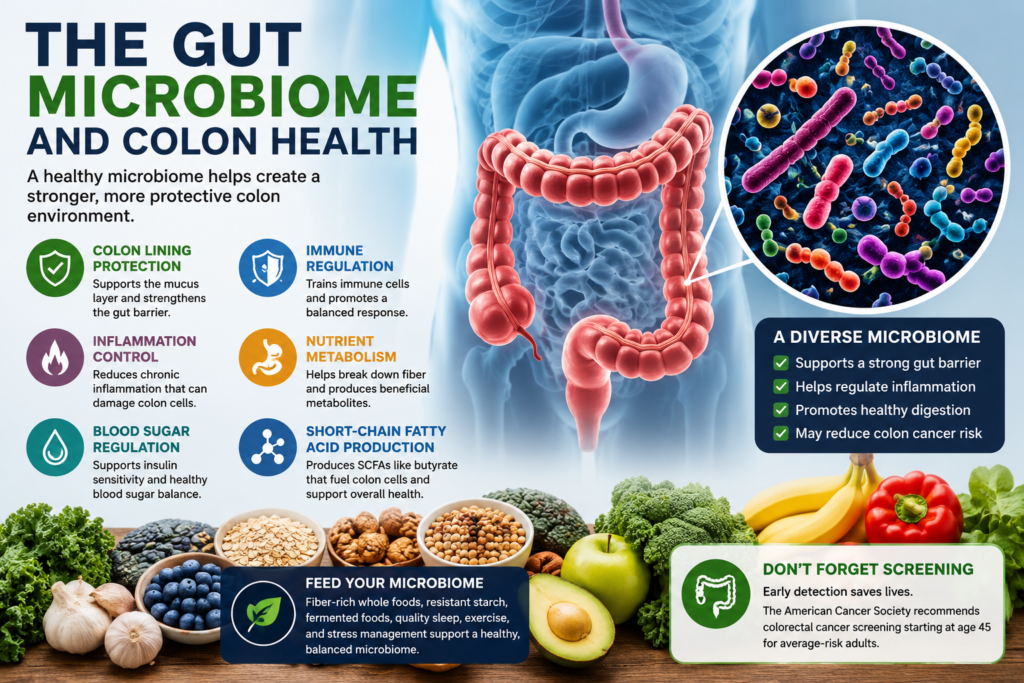
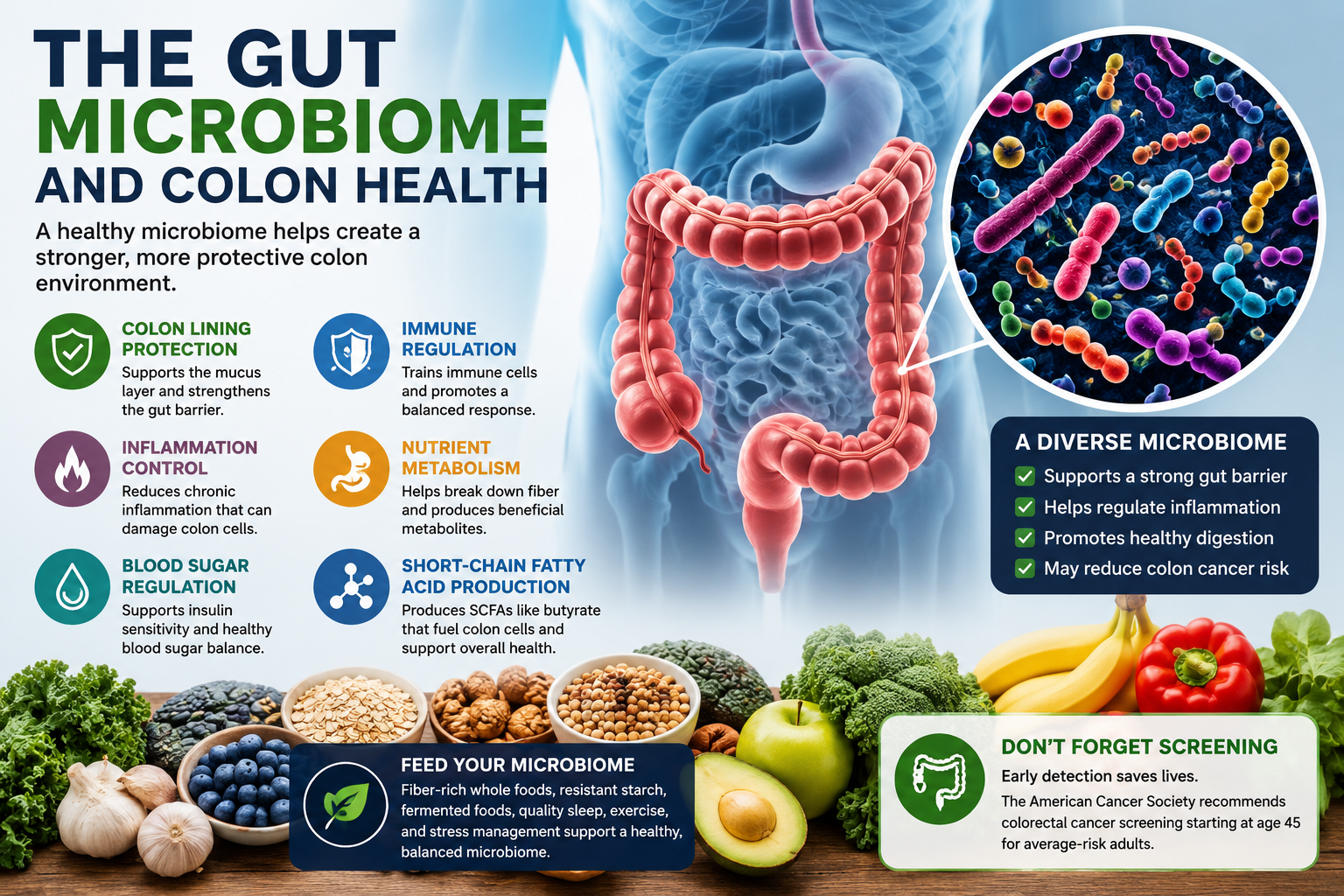
The microbiome helps communicate with the immune system, supports the colon lining, helps control inflammation, produces helpful compounds from fiber, and may influence blood sugar and metabolism.
In simple terms, the gut microbiome helps shape the environment your colon cells live in every day.
A healthy microbiome may help create a more protective colon environment.
An unhealthy or disrupted microbiome may create a more inflammatory, irritated, and less protective environment over time.
This matters because colon cancer does not usually appear overnight. It often develops slowly over many years through a combination of genetics, inflammation, diet, metabolism, immune changes, gut barrier damage, and lifestyle factors.
The gut microbiome is not the only factor in colon cancer risk, but it may be one important part of the bigger picture.
Quick Answer: How Does the Gut Microbiome Support Colon Health?
The gut microbiome may help support colon health by helping with:
- Colon lining protection
- Immune regulation
- Inflammation control
- Nutrient metabolism
- Blood sugar regulation
- Short-chain fatty acid production
- Gut barrier integrity
These processes are all connected.
For example, fiber feeds certain gut bacteria. Those bacteria produce short-chain fatty acids. Short-chain fatty acids help support the colon lining, immune balance, and inflammation control.
That is why gut health is not just about digestion. It is also about long-term colon protection.
Why the Colon Depends on the Microbiome
The colon is the final major section of the digestive tract.
By the time food reaches the colon, much of the protein, fat, and simple sugar has already been absorbed earlier in digestion. What reaches the colon often includes fiber, resistant starch, plant compounds, bile acids, water, and leftover food material.
This is where gut bacteria become very important.
Certain bacteria ferment fibers and resistant starches that the human body cannot fully digest on its own. During this process, they create helpful compounds called short-chain fatty acids.
The colon is one of the most microbe-rich areas of the body. That means colon cells are constantly exposed to microbial activity, microbial byproducts, immune signals, and food breakdown products.
A balanced microbiome helps keep this environment stable.
A disrupted microbiome may increase irritation, inflammation, and gut barrier stress.
Colon Lining Protection
The inside of the colon is protected by a thin but important mucus layer.
This mucus layer acts like a shield between colon cells and the bacteria living inside the gut.
When this lining is healthy, it helps:
- Protect colon cells
- Keep bacteria in the right place
- Reduce irritation
- Support smoother digestion
- Lower unnecessary immune activation
Beneficial gut bacteria help support this protective lining.
They do this partly by producing metabolites, especially short-chain fatty acids, that help nourish colon cells and support mucus production.
When the microbiome becomes unhealthy, the mucus layer may become weaker. This can allow more direct contact between bacteria, toxins, inflammatory molecules, and the colon wall.
Over time, that may contribute to chronic irritation and inflammation.
Gut Barrier Integrity
Gut barrier integrity means the intestinal wall is doing its job properly.
A healthy gut barrier allows nutrients to pass into the body while helping keep harmful substances, bacteria, and inflammatory molecules from crossing into places they should not go.
When this barrier becomes weakened, it is sometimes called increased intestinal permeability.
Many people use the phrase “leaky gut,” but the more scientific wording is gut barrier dysfunction or increased intestinal permeability.
Gut barrier dysfunction may contribute to:
- More immune activation
- More inflammation
- Digestive irritation
- Metabolic stress
- Whole-body inflammatory signaling
Short-chain fatty acids, especially butyrate, appear to help support the gut barrier.
They help nourish colon cells and may support the tight junctions that hold intestinal cells together.
Think of tight junctions like the seals between tiles. When they are strong, the barrier works better. When they are weak, unwanted substances may pass through more easily.
This is one reason fiber and microbiome health are studied so heavily in colon health research.
Immune Regulation
A large portion of the immune system interacts with the gut.
That makes sense because the digestive tract is constantly exposed to food, bacteria, viruses, fungi, and environmental material.
The immune system has to make constant decisions:
- What is harmless food?
- What is a friendly bacteria?
- What is a dangerous pathogen?
- What needs to be attacked?
- What should be tolerated?
A healthy microbiome helps train the immune system to respond appropriately.
This is important because an overactive immune response may create unnecessary inflammation, while a weak immune response may allow harmful microbes or abnormal cells to survive.
Beneficial gut bacteria and short-chain fatty acids may help support immune balance by influencing immune cells and inflammatory signaling.
The goal is not to shut the immune system down.
The goal is balance.
A balanced immune system can respond when needed without staying chronically inflamed all the time.
Inflammation Control
Chronic inflammation is one of the major themes in colon cancer research.
Inflammation is not always bad. Short-term inflammation is part of normal healing and immune defense.
The problem is chronic, low-grade inflammation that stays active for years.
Long-term inflammation may contribute to:
- DNA damage
- Oxidative stress
- Tissue irritation
- Abnormal cell signaling
- Increased cancer-promoting environments
The gut microbiome can influence inflammation in both directions.
A healthy microbiome may help calm unnecessary inflammation.
A disrupted microbiome may increase inflammatory signals.
This can happen through:
- Loss of beneficial bacteria
- Lower short-chain fatty acid production
- Weaker mucus protection
- Gut barrier dysfunction
- Overgrowth of inflammatory bacteria
- More exposure to bacterial toxins
This is why colon health is not only about what food enters the body. It is also about what the microbiome turns that food into.
Nutrient Metabolism
The microbiome helps process parts of food that the human body cannot fully break down by itself.
This includes many fibers, resistant starches, and plant compounds.
Gut bacteria can turn these food components into metabolites that affect the colon and the rest of the body.
These microbial metabolites may influence:
- Colon cell energy
- Immune signaling
- Inflammation
- Bile acid metabolism
- Blood sugar control
- Appetite hormones
- Gut barrier strength
This means two people can eat the same food and have somewhat different responses depending on their microbiome, metabolism, and overall health.
The microbiome helps explain why diet is not only about calories, carbs, fat, or protein.
It is also about what your gut ecosystem does with the food after you eat it.
Blood Sugar Regulation
The gut microbiome may also influence blood sugar regulation and insulin sensitivity.
This matters for colon health because insulin resistance, obesity, and type 2 diabetes are associated with higher colorectal cancer risk.
Gut bacteria may affect blood sugar through several pathways:
- Producing short-chain fatty acids
- Supporting gut barrier function
- Reducing inflammation
- Influencing gut hormones such as GLP-1 and PYY
- Affecting appetite and fullness signals
- Changing how the body handles nutrients
This does not mean gut bacteria alone control blood sugar.
But it does mean the microbiome may be part of the larger metabolic picture.
A healthier microbiome may support better metabolic control.
A disrupted microbiome may contribute to inflammation and insulin resistance in some people.
Short-Chain Fatty Acid Production
Short-chain fatty acids are one of the biggest reasons the microbiome matters for colon health.
Short-chain fatty acids, often called SCFAs, are produced when gut bacteria ferment fiber and resistant starch.
The three main short-chain fatty acids are:
- Acetate
- Propionate
- Butyrate
Butyrate is especially important for the colon.
Healthy colon cells can use butyrate as fuel.
Butyrate may also help:
- Support the colon lining
- Strengthen the gut barrier
- Regulate inflammation
- Support immune balance
- Influence normal cell behavior
- Help maintain a healthier colon environment
This is one reason fiber is so important.
Fiber is not just “roughage.”
Fiber feeds bacteria that produce protective compounds.
Butyrate: A Key Colon-Health Compound
Butyrate is one of the most studied short-chain fatty acids.
It helps nourish the cells lining the colon and supports the gut barrier.
Researchers are also interested in butyrate because it may influence gene expression, inflammation, immune signaling, and abnormal cell behavior.
Some research describes something called the “butyrate paradox.”
This means butyrate may support healthy colon cells while affecting abnormal or cancer-like cells differently because cancer cells often use altered metabolism.
That does not make butyrate a cancer treatment.
It simply shows why butyrate is such an important focus in colon health research.
The main practical point is simple:
A fiber-fed microbiome can produce more colon-supporting compounds like butyrate.
Dysbiosis: When the Microbiome Becomes Disrupted
Dysbiosis means the gut microbiome has become imbalanced.
This may include:
- Loss of beneficial bacteria
- Lower microbial diversity
- Lower short-chain fatty acid production
- Increase in inflammatory bacteria
- More harmful bacterial byproducts
- Weaker gut barrier protection
Dysbiosis can be influenced by many factors, including:
- Ultra-processed foods
- Low fiber intake
- Excess added sugar
- Heavy alcohol use
- Smoking
- Poor sleep
- Chronic stress
- Sedentary lifestyle
- Obesity
- Frequent or unnecessary antibiotic use
Dysbiosis does not automatically mean someone will get colon cancer.
But it may create a gut environment that is less protective and more inflammatory over time.
How Ultra-Processed Foods May Damage the Gut Environment
Ultra-processed foods are a major concern for microbiome health.
Many ultra-processed foods are:
- Low in fiber
- High in refined carbohydrates
- High in added sugars
- High in unhealthy fats
- Easy to overeat
- Low in plant compounds
- Low in natural food structure
These foods may feed the wrong microbial environment while starving beneficial fiber-fermenting bacteria.
Over time, a low-fiber, ultra-processed diet may contribute to:
- Less microbial diversity
- Lower butyrate production
- More inflammation
- Weaker gut barrier health
- Blood sugar instability
- Metabolic overload
The issue is not one meal.
The issue is the repeated pattern over years.
Fiber: Food for the Microbiome
Fiber is one of the most important tools for supporting a healthy microbiome.
The body does not digest many fibers the same way it digests sugar or starch.
Instead, fiber reaches the colon, where gut bacteria can ferment it.
This fermentation process helps produce short-chain fatty acids.
Fiber may help:
- Feed beneficial bacteria
- Support bowel regularity
- Slow glucose absorption
- Increase stool bulk
- Reduce constipation
- Support gut barrier health
- Increase short-chain fatty acid production
This is why whole plant foods are different from processed carbohydrates.
A whole apple is not the same as apple juice.
Whole fruit contains fiber, water, structure, and plant compounds that slow absorption.
Juice removes much of that structure and allows sugar to hit the body faster.
Food structure matters.
Resistant Starch and the Microbiome
Resistant starch acts somewhat like fiber.
It resists digestion in the small intestine and reaches the colon, where gut bacteria ferment it.
Foods that may contain resistant starch include:
- Cooked and cooled potatoes
- Cooked and cooled rice
- Steel-cut oats
- Green bananas
- Beans
- Lentils
Resistant starch may help increase short-chain fatty acid production, especially butyrate.
Some people also find cooled starches create a gentler blood sugar response than hot, freshly cooked starches.
This does not mean everyone needs high amounts of starch.
It means carbohydrate quality, food structure, preparation, and metabolic health all matter.
The Microbiome Changes Based on What You Eat
The gut microbiome is highly adaptive.
Diet can change the microbiome quickly.
This is one reason long-term eating patterns matter so much.
A diet built around fiber-rich whole foods may support different bacteria than a diet dominated by ultra-processed foods, refined carbs, and low-fiber meals.
The gut microbiome responds to repeated exposure.
In simple terms:
What you eat regularly helps decide which microbes thrive.
A Healthy Microbiome Is Not One Perfect Bacteria
It is easy to focus on one bacteria, one probiotic, or one supplement.
But a healthy microbiome is more like a balanced forest than a single magic species.
A strong microbiome usually depends on:
- Diversity
- Fiber intake
- Food quality
- Gut barrier health
- Low chronic inflammation
- Good sleep
- Physical activity
- Lower ultra-processed food intake
- Avoiding unnecessary antibiotic disruption
This is why the next article will focus on Akkermansia muciniphila as one important bacteria, but not as the whole answer.
The bigger goal is creating a healthier gut ecosystem.
Practical Ways to Support the Gut Microbiome
Simple microbiome-supportive habits may include:
- Eat more fiber-rich whole foods
- Add vegetables slowly if your gut is sensitive
- Include berries and colorful plant foods
- Use resistant starch if tolerated
- Choose whole fruit instead of fruit juice
- Reduce ultra-processed foods
- Reduce constant refined-carb snacking
- Consider fermented foods if tolerated
- Stay physically active
- Sleep consistently
- Avoid smoking
- Limit alcohol
- Use antibiotics only when medically necessary
- Follow colon cancer screening guidelines
These steps do not guarantee prevention.
But they may help create a more protective colon environment over time.
Gut Health Does Not Replace Screening
A healthy microbiome is important, but it does not replace colon cancer screening.
Many guidelines now recommend average-risk colorectal cancer screening beginning at age 45.
People with family history, Lynch syndrome, familial adenomatous polyposis, inflammatory bowel disease, or other risk factors may need earlier screening.
Colonoscopy is powerful because it can find and remove precancerous polyps before they become cancer.
Diet and gut health support prevention.
Screening can directly catch problems early.
Both matter.
Final Thoughts
The gut microbiome is one of the most important areas of colon health research.
A healthy microbiome may help protect the colon lining, regulate immune responses, reduce chronic inflammation, support nutrient metabolism, improve blood sugar control, produce short-chain fatty acids, and strengthen gut barrier integrity.
A disrupted microbiome may do the opposite by increasing inflammation, weakening the barrier, reducing protective metabolites, and creating a less stable gut environment.
Colon cancer prevention is not about one food, one bacteria, or one supplement.
It is about the long-term environment inside the body.
Supporting the gut microbiome is one important part of creating a healthier colon environment over years and decades.
Internal Links
- Colon Cancer Reduction: Metabolic Health, Gut Health, and Lifestyle Factors
- Fiber and Colon Cancer Prevention
- Resistant Starch and Gut Health
- Ultra-Processed Foods and Colon Cancer
- Insulin Resistance and Colon Cancer
- Inflammation and Colon Cancer
- Gut Barrier Dysfunction and Colon Health
- Akkermansia muciniphila and Colon Health
External Authority Sources
- NIH / PubMed Central Review: The Gut Microbiome and Colorectal Cancer — Review discussing how gut microbiota, inflammation, immune signaling, and gut barrier integrity may influence colorectal cancer risk.
- NIH / PubMed Central Review: Short-Chain Fatty Acids and Colorectal Cancer — Research covering acetate, propionate, butyrate, and how SCFAs may support colon health and influence colorectal cancer biology.
- Nature Study: Diet Rapidly and Reproducibly Alters the Human Gut Microbiome — Landmark study showing that dietary changes can rapidly alter the gut microbiome within days.
- American Cancer Society: Colorectal Cancer Screening Guidelines — Current colorectal cancer screening recommendations, including screening beginning at age 45 for average-risk adults.
- National Cancer Institute: Gut Microbiota and Colorectal Cancer Research — National Cancer Institute overview discussing gut bacteria and colorectal cancer research, including Fusobacterium nucleatum
Medical Disclaimer
This article is for educational and informational purposes only and is not medical advice. It does not diagnose, treat, cure, or prevent any disease. Always speak with a qualified healthcare professional about colon cancer risk, digestive symptoms, screening, diet changes, fasting, supplements, or medical treatment decisions.