People Also Ask About Inflammation and Colon Cancer
Many people researching colorectal cancer are asking:
- How does inflammation increase colon cancer risk?
- What causes chronic inflammation in the colon?
- Can reducing inflammation lower colon cancer risk?
- What foods reduce inflammation in the colon?
- Does gut health affect inflammation and colon cancer?
- Is inflammation always a sign of colon cancer?
- What is NF-κB in cancer?
- How does obesity increase inflammation?
- What is leaky gut?
- Does insulin resistance increase inflammation?
- How does the microbiome affect inflammation?
- Can stress increase inflammation?
- Does poor sleep increase inflammation?
- Can exercise reduce inflammation?
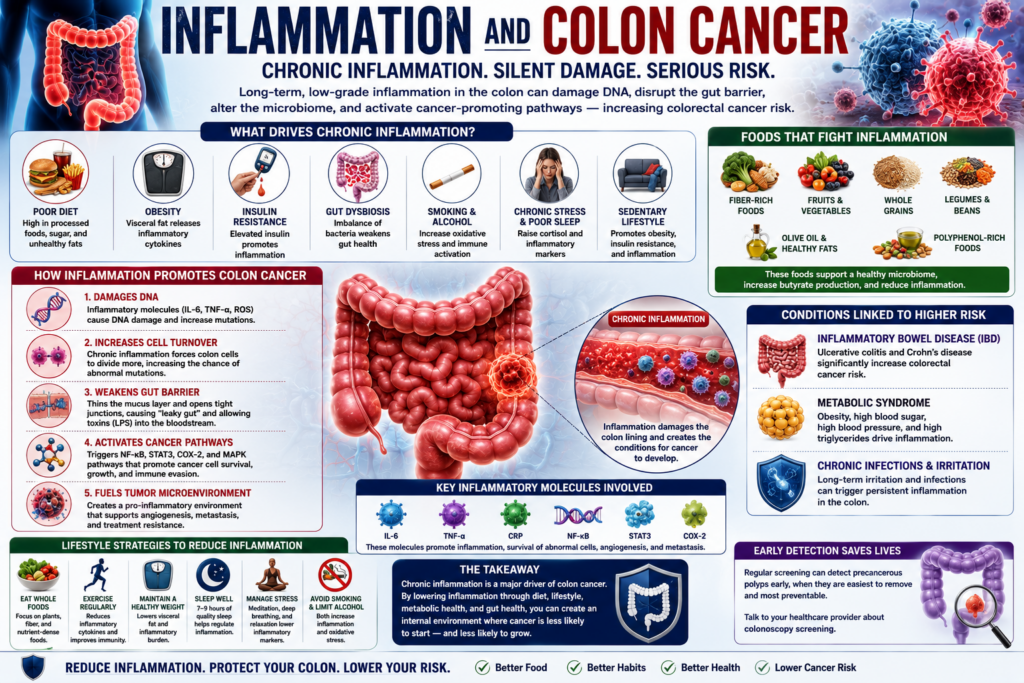
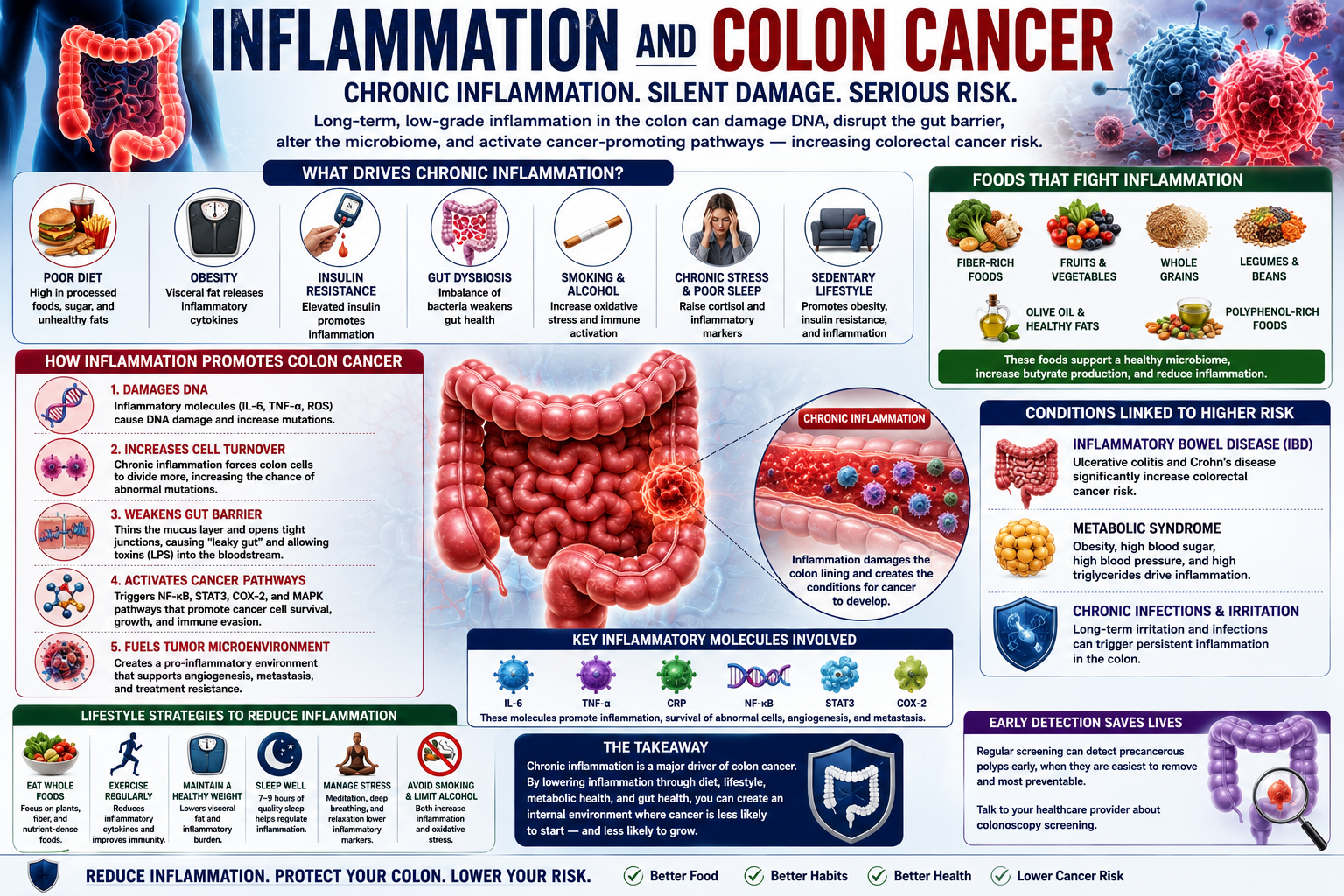
Researchers now believe chronic inflammation is one of the central biological drivers of colorectal cancer because it affects DNA damage, immune signaling, gut barrier integrity, microbiome balance, and tumor survival pathways.
Inflammation and Colon Cancer
Understanding the Hidden Connection
Chronic inflammation is one of the most powerful and consistent drivers of colorectal cancer.
Short-term inflammation is part of normal healing.
But long-term, low-grade inflammation silently damages tissues over time.
Researchers now believe inflammation is not simply a side effect of disease.
It may be one of the core biological environments that allows colorectal cancer to develop and progress.
What Is Chronic Inflammation?
Chronic inflammation is a long-lasting immune response that remains active for months or years.
Unlike acute inflammation — such as swelling after an injury — chronic inflammation is often:
- Persistent
- Low-grade
- Systemic
- Hard to notice
Many modern lifestyle factors may contribute to chronic inflammation, including:
- Poor diet
- Obesity
- Insulin resistance
- Sedentary lifestyle
- Chronic stress
- Poor sleep
- Smoking
- Gut dysbiosis
- Ultra-processed foods
Researchers increasingly connect these inflammatory conditions to colorectal cancer risk.
How Inflammation Increases Colon Cancer Risk
Inflammation affects the colon in multiple ways that may increase cancer risk.
1. Inflammation Damages DNA
Inflammatory molecules such as:
- IL-6
- TNF-α
- Reactive oxygen species (ROS)
may damage DNA inside colon cells.
Repeated DNA damage over years increases the chance of mutations that may eventually lead to cancer.
2. Inflammation Increases Cell Turnover
Inflammation constantly injures colon tissue.
The body then forces cells to divide more rapidly to repair damage.
More cell division means more chances for abnormal mutations to occur.
3. Inflammation Weakens the Gut Barrier
Chronic inflammation may:
- Thin the mucus layer
- Weaken tight junctions
- Increase gut permeability
- Disrupt gut barrier integrity
This is sometimes called “leaky gut.”
When the barrier weakens, bacterial toxins such as LPS may enter circulation and trigger even more inflammation.
This creates a self-reinforcing cycle.
4. Inflammation Activates Cancer Pathways
Inflammation activates several major cancer-promoting pathways including:
- NF-κB
- STAT3
- COX-2
- MAPK/ERK
These pathways may help abnormal cells:
- Survive
- Grow
- Avoid apoptosis
- Evade the immune system
- Build blood supply
Researchers now heavily study inflammation signaling in colorectal cancer biology.
Obesity, Insulin Resistance, and Inflammation
Obesity is strongly linked with chronic inflammation.
Especially important is visceral fat — fat stored around internal organs.
Visceral fat releases inflammatory molecules such as:
- IL-6
- TNF-α
- CRP
- Leptin
These inflammatory signals may worsen:
- Insulin resistance
- Hyperinsulinemia
- Oxidative stress
- Metabolic dysfunction
Researchers now view obesity as both a metabolic disease and an inflammatory disease.
This is one reason obesity strongly increases colorectal cancer risk.
Gut Dysbiosis and Inflammation
The gut microbiome plays a major role in inflammation control.
A healthy microbiome produces anti-inflammatory compounds such as:
- Butyrate
- Other short-chain fatty acids (SCFAs)
Dysbiosis — microbiome imbalance — may lead to:
- Lower butyrate production
- More inflammatory bacteria
- Increased gut permeability
- Immune activation
- Chronic inflammation
Researchers increasingly believe microbiome disruption is a major driver of colon inflammation and colorectal cancer risk.
Inflammatory Bowel Disease and Colon Cancer
One of the clearest examples of inflammation causing cancer comes from inflammatory bowel disease (IBD).
People with:
- Ulcerative colitis
- Crohn’s disease
have significantly higher colorectal cancer risk.
This is powerful evidence that chronic inflammation itself may drive tumor development.
Even milder forms of chronic inflammation may contribute to risk over decades.
Inflammation and the Tumor Microenvironment
Inflammation changes the entire tumor microenvironment.
The tumor microenvironment includes:
- Immune cells
- Blood vessels
- Gut bacteria
- Fibroblasts
- Cytokines
- Oxygen levels
- Inflammatory molecules
Chronic inflammation may create a microenvironment that supports:
- Tumor survival
- Angiogenesis
- Immune evasion
- Metastasis
- Treatment resistance
Researchers now view inflammation as one of the central forces shaping tumor behavior.
Oxidative Stress and Inflammation
Inflammation often increases oxidative stress.
Oxidative stress occurs when reactive molecules damage:
- DNA
- Proteins
- Mitochondria
- Cell membranes
Over years, oxidative stress may contribute to abnormal cellular behavior and tumor development.
Lifestyle Factors That Increase Inflammation
Several modern lifestyle factors may increase chronic inflammation:
Ultra-Processed Foods
Many ultra-processed foods are:
- Low in fiber
- Rapidly absorbed
- High in sugar
- Poor for microbiome diversity
Researchers believe these foods may contribute to chronic inflammation and metabolic overload.
Constant Eating and Snacking
Constant eating may keep:
- Insulin elevated
- Blood sugar fluctuating
- Digestion constantly active
This may increase inflammatory signaling over time.
Poor Sleep
Poor sleep is strongly associated with:
- Inflammation
- Insulin resistance
- Elevated cortisol
- Obesity
Sleep disruption may also negatively affect the microbiome.
Sedentary Lifestyle
Lack of movement may worsen:
- Metabolic dysfunction
- Inflammation
- Insulin resistance
- Obesity
Lifestyle Factors That Help Reduce Inflammation
Research consistently supports several anti-inflammatory lifestyle patterns.
Fiber and Whole Foods
High-fiber whole foods help support:
- Butyrate production
- Gut barrier integrity
- Microbiome diversity
- Lower inflammation
Exercise
Physical activity may reduce inflammatory cytokines while improving:
- Insulin sensitivity
- Immune function
- Body composition
Healthy Body Weight
Reducing visceral fat may significantly lower inflammation markers.
Better Sleep
Good sleep supports:
- Hormonal balance
- Immune regulation
- Metabolic health
- Lower inflammation
Reducing Ultra-Processed Foods
Whole-food diets tend to reduce inflammatory load and improve microbiome health.
The Bigger Picture
Inflammation connects many major colorectal cancer systems together:
- Obesity
- Insulin resistance
- Gut dysbiosis
- Oxidative stress
- Immune dysfunction
- Metabolic overload
- Tumor microenvironment changes
Researchers increasingly believe chronic inflammation helps create a biological environment where abnormal cells are more likely to survive and grow over time.
Final Thoughts
Chronic inflammation is one of the most important long-term drivers of colorectal cancer because it damages DNA, weakens the gut barrier, disrupts the microbiome, activates cancer pathways, and promotes tumor survival.
Modern research increasingly focuses on reducing inflammation through:
- Better metabolic health
- Fiber-rich whole foods
- Improved microbiome diversity
- Exercise
- Healthy body weight
- Better sleep
- Reduced ultra-processed foods
- Lower chronic stress
The goal is not perfection.
The goal is creating a healthier internal environment where inflammation remains controlled and cancer has a harder time developing over years and decades.
Internal Links to Add
- Colon Cancer Reduction: Metabolic Health, Gut Health, and Lifestyle Factors
- The Gut Microbiome and Colon Health
- Insulin Resistance and Colon Cancer
- Obesity and Colon Cancer
- Ultra-Processed Foods and Colon Cancer
- Fiber and Colon Cancer Prevention
- Constant Eating and Metabolic Overload
External Authority Sources
- NIH / PubMed Central: Chronic Inflammation and Colorectal Cancer
- NIH / PubMed Central: NF-κB and Inflammation in Colorectal Cancer
- NIH / PubMed Central: Gut Microbiome, Dysbiosis, and Colon Cancer
- American Cancer Society: Colorectal Cancer Prevention
- National Cancer Institute: Colorectal Cancer Prevention (PDQ)
Medical Disclaimer
This article is for educational and informational purposes only and is not medical advice. It does not diagnose, treat, cure, or prevent any disease. Always speak with a qualified healthcare professional about digestive symptoms, inflammation, colon cancer risk, screening, or treatment decisions.