People Also Ask About Akkermansia muciniphila
As gut microbiome research grows, more people are asking:
- What is Akkermansia muciniphila?
- Is Akkermansia good for colon health?
- Can Akkermansia reduce colon inflammation?
- Does Akkermansia improve gut barrier integrity?
- What is the gut mucus lining?
- Can Akkermansia improve insulin sensitivity?
- Is Akkermansia linked to colon cancer prevention?
- What foods increase Akkermansia?
- Does fasting increase Akkermansia?
- Is Akkermansia a probiotic?
- Can gut bacteria affect colon cancer risk?
- What is the connection between inflammation and colon cancer?
- Can ultra-processed foods damage the gut microbiome?
- What is butyrate and why does it matter?
Researchers are increasingly studying how Akkermansia muciniphila may influence inflammation, gut barrier integrity, immune signaling, metabolism, and long-term colon health.
Akkermansia muciniphila and Colon Cancer
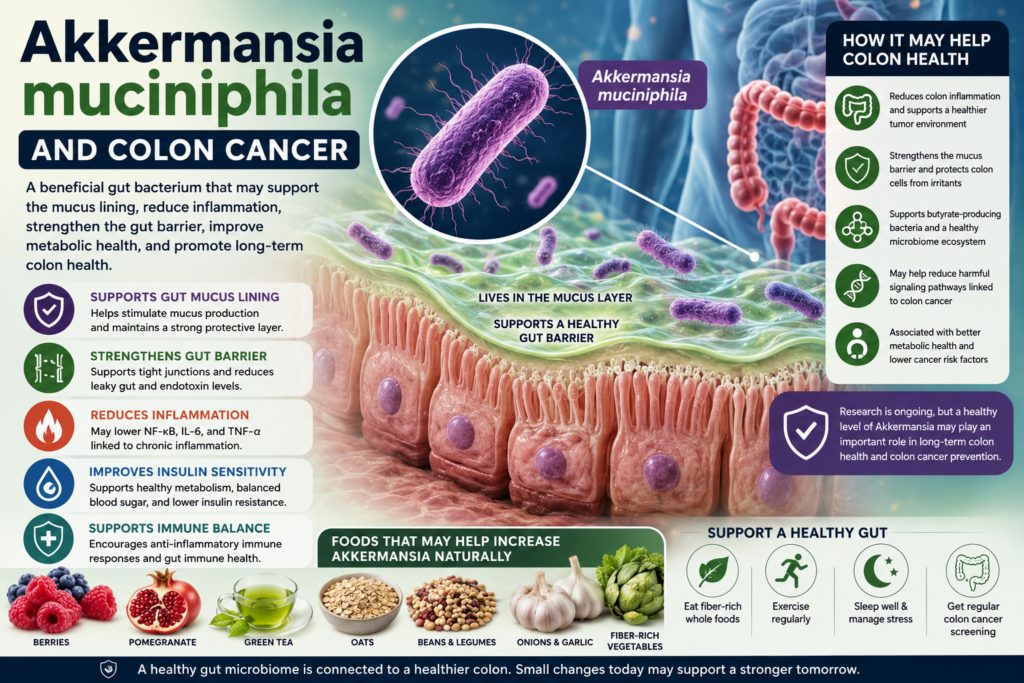
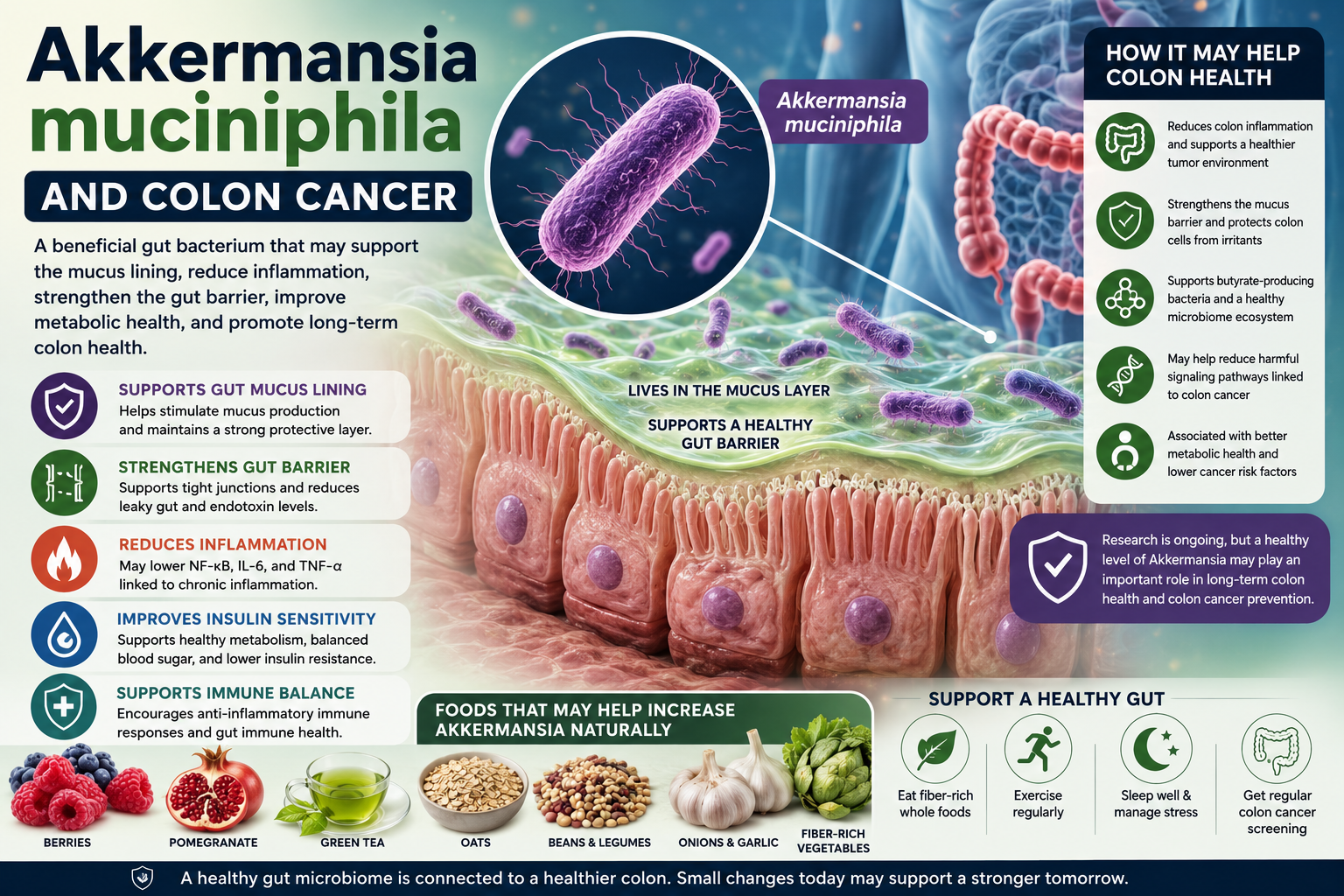
One beneficial bacteria receiving major attention in gut health and colon cancer research is Akkermansia muciniphila.
This bacteria naturally lives inside the mucus layer of the colon and interacts closely with the gut lining.
Researchers are studying Akkermansia because it may help:
- Support the gut mucus lining
- Improve gut barrier integrity
- Reduce inflammation
- Improve insulin sensitivity
- Support metabolic health
- Help regulate immune signaling
- Support short-chain fatty acid production indirectly
These areas are important because colon cancer is strongly connected to chronic inflammation, gut barrier dysfunction, insulin resistance, obesity, and microbiome imbalance.
But it is important to stay balanced and realistic.
Akkermansia muciniphila is not a proven cure or prevention treatment for colon cancer.
The research is promising, but still developing.
What Is Akkermansia muciniphila?
Akkermansia muciniphila is a bacteria that lives directly inside the mucus layer lining the intestines.
The word “muciniphila” literally means “mucus loving.”
Unlike many gut bacteria that feed mainly on fiber, Akkermansia feeds on mucin, which is one of the main proteins inside the protective mucus layer of the colon.
At first, this sounds harmful.
But in a healthy gut, this process may actually help stimulate the body to produce more mucus and strengthen the protective barrier.
The mucus layer is constantly renewing itself.
Akkermansia appears to help regulate part of this natural renewal process.
Why the Gut Mucus Layer Matters
The mucus layer acts like a protective shield between the gut microbiome and the colon wall.
A healthy mucus layer helps:
- Protect colon cells
- Reduce irritation
- Lower exposure to toxins
- Reduce direct bacterial contact
- Support gut barrier integrity
- Help regulate immune activity
When the mucus barrier becomes weak or damaged, bacteria and inflammatory molecules may move closer to colon cells.
Over time, chronic irritation and inflammation may contribute to a less protective colon environment.
This is one reason Akkermansia is getting so much research attention.
Akkermansia and Gut Barrier Integrity
The gut barrier controls what enters the bloodstream from the digestive tract.
A healthy barrier allows nutrients through while helping block harmful substances, toxins, and inflammatory molecules.
When the barrier weakens, researchers call this increased intestinal permeability.
Many people know this as “leaky gut.”
Akkermansia may help support the gut barrier by:
- Supporting mucus production
- Helping regulate tight junction proteins
- Reducing inflammatory signaling
- Supporting healthier microbiome balance
- Reducing metabolic inflammation
This may help reduce chronic immune activation and gut irritation.
Akkermansia and Inflammation
Chronic inflammation is one of the biggest themes in colon cancer research.
Long-term inflammation may contribute to:
- DNA damage
- Oxidative stress
- Abnormal cell signaling
- Gut barrier dysfunction
- Tumor-promoting environments
Researchers are studying Akkermansia because it may help reduce inflammatory pathways linked to colon disease.
Some studies suggest Akkermansia may help lower:
- NF-κB signaling
- TNF-α
- IL-6
- Chronic low-grade inflammation
These inflammatory pathways are commonly associated with colorectal cancer development.
Akkermansia and Metabolic Health
Akkermansia muciniphila is also heavily studied in obesity and metabolic health research.
Higher Akkermansia levels are often associated with:
- Better insulin sensitivity
- Lower metabolic inflammation
- Healthier body weight
- Better blood sugar control
- Lower visceral fat levels
This matters because obesity, insulin resistance, and metabolic syndrome are all linked with higher colorectal cancer risk.
Researchers believe Akkermansia may help create a healthier metabolic environment inside the body.
Akkermansia and Insulin Sensitivity
Insulin resistance means the body no longer responds efficiently to insulin.
Over time, insulin resistance can lead to:
- Higher insulin levels
- Higher blood sugar
- More inflammation
- Increased metabolic stress
High insulin and IGF-1 signaling may activate growth pathways that cancer cells use for survival and growth.
Researchers are studying whether Akkermansia may help improve insulin sensitivity through:
- Better gut barrier health
- Reduced inflammation
- Improved gut hormone signaling
- Better microbiome balance
This does not mean Akkermansia alone controls metabolism.
But it may be one important part of the larger metabolic picture.
Akkermansia and Butyrate
One of the most important compounds in colon health research is butyrate.
Butyrate is a short-chain fatty acid produced when beneficial gut bacteria ferment fiber and resistant starch.
Butyrate may help:
- Fuel healthy colon cells
- Support the gut barrier
- Reduce inflammation
- Support normal cell behavior
Akkermansia does not produce large amounts of butyrate directly.
But it may help support butyrate-producing bacteria by helping maintain a healthier microbiome ecosystem.
Researchers sometimes call this cross-feeding.
One bacteria supports another bacteria.
This is why the microbiome works more like a balanced ecosystem than one single “magic” bacteria.
Akkermansia and Colon Cancer Research
Research on Akkermansia and colorectal cancer is complex.
Some studies suggest Akkermansia may help create a healthier colon environment through:
- Reduced inflammation
- Stronger gut barrier function
- Better metabolic health
- Improved immune signaling
- Support of beneficial bacteria
Some studies have also linked higher Akkermansia levels with improved responses to cancer immunotherapy.
However, researchers also found that context matters.
Because Akkermansia breaks down mucin, it may not always behave the same way in every gut environment.
In severely inflamed or damaged guts, too much mucin degradation could potentially worsen barrier problems in some situations.
This is why researchers describe Akkermansia as potentially beneficial in healthy or balanced environments, but more complicated in diseased environments.
Biology is rarely black and white.
What Foods May Support Akkermansia?
Researchers are studying how diet may influence Akkermansia levels.
Foods associated with healthier Akkermansia levels may include:
- Fiber-rich foods
- Polyphenol-rich foods
- Berries
- Pomegranate
- Green tea
- Cranberries
- Cocoa
- Onions
- Garlic
- Beans and lentils
- Steel-cut oats
- Resistant starch foods
- Extra virgin olive oil
Fasting and time-restricted eating are also being studied for their possible effects on Akkermansia and the microbiome.
What May Damage the Gut Environment?
Several lifestyle factors may negatively affect the microbiome and gut barrier over time:
- Ultra-processed foods
- Low fiber intake
- Excess refined sugar
- Smoking
- Heavy alcohol use
- Chronic stress
- Poor sleep
- Sedentary lifestyle
- Repeated unnecessary antibiotic use
Akkermansia does not work alone.
The overall gut environment matters most.
The Bigger Picture
Akkermansia muciniphila is one of the most promising bacteria being studied in gut health research.
It may help support:
- Gut barrier integrity
- Mucus layer health
- Inflammation control
- Immune balance
- Metabolic health
- Insulin sensitivity
These are all major areas connected to long-term colon health and colorectal cancer research.
But the microbiome is extremely complex.
The best prevention strategy is probably not chasing one bacteria.
The stronger long-term strategy is improving the entire gut environment through:
- Fiber-rich whole foods
- Better metabolic health
- Lower ultra-processed food intake
- Healthy body weight
- Physical activity
- Better sleep
- Reduced inflammation
- Colonoscopy screening
- Earlier detection
Final Thoughts
Akkermansia muciniphila is becoming one of the most important bacteria in colon health research because it connects the microbiome with inflammation, metabolism, gut barrier integrity, and immune signaling.
Researchers are actively studying whether healthier populations of Akkermansia may help support long-term digestive and colon health.
But the science is still evolving.
The most evidence-based approach right now is focusing on overall gut health, metabolic health, fiber intake, microbiome diversity, and colon cancer screening — not relying on one bacteria alone.
Internal Links to Add
- Colon Cancer Reduction: Metabolic Health, Gut Health, and Lifestyle Factors
- The Gut Microbiome and Colon Health
- Fiber and Colon Cancer Prevention
- Resistant Starch and Gut Health
- Ultra-Processed Foods and Colon Cancer
- Insulin Resistance and Colon Cancer
- Inflammation and Colon Cancer
- Obesity and Colon Cancer
- Hypoxia and HIF-1α in Cancer
External Authority Sources
- NIH / PubMed Central: Akkermansia muciniphila and Colorectal Cancer Research — Review discussing the complex and context-dependent role of Akkermansia muciniphila in colorectal cancer biology, inflammation, gut barrier integrity, and microbiome balance.
- National Cancer Institute: Gut Microbiome and Colorectal Cancer — Overview of gut bacteria and colorectal cancer research, including microbiome-related tumor signaling and inflammation.
- American Cancer Society: Colorectal Cancer Prevention — Evidence-based prevention guidance including body weight, physical activity, diet, alcohol, smoking, and colonoscopy screening.
- Nature Reviews: Gut Microbiome and Inflammation — Scientific review on how the gut microbiome influences inflammation, immune signaling, metabolism, and gastrointestinal disease.
- NIH / PubMed Central: Gut Barrier Integrity and Colon Health — Research review covering intestinal permeability, gut barrier function, inflammation, microbiome signaling, and digestive health.
Medical Disclaimer
This article is for educational purposes only and is not medical advice. It does not diagnose, treat, cure, or prevent any disease. Always speak with a qualified healthcare professional about digestive symptoms, colon cancer risk, screening, supplements, probiotics, or treatment decisions.